
Submersible vs. Jet Pump: Which One Fits Your Well?
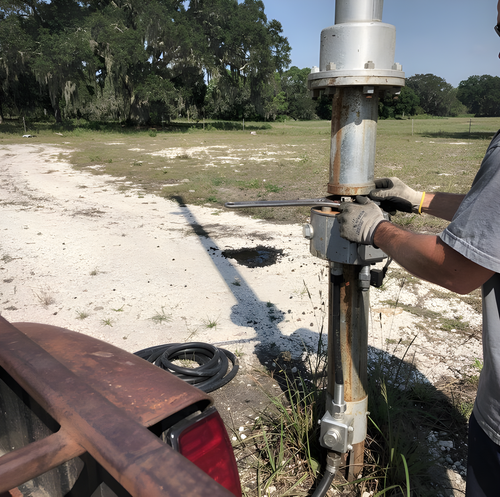
Quick Answer: Which pump fits your well comes down to depth. A submersible sits below the water line and pushes water up, handling deep wells. A jet pump sits above ground and pulls water up, but only works within about 25 feet of vertical lift. If your water is deep, go submersible; if shallow, a jet pump is fine.
Two well systems can deliver the same glass of water to your kitchen tap and do it in opposite ways. One sits at the bottom of your well, out of sight, quietly shoving water toward the surface. The other sits in a pump house or basement, straining to pull water up a pipe against the weight of the atmosphere. Which one you have (and which one you should have) comes down to how deep your water sits and how you want to live with the equipment. Getting that match right is the difference between a system you forget about and one you fight with.
The Core Split: Pushing Water vs Pulling It
A submersible pump and a jet pump solve the same problem from opposite ends of the well.
A submersible pump is a long, narrow cylinder that hangs down inside the well casing, below the water line. The motor and the pump are built into one sealed unit, sitting underwater the entire time it runs. It does not suck water up from above; it pushes water up from below, feeding it through a pipe to the surface and on to your pressure tank. Because the pump is already submerged, it never has to fight atmospheric pressure to get started, and it never needs priming.
A jet pump works the other way around. It sits above the water, either at ground level in a well house or inside the home. It creates suction in a pipe that reaches down into the well, and atmospheric pressure pushes water up that pipe toward the pump. That single detail (relying on suction instead of a submerged push) governs almost everything else about how a jet pump behaves, including its biggest limitation.
Why a Jet Pump Can Only Pull Water So Far
Suction has a hard ceiling, and it is set by physics, not by the pump's horsepower. When a jet pump creates a vacuum in its suction pipe, it is not really pulling the water up; atmospheric pressure below is pushing it up into the void the pump created. Atmosphere can only push water so high, which in real-world wells lands around 25 feet of vertical lift. Buy a bigger motor, and you still cannot beat that limit, because more horsepower does not add more atmosphere.
This is why jet pumps split into two designs:
- A shallow-well jet pump uses a single pipe running into the well. It works only when the water sits within roughly 25 feet of the pump. This is the simple, single-line setup you will find on shallow wells.
- A deep-well jet pump uses two pipes and an ejector assembly lowered down into the well. One pipe drives pressurized water down to the ejector; the second, larger pipe carries water back up. By putting the jet action down near the water instead of up at the pump, a two-pipe system reaches water that sits well beyond the 25-foot suction ceiling.
A submersible pump sidesteps the whole question. Sitting below the water line, it has no suction lift to overcome at all, which is why it is the common choice once a well gets truly deep.
How the Two Compare, Side by Side
| Feature | Submersible Pump | Jet Pump |
|---|---|---|
| Location | Down in the well, below the water line | Above ground, in a well house or basement |
| How it moves water | Pushes water up from below | Suction: the atmosphere pushes water up the pipe |
| Priming | Self-priming; never needs it | Must be primed, and re-primed if it loses prime |
| Depth it suits | Deep wells | Shallow wells (single-pipe) or moderate depth (two-pipe) |
| Noise | Silent, the motor runs underwater | Audible; the motor and impeller run in open air |
| Efficiency | Higher; energy goes straight to lifting water | Lower; recirculating water wastes some effort |
| Service access | Must be pulled from the well | Reach it and work on it in place |
| Typical lifespan | Longer, once installed correctly | Generally shorter |
Both systems still rely on the same pressure tank at the surface to store water and hold steady pressure between pump cycles, so a tank problem can look like a pump problem, no matter which type you own.
How to Tell Which One You Already Have
You usually do not need a technician to figure out which system is in your yard. Walk out to the well and look.
If you see an actual pump, a metal housing about the size of a bread loaf, mounted near your pressure tank with pipes running into it, you have a jet pump. It is right there in the open because it has to be; a jet pump only works from above the water. On a deep-well jet setup, you may also spot two pipes heading toward the well instead of one.
If you walk out and see almost nothing, just a capped wellhead with an electrical wire and a single pipe disappearing straight down into the ground, you have a submersible. The pump itself is hanging in the water below your feet, which is exactly why there is nothing to see up top.
Service, Repair, and the Trade-Off You Are Really Buying
The reason a submersible tends to last longer is partly that it runs cool and steady in the water and never dry-cycles the way a jet pump can if it loses prime. The trade-off shows up on the day it needs attention. Servicing a submersible means pulling the entire pump, motor, and drop pipe back up out of the well before anyone can touch it, a bigger job that often calls for hoisting equipment. A jet pump, sitting in the open, can be inspected, unbolted, and worked on without disturbing the well at all.
So the honest comparison is not "one is better." It is a swap: the submersible asks for more effort on the rare occasions it needs service, in exchange for needing service less often and running silently and efficiently in between. The jet pump asks for easier, cheaper access but gives up some efficiency, adds noise, and depends on keeping its prime.
If you are weighing whether to repair an aging deep-well jet pump or replace it with a submersible, the depth of your well usually settles it. On a truly deep well, a jet pump has always been working near the edge of what suction can do, and a submersible removes that strain entirely. On a shallow well, a well-maintained jet pump can be perfectly sensible to keep, since the depth never demanded a submersible in the first place.
What It Comes Down To
Well depth is the deciding factor, and everything else follows from it. Shallow water favors a jet pump you can reach and service easily; deep water favors a submersible that pushes instead of pulls. Beyond depth, decide how much you value silence and efficiency against easy access, and whether you want the steadier pressure a variable-speed submersible can provide. Match the pump to the well first, then to how you want to live with it, and you end up with a system that quietly does its job for years.
Frequently Asked Questions
Water level, not total well depth, is what matters; a well drilled 200 feet down may still hold water only 15 feet from the surface. If the static water level sits within about 25 feet of the pump, a single-pipe shallow-well jet can handle it; below that, atmospheric pressure can no longer push water high enough, and you need a two-pipe deep-well jet or a submersible. A pump technician can measure the standing water level directly rather than guessing from the drilled depth on your well report.
A jet pump loses prime when the water drains back down the suction pipe while it sits idle, usually because the foot valve at the bottom of the pipe has worn out and no longer holds a seal. Re-priming means refilling the pump housing and suction pipe with water through the priming port so there is water for the pump to grab instead of air. If you find yourself re-priming often, the foot valve or a leak in the suction line is the real culprit, not the pump itself, and that is a repair worth chasing down, because running dry damages a jet pump fast.
In most cases, yes, as long as the existing well casing is wide enough and in sound condition to accept a submersible and its drop pipe. The conversion swaps the above-ground pump for a submersible lowered into the casing, runs new wire and pipe down the well, and reuses the existing pressure tank if it is still healthy. The one thing that can complicate it is a narrow, old, or damaged casing, which is why a technician inspects the well before quoting the change rather than assuming it will drop right in.
Yes. A standard pump runs at full speed until the pressure tank fills, then shuts off, so pressure swings between a cut-in and cut-out point and dips when several fixtures run at once. A constant-pressure, variable-speed submersible ramps its motor up and down to hold pressure steady no matter how many taps are open, so the shower does not drop off when someone starts the dishwasher. It is an upgrade path that pairs naturally with a submersible and is one of the practical reasons homeowners choose that system for a deep well.
Both can struggle, but they fail differently. Grit is abrasive and wears out the impellers and internal clearances of either pump over time, so on a sandy well, the fix is often less about the pump type and more about a properly sized screen, a sediment filter, or raising the pump intake above the well bottom, where debris settles. A submersible sitting too close to the bottom of a silty well can pull in sand and wear early, which is one reason correct placement in the casing matters as much as the choice between pump types.
Not always, a jet pump is inherently louder than a submersible because its motor and impeller run in open air rather than underwater, so a steady working hum is normal. What is not normal is a new rattle, grinding, or a sharp change in pitch, which can point to worn bearings, cavitation from a partial loss of prime, or a failing impeller. A submersible, by contrast, is silent in normal operation, so any audible noise from a submerged system usually means the sound is coming from the pressure tank, the pipes, or a pump that is short-cycling rather than from the pump motor itself.
Not sure which pump fits your well, or whether to repair or upgrade the one you have — call for an honest assessment. Perry-Pump Repair Service LLC serves Lake Butler, Gainesville, and Alachua. Call (352) 474-7142.
