

Well Inspections in Gainesville and Across North Florida
FL Water Well Contractor License #5016 · FGWA · NGWA · NCFWA Member · Google 5.0 Rated · Wisetack Financing


Whether you are a homeowner who wants to catch problems before they become emergencies, a buyer in a closing window, or a Realtor lining up due diligence on a rural listing, you are on the right page. Perry-Pump Repair Service runs two well-inspection products across 17 North Florida communities: an annual/system inspection for property owners and a pre-purchase/real-estate inspection for buyers and their agents. Family-owned, state-licensed, based in Gainesville. Eric Perry is a 3rd-generation water well specialist; the Perry family has worked North Florida wells for more than 50 years.
Pre-purchase inspections are a $200 flat anchor: full physical scope plus the written report for closing. Annual inspections are typically scheduled alongside other service work; call for a quote on a standalone visit. One hard boundary: we do not test bacteriological (E. coli/coliform) samples in-house. Buyers and Realtors arrange that through an FDOH-approved lab. We will point you to one on request.
Call (352) 320-2412 Mon. to Fri. 8 AM to 5 PM. After hours, leave a message, and we will return the call at our earliest availability.
$200 Pre-Purchase Anchor
Flat $200 anchor for the real-estate inspection, written report included.
Field-Kit Water Quality
Iron, hardness, pH, nitrate, and sulfide tested on site. No bact - FDOH-approved lab referral.
Closing-Ready Report
Written summary that buyers and Realtors can use in negotiation.
17 North Florida Cities
Gainesville HQ to Lake Butler, Starke, Newberry, Lake City, and beyond.
Annual + Pre-Purchase + Post-Storm
Three inspection products, one specialist team.
FDEP-Licensed #5016
Fully state-licensed Water Well Contractor - public registry.
Three Inspection Types - Three Reasons Customers Call
Across three Perry-family generations and 15+ years of personal experience, three inspection products cover almost every well inspection request we get. Same physical scope on the wellhead, pump, pressure system, and water-quality field kit. Different purpose, different customer, different paperwork.
Annual / system inspection - proactive maintenance.
For homeowners who want to catch problems before they become emergencies. Best scheduled in spring before storm season. Scope: wellhead + cap-and-seal condition, pressure tank + switch performance, pump amp draw + voltage check, sediment + filter condition, water-quality field kit (iron, hardness, pH, nitrate, sulfide), and a drawdown estimate when accessible. Findings get a written summary for next year's comparison. Most annual inspections get scheduled alongside other service work for efficiency. Call for a standalone quote if you would rather book it alone.
Pre-purchase / real-estate inspection - buyer and Realtor channel.
$200 flat anchor. Same physical scope as the annual inspection, plus a written report formatted for closing. Buyers use the report to confirm the well is in serviceable condition, to negotiate repair credits when something needs work, or to confirm a recently-repaired well is back in spec. Bacteriological testing (E. coli, total coliform) is not part of the inspection. Buyers and Realtors arrange that separately through an FDOH-approved lab. We do not pull the sample because bacteria testing requires a lab chain-of-custody we do not manage.
Post-storm / post-flood sanitary inspection.
After a hurricane or major flood event: cap integrity, seal damage, conduit ingress, debris in the vent, casing alignment at grade, and evidence of surface-water contamination at the wellhead. Often paired with cap-and-seal or wellhead extension work in the same visit. Common across the Suwannee, Santa Fe, and St. Marys river basins and rural lots in Bradford and Baker counties.
What We Check on Every Well Inspection
Same physical scope on annual and pre-purchase visits. Categorized below by what we look at, point-by-point.
-
• Casing stick-up height above grade: flood-zone properties need 12+ inches; we measure and document
• Cap integrity: bolts, gasket condition, evidence of past tampering or water entry
• Vent screen condition: intact mesh, insect or rodent intrusion, debris in the vent
• Conduit penetrations: sealed, foam intact, ant-blocked
• Casing-joint condition where visible, and casing alignment at grade
• Wellhead sealed to applicable Florida code
• Surrounding grade: water shedding away from the wellhead, no ponding signs
-
• Pressure tank pre-charge: measured with pump off and tank drained
• Pressure switch contacts: clean, pitted, burned, or fouled (fire ants are a real North Florida find)
• Cut-in and cut-out PSI: verified against settings on the switch
• Short-cycle test: timed cycles to confirm the tank is doing its job
• Constant-pressure drive condition if a VFD or CSV is installed
• Gauge accuracy on the system gauge vs our calibrated reference
-
• Motor amp draw at the panel under load: compared to nameplate
• Voltage at the panel and at the pressure switch - compared to spec
• Control box capacitor and start relay on 3-wire submersibles
• Drop-cable insulation condition where accessible
• GFCI and grounding status on the well circuit
• Lightning surge evidence - blackened components, witness marks on the control box

-
• pH: normal 6.5 to 8.5, lower indicates corrosive water, higher indicates scaling tendency
• Hardness: above 7 grains per gallon usually warrants a softener recommendation
• Iron: above 0.3 ppm triggers iron-removal recommendation in the report
• Sulfide / H2S: above 0.1 ppm triggers sulfide-treatment recommendation
• Nitrate - above 10 ppm hits the EPA limit; separate RO drinking solution recommended
• Bacteriological: not in scope. Buyers and Realtors arrange E. coli/coliform testing through an FDOH-approved lab
-
• Items needing immediate repair - flagged in writing with priority
• Items needing future watch - documented with baseline numbers for next year's comparison
• Code-compliance items per FDEP Chapter 62-532 F.A.C.
• Permit-required items (we flag and explain them in the report; when you hire us for the repair, we pull the permit)
What Actually Happens When You Schedule a Well Inspection
From the phone call to the written report, here's the path most inspection customers walk. The pre-purchase variant is built to fit a closing window; the annual variant is built to give you a baseline you can use next year.
Phone scheduling: tell us which inspection type.
Call (352) 320-2412 Mon-Fri 8 AM - 5 PM. Tell us whether you need an annual, pre-purchase, or post-storm inspection. For pre-purchase work, give us the closing date so we can schedule the inspection early enough that any negotiation has room. After hours, leave a message; we return at our earliest availability.
Schedule confirmation + en-route notification.
Pre-purchase inspections inside an active closing window move higher on the schedule because the timeline is real. Annual and post-storm inspections fall within the same week in most cases. We will text or call en route on the day of.
On-site inspection
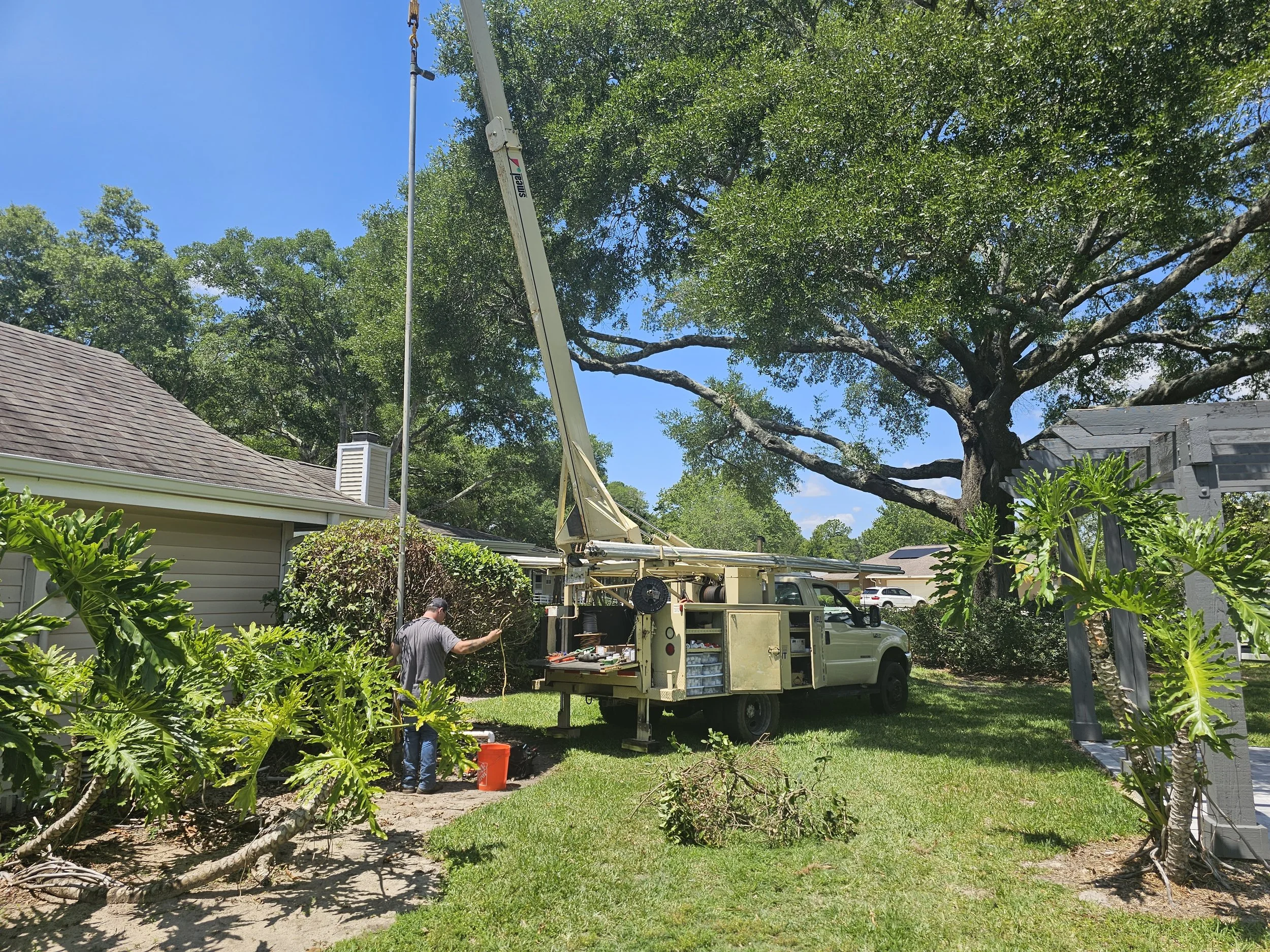
Wellhead, pressure, pump, and water quality. We arrive in a marked Perry-Pump truck and run the full scope: wellhead and casing condition, pressure tank pre-charge and switch performance, pump amp draw and voltage, and the water-quality field kit. Typical on-site time is 1.5 to 2.5 hours, depending on access and what we find.
Findings explained on the spot: plain language.
We walk you through what we found while we are still on site. No sales script. If everything checks out, you hear that. If we find a $300 switch that needs to be replaced, you hear that too. Repair work is separately quoted; the inspection itself is its own deliverable.
Follow-up repair work: separate quote, your call
If the inspection turns up items that need repair, we quote them separately. The decision to proceed is yours. Wisetack financing on larger combined jobs. Prices are subject to change because our suppliers have been very volatile with pricing lately.
Written report for pre-purchase inspections.
Pre-purchase customers get the written report formatted for closing: physical condition, performance test results, water-quality numbers, code-compliance status, repair recommendations, and follow-up items. Buyers take it to closing as a basis for negotiation if needed. Included in the $200 anchor; no surprise fees.
Bact-testing referral when needed.
Bacteriological testing (E. coli, total coliform) is not part of our inspection. We do not pull the sample because the lab chain-of-custody and turnaround are out of our scope. We point you to an FDOH-approved lab so the buyer or Realtor can arrange it directly. Doing it this way keeps the chain of custody clean for closing.
Well Inspection Pricing: What Things Cost
Inspection pricing splits into the inspection itself and any follow-up repair work. Pre-purchase/real-estate inspection: flat $200 anchor. Annual/system inspection: call-for-quote when standalone. Follow-up repair is separately quoted based on the findings.
Inspection visits
Pre-purchase / real-estate inspection: $200 anchor, includes the full physical scope and the written report for closing
Annual / system inspection (standalone): call for quote, typically scheduled alongside other service work for efficiency
Post-storm sanitary inspection: typically combined with cap-and-seal repair or wellhead extension work, quoted as a package
Written report (pre-purchase): included in the $200 anchor - no add-on fee
Follow-up repair pricing (separate from the inspection)
Pressure switch replacement: few-hundred-dollar range parts + labor
Pressure tank replacement: about $1,000 to $3,500 depending on the size your system needs
Control box capacitor replacement: under $500 typical on 3-wire submersibles
Wellhead extension + cap-and-seal sanitary repair: $1,600 to $2,400
Full system replacement (submersible from $5,000, jet from $4,000, shallow well jet $3,200) when the inspection finds end-of-life pump
What's NOT in scope on the inspection
Bacteriological testing (E. coli, total coliform) - buyers and Realtors arrange through an FDOH-approved lab
Permit filing: not included in the inspection fee — when you book the repair with us, we pull any required permit as part of that job
Insurance-claim coordination: we document findings; the adjuster makes the coverage call
Cosmetic or interior plumbing assessments: well-system only, end of meter onward is out of scope
Wisetack financing on larger follow-up repair work (minutes to apply, terms before you sign). Military and first-responder discounts case-by-case by scope; ask when you call. Prices are subject to change because our suppliers have been very volatile with pricing lately.
Our Reviews

Why homeowners choose Perry-Pump
Fully licensed and insured. Florida Water Well Contractor License #5016.
Experienced well repair specialists. Third generation, 50+ years working North Florida wells.
Quality workmanship and straightforward customer service.
Free service call and $0 diagnostic on routine residential work.
5-year parts and labor warranty on the Pressure Package and most residential submersibles, in writing on the invoice.
Seven North Florida Conditions That Shape What We Inspect
Working wells in North Central Florida means inspecting around seven local conditions that drive what we look at most carefully and what we recommend customers do between visits.
1
Floridan Aquifer wells dominate at 100 to 400 ft: inspection focus
Most inspections in our footprint target a Floridan Aquifer submersible at 100 to 400 ft, deeper east of Gainesville, and shallower across the Suwannee basin. A drawdown estimate is a useful piece of the annual inspection when the well is accessible, because it tells you whether the well still yields what it used to, and replacing the pump will not fix a low-yield well.
2
Hurricane and tropical storm season (June to November) drives inspection demand
A spring annual inspection is a smart, low-cost way to catch a compromised cap or a debris-fouled vent before it becomes a bigger problem, whatever the eventual cause. We also do sanitary inspections after a storm or flood event when a customer asks for one.
3
Summer lightning peaks (July to August): control box and drive electronics damage
Nearby lightning strikes that surge the power line can take out control box capacitors and surge protectors, same as ordinary aging components do. Annual inspections catch components on the way out before they fail outright. Witness marks on the control box mean a capacitor and a start relay flag in the report.
4
Karst geology and casing shifts: slow damage that only shows on inspection
North Florida sits on karst limestone. Casing cracks and joint separations most often trace back to the original installation; annual and post-event inspections catch them before they become a contamination issue. None of that announces itself until the inspection. Annual and post-event inspections catch casing damage before it becomes a contamination event.
5
Iron, sulfide, and hardness: chemistry assessment is part of the field kit
Most North Florida wells produce water with measurable iron, sulfide, and hardness. The report flags treatment when the numbers indicate it. Buyers use field-kit numbers in negotiation; homeowners use them to plan a treatment install.
6
Flood-zone properties along the Suwannee, Santa Fe, and St. Marys basins
Lower-elevation rural lots in Bradford, Baker, Union, and the river-basin counties need the wellhead 12 inches or more above grade to keep surface water out of the source. Inspection focus on these properties is wellhead elevation, cap-and-seal integrity, and sanitary barrier. Often leads to an extension recommendation in the report and a follow-up scope quoted separately.
7
Fire ants and pest pressure on the pressure switch and conduit
A lineman told Eric years ago that insects are attracted to the frequency in pump wiring, borne out by what we pull from switches since. Inspections routinely catch an intrusion in the pressure switch and conduit before it causes a sudden no-water failure. Pest-blocking foam and silicone recommendations make the report.
Seven Technical Topics Where Inspection Detail Matters
Seven places where what is on the inspection report (and what is not) shapes the real-world decision. The actual reasoning is here.
-
Healthy submersibles pull amp draw close to nameplate under load. Worn pumps pull high amps because the motor is fighting impeller wear or bearing drag. We measure the amp draw under load and the voltage at the panel and the pressure switch, then compare them against the nameplate. Elevated amp draw, low voltage, and short-cycling together tell us the pump is worn, without pulling it.
-
Pre-charge measured with pump off and tank drained, against the cut-in PSI minus 2 rule of thumb. Switch cut-in and cut-out verified against label settings. Short-cycle test timed under simulated demand. Gauge accuracy was checked against our calibrated reference. All four numbers go on the report as a baseline for next year's annual, or for the buyer's records.
-
Physical condition of the wellhead, casing, and surrounding grade. Performance test results on the tank, switch, and pump. Water-quality field-kit numbers. Code-compliance status against FDEP Chapter 62-532 F.A.C. Repair recommendations with priority and follow-up list. Readable by the buyer, the Realtor, and the closing attorney, usable as a basis for repair-credit negotiation when needed.
-
pH 6.5 to 8.5 is the normal range; lower values indicate corrosive water, higher values indicate a tendency for scaling. Hardness above 7 grains per gallon usually warrants a softener. Iron above 0.3 ppm triggers an iron-removal recommendation. Sulfide above 0.1 ppm triggers a sulfide-treatment recommendation. The rotten-egg smell is the tell. Nitrate above 10 ppm hits the EPA limit, which calls for a separate RO drinking-water solution from a specialist.
-
Bacteriological testing for E. coli and total coliform requires FDOH-approved lab chain-of-custody and a specific turnaround. We do not pull the sample because we will not put our name on a chain we do not manage end-to-end. Buyers and Realtors arrange BACT testing directly with the lab; we can recommend an FDOH-approved lab on request. Hard scope boundary, not a maybe.
-
When the well is accessible during an annual inspection, we pump for an hour at a known rate, measure the water-level drop, and time the recovery after shutoff. The numbers tell us whether the well still yields what it used to. Yield falls over the years on some Florida wells, a separate problem from a worn pump. Not always feasible inside a short closing window.
-
We check that the wellhead is properly sealed to applicable Florida code and document it in the report. Out-of-spec items get flagged with a recommended fix and estimate. If the fix requires a permit, we pull it and file it ourselves as a state-licensed contractor.
Frequently Asked Questions
-
Pre-purchase/real-estate inspection: $200 flat anchor, written report included. Annual/system inspection: call for a quote when standalone. Most annual inspections get scheduled alongside other service work, which is the most efficient visit. Post-storm sanitary inspections are typically packaged with the cap-and-seal or wellhead-extension repair, the inspection drives. Prices are subject to change because our suppliers have been very volatile with pricing lately.
-
Wellhead and cap-and-seal condition, pressure tank pre-charge and switch performance, pump amp draw and voltage check at the panel, sediment and filter condition where installed, and a water-quality field kit covering iron, hardness, pH, nitrate, and sulfide. Written summary of findings so you have a baseline for next year. No bacteriological testing: that is out of scope by design.
-
Same physical scope as the annual inspection, plus a written report formatted for closing. Physical condition, performance test results, water-quality numbers, code-compliance status, repair recommendations, and follow-up items. Designed for the buyer to use as a basis for negotiation if needed. Included in the $200 anchor.
-
No. Bacteriological testing requires FDOH-approved lab chain-of-custody and a specific turnaround that we do not manage. Buyers and Realtors arrange BACT testing directly with an FDOH-approved lab. We will point you to one on request. This is a hard scope boundary: we do not pull the sample because we will not put our name on a chain we do not manage end-to-end.
-
Typically, 1.5 to 2.5 hours on site, depending on access to the wellhead, the condition we find as we go, and whether the well is easy to reach for the drawdown estimate. Pre-purchase inspections in active closing windows are scheduled higher on the day so the report is ready when you need it.
-
Annual/system inspection: spring is the right window in our footprint, ahead of hurricane and summer-lightning season. Pre-purchase inspection: as early in the closing window as possible, so any negotiation around repair credits has time to play out. Post-storm inspections: within the first week or two after a named storm passes, or sooner if the water quality changes.
-
Yes, that is a real share of our inspection volume from June through November. Post-storm sanitary inspections focus on cap integrity, casing alignment, conduit ingress, and evidence of surface-water contamination at the wellhead. Often paired with cap-and-seal repair or wellhead extension work during the same visit.
-
Yes, for pre-purchase/real-estate inspections, included in the $200 anchor, formatted for closing. Annual inspections get a summary findings document, so you have a baseline for year-over-year comparison. Post-storm inspections are typically documented inside the follow-up repair quote because the inspection drives the repair scope directly.
-
17 communities: Gainesville (HQ), Lake Butler, Lake City, Alachua, Newberry, High Springs, Starke, Keystone Heights, Branford, Trenton, Waldo, Hawthorne, Glen Saint Mary, Bell, Brooker, Raiford, and Melrose. Not sure if you are in our footprint? Call (352) 320-2412, and we will tell you straight.
-
Yes, through Wisetack on the larger follow-up repair jobs. Application takes minutes, terms shown before you sign. We do not push financing on small repairs; for a full pump-replacement scope or wellhead-extension restoration, it is a real option.
Ready to Schedule a Well Inspection? Call Perry-Pump Today.
Whether you are a homeowner catching problems before they become emergencies, a buyer in a closing window, or a Realtor lining up due diligence, call (352) 320-2412 and we will get you on the schedule. Pre-purchase: $200 flat anchor with the written report included. Annual: call-for-quote when standalone.