
Why Your Well Water Is Coming Out Dirty or Sandy
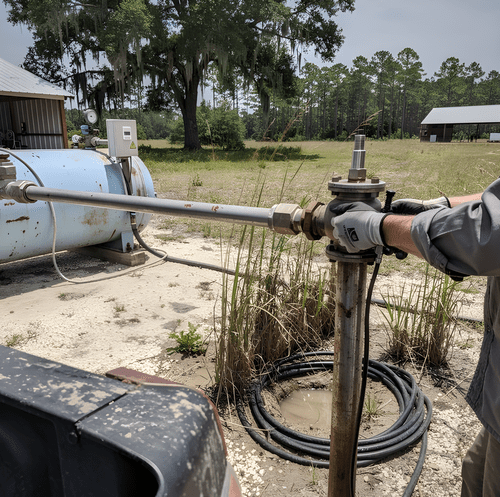
Quick Answer: Sand or dirt in well water usually means the system is pulling in material it normally wouldn't. Common causes are a worn or failing well screen, a pump set too low (drawing from the silty bottom), a dropping water level that lets the pump suck sediment or air, a cracked drop pipe or well casing, or a new or recently serviced well still clearing out. Cloudy water can also be air or mineral content. A clogged or bypassed sediment filter lets it reach your taps.
Turning on the tap to gritty, cloudy, or sandy water is unsettling — and in a well system, it's a sign that sediment is getting in somewhere it shouldn't. Florida's sandy ground makes this a familiar issue. The grit is more than a nuisance: sand wears out pumps, valves, and fixtures over time, so it's worth tracking down. Here's what usually causes it.
Where the Sand Comes In
A healthy well delivers clean water because the pump draws from a zone of the well above the silt, and a well screen keeps sand and sediment out. When you get grit at the tap, that protection has broken down somewhere: the screen is failing, the pump is drawing from too low a level, the water level has dropped so the pump pulls in sediment, or there's a crack letting material in. Cloudiness without grit can be a different story — air or dissolved minerals — but visible sand points to one of these intake problems.
The Common Causes
A Worn or Failing Well Screen
The well screen is the filter at the bottom of the well that keeps sand out while letting water in. Over time, it can corrode, crack, or wear, and once it fails, sand flows in with the water. A failing screen is a leading cause of persistent sandy water and usually needs professional attention.
A Pump Set Too Low
If the pump is positioned too close to the bottom of the well, it draws from the silty zone where sediment settles, pulling sand into the system. This can happen with the original installation or after a pump has shifted. Repositioning the pump higher can resolve it, which is a job for a well professional.
A Dropping Water Level
When the water level falls — from drought, heavy demand, or a well issue — the pump can end up drawing near the bottom or even sucking air, pulling in sediment and sand. Sandy water that shows up during dry spells or after heavy use often points to a level problem.
A Cracked Drop Pipe or Casing
A crack in the drop pipe (which carries water up from the pump) or in the well casing can let surrounding soil and sand enter the system. This kind of breach also risks contamination and needs to be diagnosed and repaired.
A New or Recently Serviced Well
A newly drilled well, or one that was just serviced, can produce some sediment temporarily as it settles and clears. This usually improves on its own, but persistent sand afterward isn't normal and should be checked.
| What you notice | Likely cause | What to do |
|---|---|---|
| Persistent sand at taps | Failing well screen | Professional well service |
| Grit, especially after heavy use | Pump set too low/dropped level | Reposition pump; check level |
| Sudden sediment with a leak | Cracked drop pipe or casing | Diagnose and repair |
| Cloudy but no grit | Air or dissolved minerals | Test water; check for air |
| Sediment after new/serviced well | Settling in | Often clears; recheck if it persists |
Why It Matters and What to Do
Sandy water isn't just unpleasant — abrasive sand wears out the pump, scores valves and fixtures, fills the bottom of the pressure tank and water heater, and clogs filters quickly. Left unaddressed, it shortens the life of the whole system. So, beyond replacing a clogged sediment filter (which only catches the symptom), the source needs to be found.
A few things you can do: replace or check the sediment filter, and note when the grit appears (constantly, after heavy use, during dry spells) since that timing helps pinpoint the cause. But the real diagnosis — inspecting the well screen, checking the pump depth and water level, and looking for cracks in the pipe or casing — is a well professional's job, since it involves the well itself. And because a cracked casing can also be a contamination route, sandy water that comes on suddenly with other changes is worth prompt attention, including testing the water if its safety is in question.
Frequently Asked Questions
Sudden sand usually means the system started pulling in sediment it normally keeps out — often a failing well screen, a dropped water level letting the pump draw from the silty bottom, or a crack in the drop pipe or casing. The timing helps: grit during dry spells or after heavy use points to a level issue, while sudden sand with other changes can indicate a breach that needs prompt professional diagnosis.
It's hard on the whole system. Abrasive sand wears out the pump, scores valves and fixtures, settles in the bottom of the pressure tank and water heater, and clogs filters quickly — shortening the life of your equipment over time. A sediment filter catches some of it, but only treats the symptom; finding and fixing the source is what protects your plumbing. Persistent sand shouldn't be ignored.
Yes. When the water level in the well drops — due to drought, heavy demand, or a well problem — the pump can draw near the silty bottom or even pull in air, which can bring sand and sediment into the system. Sandy water that appears during dry spells or after heavy usage often points to a level issue, which a well professional can assess.
Cloudiness without visible grit is often different from a sand problem. It can be air in the water (which clears from the bottom up in a glass), or dissolved minerals like iron or other content. If it's persistent or comes with staining, odor, or taste changes, it's worth testing the water and having the system checked, since the cause and any treatment differ from a sediment-intake problem.
A sediment filter catches sand before it reaches your taps, but it only treats the symptom — and heavy sand clogs filters fast. If you're constantly replacing a sand-filled filter, the source needs to be fixed: a failing well screen, a pump set too low, a dropped water level, or a cracked pipe. A well professional can find and address the actual cause, so the filter isn't doing all the work.
Trace the Grit to Its Source
Sandy or dirty well water means sediment is getting into a system designed to keep it out — usually a failing screen, a pump drawing too low, a dropped water level, or a crack in the pipe or casing. A filter helps at the tap, but the sand wears out your pump and fixtures, so the real fix is finding the source. Note when the grit shows up, change the filter, and have a well professional inspect the well — that's how you protect the system and get clean water back. Acting sooner rather than later also keeps the sand from doing months of quiet damage to the pump and fixtures while you live with it.
Sand or grit showing up in your well water? — Get the screen, pump depth, and well checked to find and fix the source. Perry-Pump Repair Service LLC serves Lake Butler, Gainesville, Alachua. Call (352) 474-7142.