
Suddenly No Water From Your Well? What to Check First
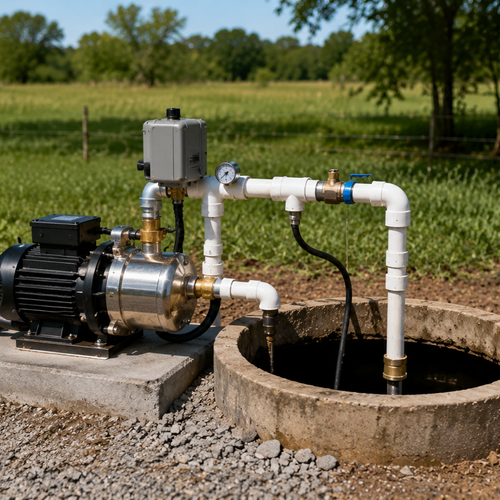
Quick Answer: When a well suddenly stops delivering water, the cause is usually electrical or mechanical: a tripped breaker or lost power to the pump, a failed pressure switch or control box, a waterlogged or failed pressure tank, a burned-out or worn pump, or a dropped water level in the well. Start with the simple checks — breaker and power — then it's a job for a well professional, since pump and well-level issues need proper diagnosis and equipment.
Few home problems feel as urgent as turning on the tap and getting nothing. With a private well, no water almost always traces to one of a handful of points in the system — power, the pressure controls, the tank, the pump, or the well itself. Some you can check safely in a couple of minutes; the rest need a professional. Here's how to think through it without guessing.
Where Wells Lose Water
A well system is a chain: power runs the pump, the pump draws water from the well and pushes it into a pressure tank, a pressure switch controls when the pump runs, and the tank delivers steady pressure to the house. No water means the chain is broken somewhere — no power to the pump, a failed control, a tank that can't hold pressure, a pump that can't move water, or a well whose water level has dropped below the pump. Walking the chain in order is how you find the break.
Start With the Simple Checks
Power and the Breaker
The first thing to check is whether the pump is getting power. A tripped circuit breaker is a common and easy cause — flip it fully off and back on. If it trips again immediately, stop and call a professional, because a breaker that won't reset points to an electrical fault in the pump or wiring that shouldn't be forced. Also, confirm there isn't a wider power outage affecting the pump.
The Pressure Switch and Control Box
The pressure switch tells the pump when to run; if it's failed, the pump won't start even with power. Submersible pumps also rely on a control box. These are common failure points, but testing and replacing them safely involves electricity and is best left to a well technician.
The Mechanical Causes
A Failed or Worn Pump
If power and controls are fine, the pump itself may have failed or worn out. A burned-out motor, a failed submersible pump, or a worn pump that can no longer move water all result in no water at the tap. Pump failure is one of the leading causes of a well suddenly going dry, and replacing or repairing a pump is a professional job.
A Waterlogged or Failed Pressure Tank
If the pressure tank has lost its air charge or its bladder has failed, the system can't store and deliver pressure properly. While this more often causes rapid cycling, a failed tank can contribute to pressure and delivery problems that look like "no water."
A Dropped Water Level
Drought, heavy seasonal demand, or a well issue can lower the water level below the pump, so it can't draw water even though everything else works. In parts of Florida, this can follow dry spells or heavy local usage. Diagnosing a water-level problem requires a professional who can assess the well.
| What you find | Likely cause | What to do |
|---|---|---|
| Breaker tripped | Lost power/overload | Reset once; if it re-trips, call a pro |
| Power on, pump silent | Failed pressure switch/control box | Technician diagnosis |
| Pump runs, no water | Worn/failed pump or dropped water level | Professional pump/well service |
| Rapid cycling then nothing | Waterlogged/failed pressure tank | Recharge or replace the tank |
| Air spitting, then dry | Low water level/lost prime | Well and pump assessment |
What to Do
Do the safe checks first: confirm there's power, and reset the breaker once. If the breaker holds and water returns, you're done; if it trips again or there's still no water, that's the line to call a well professional. Resist the urge to keep cycling a tripping breaker or to run a pump that may be drawing no water, since both can cause damage.
A technician can quickly work down the chain — testing the switch and control box, checking the tank's charge, assessing the pump, and evaluating the well's water level — and tell you whether it's a simple electrical fix or a pump or well issue. Because these systems combine water and electricity, and because a misdiagnosis can mean replacing the wrong part, professional diagnosis is the fastest route back to water.
Frequently Asked Questions
Check the power to the pump. A tripped circuit breaker is a common, easy cause — flip it fully off and back on once. Also, rule out a wider power outage. If resetting the breaker restores water, the problem was electrical and minor. If the breaker trips again immediately, stop and call a professional, because that points to an electrical fault you shouldn't keep forcing.
If the pump has power but won't run, a failed pressure switch or (on submersible pumps) a bad control box is a likely cause — these tell the pump when to start, and if they fail, the pump stays off. A failed pump motor is another possibility. Because testing and replacing these involves electricity, it's safest to have a well technician diagnose and repair it.
Yes. The water level in a well can drop below the pump due to drought, heavy seasonal demand, or a well issue, so the pump can't draw water even though it's running. This can happen after dry spells or periods of high usage. Diagnosing a water-level problem requires a professional to assess the well, since the fix depends on why the level dropped.
If the pump runs but delivers nothing, it may be drawing no water — the well's water level may have dropped below it, it may have lost its prime, or the pump may be worn out and unable to move water. Running a pump in that state can damage it, so it's best to shut it off and have a professional assess the pump and the well level.
No. Reset a tripped breaker once. If it trips again right away, that indicates an electrical fault in the pump or wiring, and repeatedly forcing it on can cause damage or be unsafe. Leave it off and call a well professional to diagnose the cause. A breaker that won't hold is a signal, not just a nuisance.
Walk the Chain, Then Call for the Rest
Sudden no water from a well due to a broken link — power, controls, tank, pump, or water level. Check the breaker and power yourself, and reset the breaker once. If that doesn't bring water back, or the breaker won't hold, it's time for a professional, because the remaining causes involve electricity, the pump, or the well itself. Proper diagnosis gets your water back on faster and protects the pump from further damage. And once your water is restored, it's worth asking the technician what caused the failure — a worn pump, an aging switch, or a well-level issue — so you know whether it's a one-off fix or a sign the system is due for broader attention.
Suddenly out of water from your well? — Get the power, switch, pump, and well level checked and your water restored. Perry-Pump Repair Service LLC serves Lake Butler, Gainesville, Alachua. Call (352) 474-7142.