

Well Pump Repair in Alachua, FL — 3rd-Generation Family Service for Alachua County
FL Water Well Contractor License #5016 · FGWA · NGWA · NCFWA Member · Google 5.0 Rated · Wisetack Financing
Alachua is our home county. Perry-Pump Repair Service is based about 20 minutes south in Gainesville, and we've worked wells across Alachua and the horse farms north of town for years. Out past the city water lines, on the large-lot equestrian properties, the established farm homesteads, and the fast-growing edges of town, nearly every home runs on a private well. When the water stops, there's no utility to call. That's the call we take.
Most Alachua customers find us the same way: "I woke up this morning and have no water." We answer the phone, walk through the diagnostic with you on the call, and schedule the visit. There's no service call fee and no diagnostic fee on routine residential work, and we put the warranty in writing on the invoice, parts, and labor, before you sign anything. Pressure systems and most residential submersibles carry a 5-year parts-and-labor warranty.
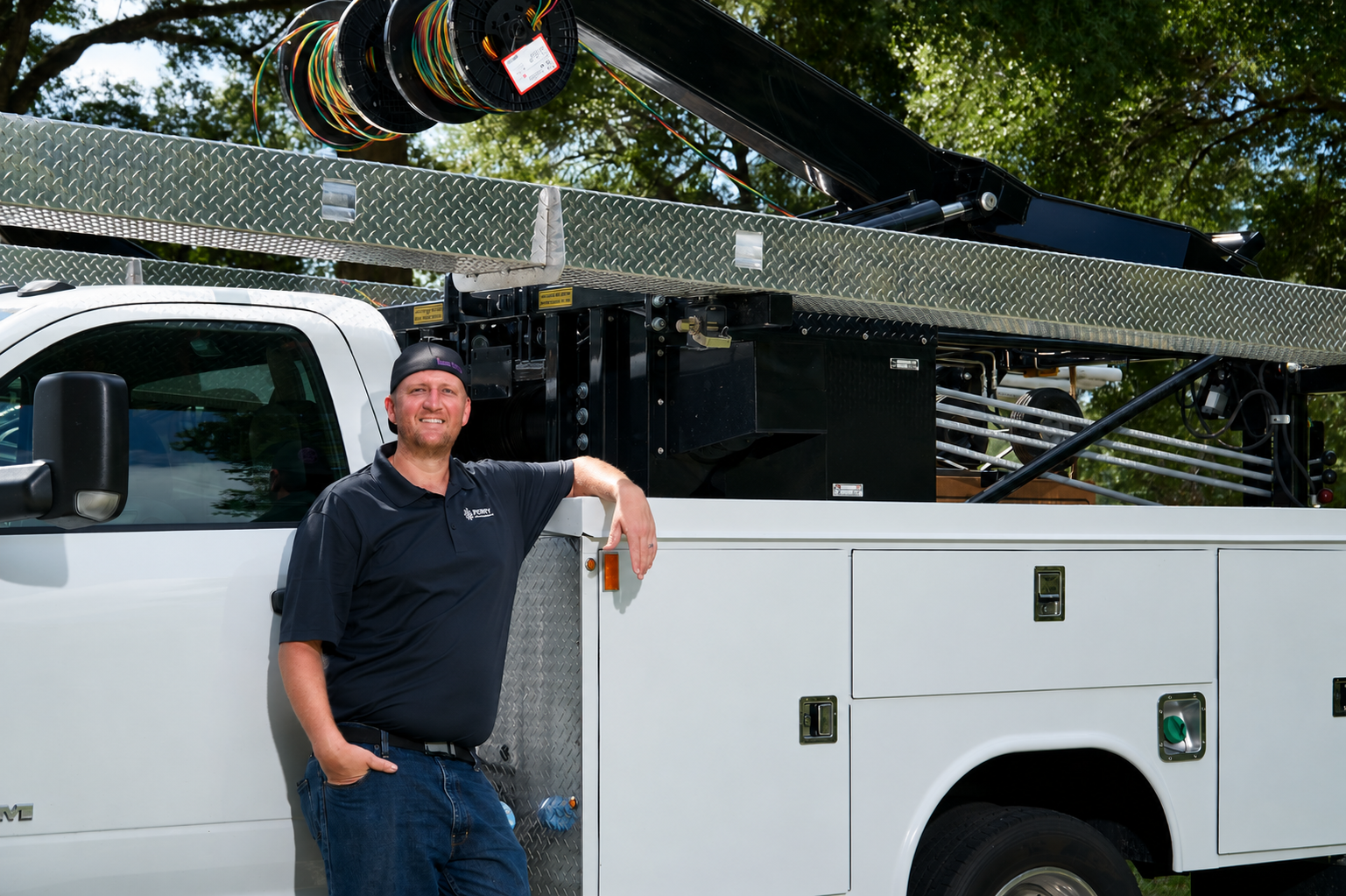
Owner-operator Eric Perry is a 3rd-generation water well specialist; the Perry family has worked North Florida wells for more than 50 years. Whether it's a sudden no-water emergency, a pressure tank short-cycling, an irrigation pump down before you can water the pasture, or a pre-purchase inspection for a buyer closing on an Alachua property, one call to (352) 320-2412 reaches Eric or the office directly.
FL LICENSE #5016
Fully state-licensed Water Well Contractor, public FDEP registry.
FREE SERVICE CALL. $0 DIAGNOSTIC.
On routine residential work. Pricing built on the invoice, not the doorknock.
3RD-GENERATION FAMILY TRADE
50+ years of Perry family well work; Eric is owner-operator.
GOOGLE 5.0 RATED
Verified Google reviews from real North Florida customers.
5-YEAR PARTS + LABOR WARRANTY
Pressure Package + most residential submersibles. Always in writing.
Our Home County
Alachua County is home base, minutes from our Gainesville shop.
Alachua is horse country, and horse country runs on private wells
Alachua sits in the rolling pastureland north of Gainesville, and it wears two hats at once. On one side, it's a fast-growing biotech town, home to the Sid Martin Biotech Incubator and the Santa Fe College Perry Center; on the other, it's horse country, dotted with equestrian farms and large-lot pastures: Mill Creek Farm, the retirement home for horses, is right here. Both of those worlds depend on water, and out past the city lines, that water comes from a private well.
When a pump or pressure system fails on a horse property, it isn't just an inconvenience; livestock need water, pastures need irrigation, and the repair can't wait until next week. That's the work Perry-Pump is built for: diagnosing and fixing the well systems that Alachua homes and farms depend on, with a licensed 3rd-generation specialist who has seen North Florida water at its worst.
-
Alachua sits in a sensitive aquifer-recharge zone, so water quality and wellhead integrity both matter — most wellhead issues we see trace back to the original installation rather than the ground.
Symptoms and failures we diagnose across Alachua
If something about your water isn't right, it's probably on this list. These are the symptoms and component failures we see most often on Alachua homes and farms. If any of them sound like your situation, the diagnosis on the phone is usually close enough to put a plan in motion before we arrive.
No Water at All
- You turned the tap on this morning, and nothing happened
- Faucets sputter for a few seconds, then run dry
- Sudden complete water loss with no warning
- A tripped breaker that won't reset
- The pump is running audibly, but no water reaches the house or barn
- Power is on, but the pump won't start at all
- Water at one fixture, none at another
- A lightning strike took out the control box
Pressure Problems
- The pump short-cycles - clicking on and off every 30 to 60 seconds
- The pump runs constantly and never shuts off
- Low water pressure throughout the house
- Pressure drops sharply when the irrigation and the house run together
- Pressure surges high, then falls low
- Water hammer or banging when a tap shuts off
- The pressure tank feels heavy or waterlogged when tapped
Smell, Staining & Water Quality
- A rotten-egg or sulfur smell from the taps (hydrogen sulfide)
- Orange-brown iron staining on sinks, tubs, fixtures, and laundry
- Chalky scale and hard-water buildup on fixtures and appliances
- A yellow-to-brown tint from tannins near the hammock or creeks
- Gritty sediment or sand in the water
- A metallic or off taste you want tested
Pump, Tank & Control Failures
- A failed or waterlogged pressure tank
- A worn or stuck pressure switch
- A burned-out control box or start capacitor
- Insects fouling the pressure-switch contacts
- A submersible, jet, or irrigation pump at the end of its life
- A corroded or unsealed wellhead after a storm or flood
- An undersized system struggling to keep up with pasture irrigation
Every well and pump service we offer in Alachua
Well pump repair is what most people search for, but it's one of many things we do for Alachua homes and farms. Whatever your water problem is, it's on this list — click any service to learn more.
Not sure which one fits your problem? Call (352) 320-2412 and describe what's happening. Most of the time, we can name the likely culprit on the phone before we ever load the truck.
North Florida water conditions that affect Alachua wells

Every market has its own water personality, and Alachua's is shaped by horse-country demand and the karst limestone around San Felasco. Here's what we actually see in the field out here — and why it matters for your pump and pressure system.
-
Closer to San Felasco Hammock, Mill Creek Preserve, and the area's creeks, shallower wells can pull a yellow-to-brown tint from tannins, organic material leaching in from surface water, and decaying vegetation. It's a cosmetic and taste issue more than a safety one, but it points to surface influence that's worth understanding before you treat it.
-
Low-lying ground near the creeks and preserves in North Florida can flood, and a flooded or submerged wellhead is both a contamination risk and an electrical hazard. Raising and re-sealing a wellhead is one of the more common calls we get in this part of North Florida, whatever caused the flooding.
-
It sounds minor until you are the one without water. During the rainy season, insects work their way into the pressure switch. Eric has pulled fire ants out from between the contacts, where they had wedged in and held them apart so the pump could never start. Insect bodies conduct electricity poorly, so once one lodges between the contacts, the circuit stays open and the system will not fire up. It's the first place we check on a sudden "everything was fine, then nothing" failure. We seal the electrical conduit with pest-blocking foam wherever we can, though nothing is ever completely foolproof.
-
If your Alachua water smells like rotten eggs, that's hydrogen sulfide gas, one of the single most common well-water complaints in North Florida, confirmed by the Florida Department of Health. It's unpleasant, and worse for your equipment: sulfide accelerates corrosion on pump components, pressure switch contacts, and fittings. We diagnose where it's coming from and design treatment around your actual water, not a cookie-cutter system.
-
Orange-brown stains on sinks, tubs, and laundry are dissolved iron; the chalky scale is calcium hardness, picked up straight from the limestone. Both are widespread around Alachua, and they're especially hard on barns and outbuildings where iron stains wash racks, troughs, and concrete. Hard, iron-heavy water also shortens the life of everything it runs through, which is why so many properties pair a pump repair with a treatment conversation.
-
This is the Alachua difference. An equestrian property running pasture irrigation, wash racks, and livestock troughs puts hours on a pump that a typical house never would, and that constant demand punishes an undersized or worn system. We size irrigation and well systems to the real draw, not a guess, so the pump that waters your pasture in July isn't the one that fails in August.
-
Alachua sits on the edge of San Felasco's fractured-limestone karst, which is what makes the Floridan Aquifer so productive here, and also why sinkholes, shifting water tables, and a sensitive recharge zone are part of life. Casing problems almost always trace back to the original installation; karst movement can accelerate a failure on a marginal casing, but it isn't the root cause. A compromised seal lets surface water straight into the aquifer, so when we're on site, we look at the wellhead and casing, not just the pump.
The technical detail that sets our Alachua well work apart
Anyone can swap a part. Diagnosing a well system correctly the first time — and sizing the fix to your specific well, water, and demand — is what separates a lasting repair from a repeat call. Here's some of the thinking that goes into an Alachua job.
We diagnose top-down, not bottom-up
When water stops, the most expensive possible cause is the pump and drop pipe at the bottom of the well, and it's rarely the actual problem. We start at the surface: power, breaker, pressure switch, control box, capacitor, then the tank, and only then the pump itself. Around Alachua, where sulfide corrosion and insects foul switch contacts, the answer is often a part you can hold in your hand. Diagnosing in that order means you don't pay to pull a healthy pump.
Sizing a pump to the well and the demand
Horsepower is the lazy way to spec a pump, and it's especially wrong on a horse property. We size to the well's depth, the static and pumping water levels, the recovery rate, and the real demand, house, irrigation, and livestock together. An oversized pump in a karst well can over-draw and pull air or sediment; an undersized one runs hot and dies young under pasture-irrigation load. Getting the curve right is why a correctly specified system lasts.
Pressure tank drawdown and air charge
Short-cycling is the silent pump-killer. A pressure tank works on an air charge above a bladder; when that charge is wrong, or the bladder fails, the pump cycles every few seconds and burns out the motor. We set the air precharge to match the switch's cut-in pressure and verify drawdown, so the pump starts and stops the right number of times, not dozens of times an hour.
Water treatment in the right sequence
Iron, sulfur, hardness, and tannins each need a different fix, and the order matters; treat them out of sequence, and you'll foul the next stage. That's why we test your water first, free with any treatment quote, and design the sequence around your actual chemistry instead of dropping in a generic softener that can't touch sulfide. Alachua water varies property to property; the system should too.
Electrical, grounding, and lightning protection
We look at the wiring, grounding, and box condition, and we seal conduit and switch openings with pest-blocking foam to keep insects out of the contacts. Lightning can damage a control box during a summer storm, so we also check the electrical side after a nearby strike
Constant-pressure systems, and when they're worth it
For homes and irrigation that need steady pressure no matter how many fixtures or zones are open, a variable-speed constant-pressure drive, such as a Franklin SubDrive or a Grundfos drive, ramps the motor to hold pressure flat. It's a real upgrade on a property where the house and the pasture compete for water. It's not the answer for every well, though: a Cycle Stop Valve is a simpler fix for small fluctuations on the right system. We recommend, based on your equipment and demand, not a one-size-fits-all upsell.
Wellhead seal and casing integrity
A compromised wellhead seal is a direct line for surface contamination into your water and the aquifer, so we check the sanitary cap-and-seal and casing on every call — most seal problems trace back to the original installation.
Our Reviews
The Alachua calls we get most
These are representative of the work we do across Alachua and the surrounding farms, the patterns repeat, even though every well is a little different.
1
"No water this morning" on a horse property
A well on a large-lot equestrian property loses water overnight, and the barn needs it as much as the house. Nine times out of ten, on a sudden total loss, we start at the pressure switch and control box before anyone touches the pump down the well: it's the cheapest thing to rule out and, around here, often the actual culprit thanks to sulfide-corroded contacts or an insect in the switch. We diagnose top-down, so you're not paying to pull a healthy pump.
2
An irrigation pump that can't keep up with the pasture
By midsummer, the pasture irrigation and the house are fighting over the same water, the pressure sags, and the homeowner assumes the pump is dying. Sometimes it is, but just as often it's an undersized or worn system, a waterlogged tank, or the wrong pressure setup for a property that demands this much. We size the fix to the real draw instead of just swapping like-for-like.
3
Pre-purchase well inspection before closing
A buyer is closing on an Alachua property with a private well and needs to know what they're inheriting. We inspect the pump, pressure system, structural wellhead, and casing, and run an in-house field-kit water-quality check for iron, hardness, pH, nitrate, and sulfide. (Bacteriological lab testing is arranged separately by the buyer: we don't handle coliform/E. coli sampling.) Pre-purchase inspections are a flat $200, which includes the written report for closing.
Why homeowners choose Perry-Pump
Fully licensed and insured. Florida Water Well Contractor License #5016.
Experienced well repair specialists. Third generation, 50+ years working North Florida wells.
Quality workmanship and straightforward customer service.
Free service call and $0 diagnostic on routine residential work.
5-year parts and labor warranty on the Pressure Package and most residential submersibles, in writing on the invoice.
Why Alachua homeowners and farms call Perry-Pump
A licensed, 3rd-generation specialist, not a handyman with a truck
Perry-Pump holds a Florida Water Well Contractor License #5016, listed in the FDEP public registry, and belongs to the Florida, National, and North Central Florida groundwater associations. Owner-operator Eric Perry grew up on North Florida well sites and has run the business since college. When you call, you reach someone who has seen Alachua County water at its worst.
The warranty is in writing: parts and labor
Every install gets the warranty written on the invoice before you sign. Pressure systems and most residential submersibles carry a 5-year parts-and-labor warranty; jet pumps and commercial work carry one year. If a job warrants a shorter term because of the system style, we tell you that upfront and put it in writing, too.
Honest diagnosis, fair pricing
No service call fee and no diagnostic fee on routine residential work. We diagnose top-down, so you don't pay to pull a healthy pump for a problem that lives at the pressure switch. Pricing is built on the invoice, not guessed at the doorknock, and Wisetack financing is available if a full replacement isn't in the budget this month.
Honest advice before you spend money on an Alachua well
If your Alachua water just stopped and the pump is silent, don't assume the worst. The most expensive fix — pulling and replacing a submersible and its drop pipe — is also one of the least common reasons for a sudden failure. Far more often, it's the pressure switch, the control box, a capacitor, or a waterlogged tank, and those are a fraction of the cost. A shop that quotes you a full pump replacement over the phone, sight unseen, is guessing in the direction of the biggest invoice.
And if you run a horse property, the smartest money is often spent before anything breaks — on sizing the system to your real summer demand rather than nursing an undersized pump through another irrigation season. If your real complaint is smell, stain, or taste rather than pressure, the answer probably isn't a new pump at all; it's treatment matched to your water. We include a free water test with every treatment quote and design around what's actually in your well, because the sulfur, iron, and hardness profile varies from one Alachua property to the next. There's no one-size-fits-all system, and we won't sell you one.
What happens when you call Perry-Pump
There's no call center and no runaround. Here's the whole process, start to finish.
You call (352) 320-2412
You reach Eric or the office directly during business hours — not a call center. We listen to the symptoms.
We confirm the cause and quote it
We diagnose top-down on site, explain the real problem plainly, and quote the repair before any work starts. Free service call, $0 diagnostic on routine residential work.
We diagnose on the phone
We walk through what's happening — pressure, sound, breakers, smell — and usually narrow the likely cause before we load the truck.
We schedule the visit
We set a time and arrive with the truck stocked to fix common Alachua-area failures on the first trip.
We repair it and warranty it in writing
We complete the repair and write the parts-and-labor warranty on the invoice before you sign.
Serving Alachua from our Gainesville shop
Perry-Pump Repair Service is based at 747 SW 2nd Ave, Gainesville, FL 32601 — about 20 minutes south of Alachua in the same county. Alachua and the horse farms north of town are one of our core home markets.
Business hours
Monday-Friday, 8:00 AM - 5:00 PM. Weekends, late evenings, and holidays are handled as overflow and emergency only — not scheduled service.
After-hours and emergencies
No-water emergencies happen. If you call after hours, here's the honest version of what to expect: we will return the call at our earliest availability. Eric answers when he's awake and not with family, and in most cases, that means getting you on the schedule for the next available day rather than a middle-of-the-night dispatch. We'd rather tell you that plainly than promise something we can't deliver every time.
Alachua well pump FAQs
-
Yes, that's a big part of what we do here. We service the wells, irrigation pumps, and pressure systems on watermelon, row-crop, and large-lot properties, and we size systems to real seasonal demand rather than a like-for-like guess. Call (352) 320-2412 and tell us what your property runs.
-
That smell is hydrogen sulfide gas, the most common well water complaint in North Florida. It's usually more of a nuisance and a corrosion problem than a health emergency, but it's worth treating. We test your water for free with any treatment quote and design a system around your actual chemistry rather than installing a generic unit.
-
Probably not. On a sudden total loss of water, the cause is more often the pressure switch, control box, capacitor, or a waterlogged tank than the pump itself, and those are far cheaper. We diagnose top-down, so you never pay to pull a healthy pump. Be cautious of anyone quoting a full replacement over the phone without seeing the system.
-
No service call fee and no diagnostic fee on routine residential work. We build the price on the invoice after we've seen the actual problem, not at the doorknock.
-
Yes. Our pre-purchase inspection covers the pump, pressure system, structural wellhead and casing, and an in-house field-kit water-quality check for iron, hardness, pH, nitrate, and sulfide. Bacteriological (coliform/E. coli) lab testing is arranged separately by the buyer. Pre-purchase inspections are a flat $200, which includes the written report for closing.
-
Parts and labor, in writing on every invoice. Pressure systems and most residential submersibles carry a 5-year parts-and-labor warranty; jet pumps and commercial pumps carry one year. If a job warrants a shorter term, we explain why upfront and put it in writing.
No water in Alachua? Call Perry-Pump.
Whether it's a no-water emergency, a short-cycling pressure tank, an irrigation pump that can't keep up, a sulfur or iron problem, or a pre-purchase inspection before closing, one call reaches Eric or the office directly.