
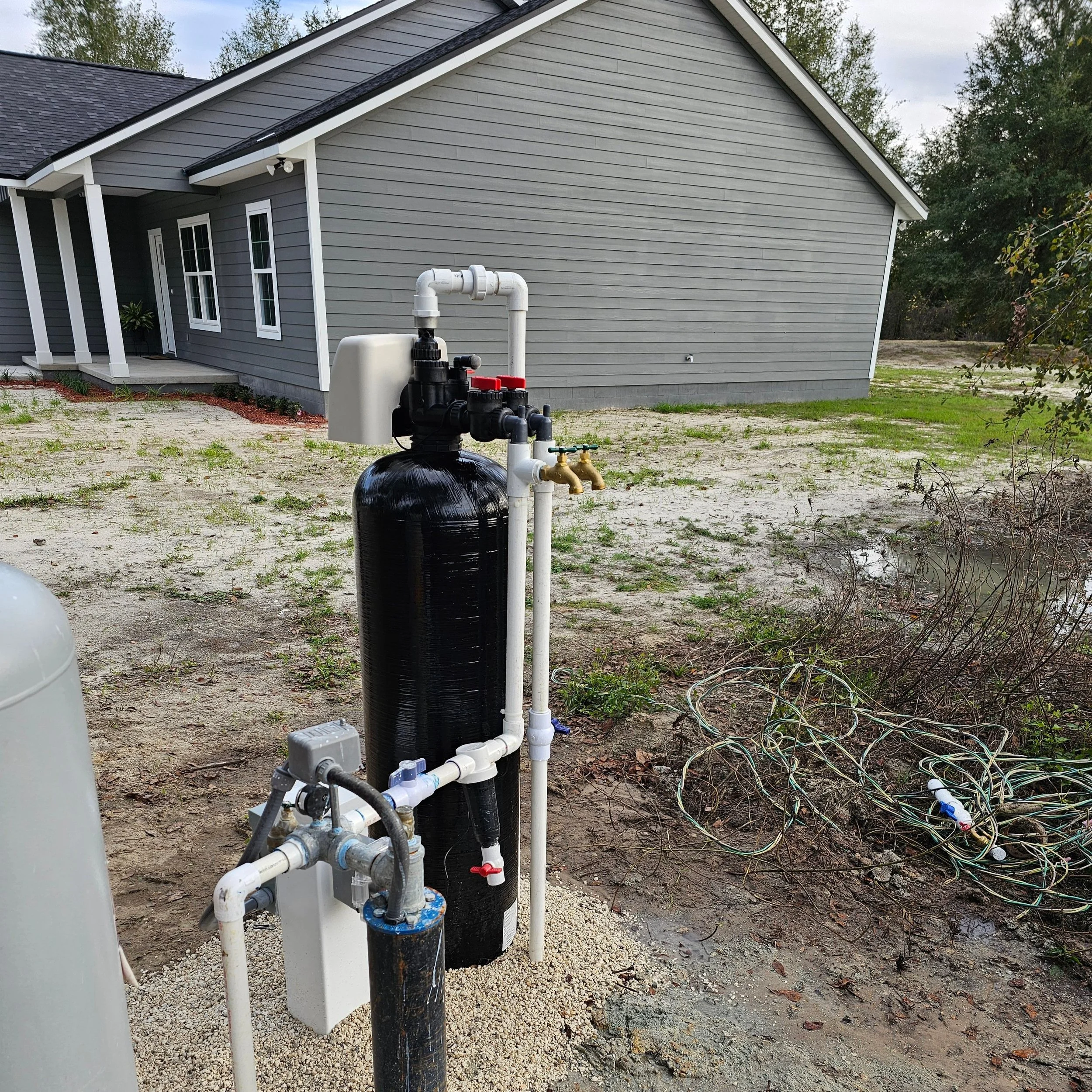
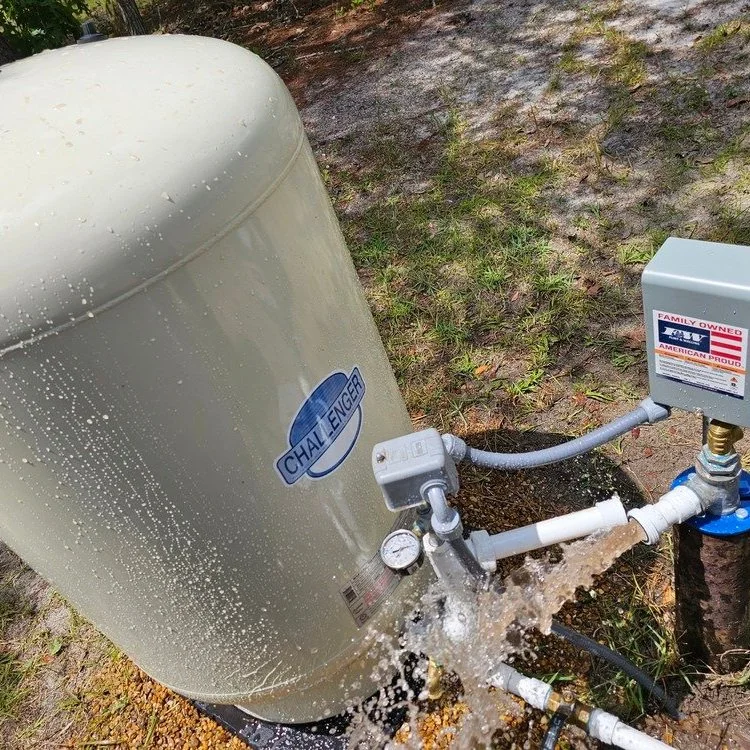

Pressure Tank Replacement in Gainesville and Across North Florida
FL Water Well Contractor License #5016 · FGWA · NGWA · NCFWA Member · Google 5.0 Rated · Wisetack Financing


If your pump will not shut off, your pressure has been creeping down, or your system short-cycles every 30 to 60 seconds, the most likely cause is not the pump. It is a waterlogged pressure tank. About 80% of "low pressure" and "pump runs constantly" calls trace back to a failed tank bladder, and the fix costs a fraction of a full pump replacement. Perry-Pump Repair Service is a family-owned, state-licensed well pump shop based in Gainesville, serving 17 communities across Alachua, Union, Bradford, Columbia, Suwannee, Putnam, Clay, Baker, and Gilchrist counties. Eric Perry is a 3rd-generation water well specialist; the Perry family has been working North Florida wells for more than 50 years.
Tank diagnosis happens on the phone in most cases: three or four questions tell us whether it is tank, switch, or pump before we drive out. If it is the tank, we quote it straight, install a bladder tank (Amtrol Well-X-Trol, Wellmate, or Flexcon) the same week, and write the 5-year parts and labor Pressure Package warranty on the invoice before you sign. No service call fee, no diagnostic charge on routine residential work.
Call (352) 320-2412 Mon-Fri 8 AM - 5 PM. After hours, leave a message, and we'll return the call at our earliest availability.
FREE SERVICE CALL
$0 service-call fee + $0 diagnostic on routine residential work.
Sized to Your System
Tank size matched to your pump's output and demand.
5-Year Warranty
Pressure Package - parts AND labor on tank + switch.
17 North Florida Cities
Gainesville HQ to Lake Butler, Starke, Newberry, Lake City, and beyond.
Bladder Tanks Only
Amtrol Well-X-Trol, Wellmate, Flexcon - no captive-air tanks.
FDEP-Licensed #5016
Fully state-licensed Water Well Contractor - public registry.
Three Tank Failures That Drive Most Calls - and Why the Pump Usually Isn't the Problem
Across 15+ years of personal experience and three Perry-family generations of wells, almost every "pump will not shut off" or "low pressure" call we get traces back to one of three tank failures. The customer thinks the pump is dying; the math says the tank is.
Waterlogged tank - bladder failure. About 80% of calls.
Inside every modern tank is a rubber or butyl bladder that separates a pre-charged air cushion from the water. When the bladder splits or loses elasticity, the tank fills with water, and the pump loses the air cushion that holds steady pressure. What you hear: pump kicks on every 30 to 60 seconds (short-cycling), runs constantly, or pressure feels weak. Tap the tank: waterlogged sounds dull all the way up instead of ringing hollow on the top third. The fix is a tank swap, not a pump pull.
Pre-charge loss through the Schrader valve.
Even with an intact bladder, the air pre-charge can leak out over the years through a worn Schrader valve (same style as a tire stem) or a corroded port. Symptoms look identical to bladder failure: short-cycling, low pressure, but the tank itself is fine. On a small number of calls, we re-pressurize an intact tank, and the system holds for years. We test before we quote, so you do not pay for a tank you do not need.
Tank shell corrosion - the steel rusts through.
The steel shell lives in a damp wellhouse or garage for a decade-plus and eventually rusts. The failure point is usually the bottom seam where condensation pools. You will see external staining or an active drip, especially in older galvanized tanks. Iron- and sulfide-heavy North Florida water accelerates rust from the inside, too. Replacement is straightforward; we clean the area and check the switch and conduit before we leave.

Symptoms and Failures We See Across the Service Area
If any of these sound like what you are dealing with, call us. Most tank diagnoses are made over the phone before we drive out.
-
• Pump short-cycles - kicks on every 30 to 60 seconds
• Pump runs constantly and never reaches cut-out pressure
• Pressure drops sharply when a second fixture opens
• Pressure surges high then drops low within seconds
• Water hammer noise on shut-off
• Faucet pressure feels weak across the whole house
• Tank feels heavy when tapped on the top third (waterlogged)
-
• Air hisses out of the Schrader valve with the system depressurized
• Pre-charge reads below cut-in PSI when measured with pump off and tank drained
• Tank holds pressure for hours, then drops without water use
• Bladder appears intact, but the cycle time is shorter than the design
• Older Schrader stem corroded green at the cap

-
• External rust staining at the bottom seam
• Active drip or water pooling under the tank
• Galvanized tank older than 12 to 15 years showing pitting
• Tank mounting bolts loosened from years of cycling
• Tank shifted out of plumb - support stand failure
• Insulation jacket on a wellhouse tank torn or removed
• Tank fitting threads corroded - leak at the tee
-
• Switch points pitted from the tank cycling too often
• Tank short-cycled the switch into early failure
• Switch differential set wrong - tank works harder than designed
• Cut-in and cut-out PSI drifting over months
• Switch chatters as tank pre-charge decays
What Actually Happens When You Call About a Pressure Tank
From the phone call to the final invoice, here's the path most tank customers walk. We try to do as much of the diagnostic work as we can before we ever drive out, so the visit is short, and the right tank gets installed.
Phone diagnostic - tank, switch, or pump.
Call (352) 320-2412 Mon-Fri 8 AM - 5 PM. Three or four questions (how often does the pump cycle? how does the tank sound when tapped? when did pressure start dropping?) narrow the cause to tank, switch, or pump. After hours, leave a message; we return at our earliest availability.
Schedule + en-route notification.
Most routine tank replacements land within the same week, or the same day if we are already in your area. No-water emergencies move to the top. We will text or call en route.
On-site tap test + Schrader check - no service-call fee.
We arrive in a marked Perry-Pump truck and start with the tap test (healthy tanks ring hollow on the top third; waterlogged sounds dull). Then we check the Schrader pre-charge with the pump off and tank drained. Routine residential diagnostics are no charge.
Right-size the replacement on the spot.
We size the tank to your pump's output and your system's demand, so the pump runs about a minute per cycle and does not short-cycle. Installed tank replacements generally run from about $1,000 to about $3,500 depending on the size your system needs. We run the math, not a sales script.
Install the same visit when stocked - tank + switch as a system.
Common residential tanks are truck-stocked and installed on the same visit for most jobs. Larger and specialty tanks are usually ordered and installed within the same week.
Pre-charge to spec, leak-check, and written warranty.
Pre-charge set to cut-in PSI minus 2 (e.g., 38 PSI for a 40/60 system). Every joint is leak-checked at full pressure. Pressure Package: 5-year parts and labor on tank + switch, written on the invoice before you sign. Wisetack terms are shown before signing on larger combos.
Follow-up
Call us first if anything is off. Pressure not right, unusual cycling, or warranty question after the visit, call us first. We answer warranty calls the same day on average; a small issue caught early is cheaper than a burnt motor later.
Pressure Tank Replacement Pricing - What Things Cost
Every system is different. Tank size, brand, mounting, and whether the switch is paired all move the number. Ranges below are accurate as of writing; we will quote the current number on the call. Routine residential diagnostic is free.
Diagnostic
$0 service call fee + $0 diagnostic charge on routine residential calls. The tap test and Schrader pre-charge check are part of the visit, not a separate line item.
Pressure tank replacement (the core service)
Residential bladder tank (Amtrol Well-X-Trol, Wellmate, Flexcon): from about $1,000 installed
Whole-house or irrigation-booster tank: up to about $3,500 installed
Exact size is set by your pump's output and system demand; we confirm it on site
Tank-only swap when the pad and fittings are in good shape: lower end of the range
Tank + new tank tee, drain valve, union fittings: mid to upper end
Pressure switch and pre-charge service (often paired)
Pressure switch replacement (FSG, Square D, Franklin) - quoted with the tank: a few-hundred-dollar range parts + labor
Pre-charge service on an intact tank (Schrader re-pressurize, leak check): sub-$200 typical
Schrader valve replacement on a tank we don't replace: sub-$200
Switch differential adjustment + recalibration: included with most tank installs
Related work that sometimes pairs with a tank job
Tank stand or wall support rebuild on older installs: quoted per situation
Wellhouse insulation jacket replacement (freeze protection): quoted per situation
Control box capacitor replacement if the lightning storm hits both: under $500 typical
Wellhead cap-and-seal sanitary repair (flood-zone follow-on work): $1,600-$2,400
Wisetack financing on larger tank + switch + treatment combo jobs (minutes to apply, terms before you sign). Military and first-responder discounts case-by-case by scope; ask when you call. Prices are subject to change because our suppliers have been very volatile with pricing lately.

Why homeowners choose Perry-Pump
Fully licensed and insured. Florida Water Well Contractor License #5016.
Experienced well repair specialists. Third generation, 50+ years working North Florida wells.
Quality workmanship and straightforward customer service.
Free service call and $0 diagnostic on routine residential work.
5-year parts and labor warranty on the Pressure Package and most residential submersibles, in writing on the invoice.
Our Reviews
Seven North Florida Conditions That Shape Tank Sizing, Lifespan, and Replacement
Working with pressure tanks in North Central Florida means working around seven specific local conditions that do not apply the same way in other regions. These shape what tank we install, how we size it, and how often we see them fail.
1
Floridan Aquifer wells dominate at 100 to 400 ft
Almost every residential well in our footprint draws from the Floridan Aquifer at 100 to 400 ft. Submersible pumps at those depths typically deliver 8 to 12 gallons per minute, which sets the drawdown range a tank has to absorb. We size the tank to the well's output and the home's demand rather than to a default model.
2
Hurricane and tropical storm season (June to November) drives post-storm failures
Power interruptions and surges can stress a pressure system, and if your pump or tank behaves differently after one, we can check it. Most tank failures, though, come from normal bladder wear over the years, not the weather, so we look at wear and age first regardless of what prompted the call.
3
Summer lightning peaks, and tank symptoms often follow electrical events
Nearby lightning strikes that surge the power line can take out switch solenoids and control box capacitors, same as age and wear eventually do. Customers often notice weird cycling and assume the tank failed; sometimes it did, sometimes the switch did, sometimes both. We check the whole pressure system on every call, whatever the trigger.
4
Karst geology and casing shifts change well drawdown profiles slowly
North Florida sits on karst limestone. Over the years, subsidence and water-table shifts change how much a well actually draws down between cut-in and cut-out. A tank correctly sized 15 years ago can be wrong today, and the first symptom is shorter cycle times. Re-running the math is part of every replacement quote.
5
Iron, sulfide, and hardness corrode tank shells from the inside
Most North Florida wells produce water with measurable iron (reddish staining), sulfide (rotten-egg smell), and hardness (white scaling). The chemistry attacks the interior coating of older galvanized tanks, especially, and pits the steel from the inside before the bladder bursts. Replacement of a corroded shell is the right answer; treatment recommendations come with the quote when we see the signs.
6
Fire ants in the pressure switch are sometimes misdiagnosed as a tank issue
Ants in the switch contacts can produce cycling symptoms that look a lot like tank failure: the pump fails to start, then starts erratically. A lineman told Eric years ago that insects are attracted to the frequency in pump wiring; what we pull from switches in the rainy season confirms it. We check both the switch and the tank before quoting, and install pest-blocking foam in the conduit on every visit.
7
Flood-zone properties stress the whole pressure system
Suwannee, Santa Fe, and St. Marys river basins, plus lower-elevation rural lots, sit in FEMA flood zones. Surface flooding overtops wellheads, contaminates source water, and stresses tanks during the recovery cycling. Tank replacement is sometimes part of the post-flood scope, along with wellhead extension and cap-and-seal.
Seven Technical Topics Where Tank Choice Actually Matters
Seven places where the easy answer isn't the right one. One-line take? Call us. The actual reasoning is here.
-
Amtrol Well-X-Trol is the residential workhorse: heavy-gauge steel, butyl bladder, 5-year manufacturer warranty, every common size. Wellmate offers fiberglass-wound composite shells that resist external corrosion in humid wellhouses. Flexcon has strong build quality across the size range, and we reach for its larger tanks when a whole-house or irrigation system needs more run-time cushion. We pick a brand by application and size to your pump's output, not a default model.
-
Vertical mounting with the inlet at the bottom is standard, letting sediment settle below the tee instead of being drawn into the house. Horizontal works in tight wellhouse spaces but adds drain valve and support considerations. Our larger, higher-drawdown tanks need a proper base, not just floor friction; full water weight can exceed 700 lbs. In freeze-vulnerable wellhouses, we wrap insulation and verify any heat tape.
-
Switch and tank wear together. A tank with weak pre-charge cycles the pump more often, which pits switch contacts faster; pitted contacts hold the pump open longer, which works the tank harder. We quote them together whenever the switch shows wear at the time of the tank job, since one trip is cheaper than two, and the 5-year Pressure Package warranty covers both.
-
Waterlogged tank and worn pump produce identical symptoms: low pressure, pump running constantly. The diagnostic takes 30 seconds: tap the tank with a knuckle. Healthy rings hollow on the top third (air cushion) and dull on the bottom (water); waterlogged sounds dull all the way up. We also drain the tank with the pump off and check the Schrader pre-charge. Any reading well below cut-in PSI confirms it.
-
A tank's job is not to store water. It is to keep the pump from cycling too often. Drawdown (gallons released between cut-in and cut-out) times target cycle time (1-minute minimum for submersibles) sets the minimum size. The right tank yields enough drawdown that the pump runs about a minute per cycle at your system's flow rate. Larger pumps and irrigation boosters need more drawdown, so they take a larger tank to avoid mid-cycle pressure swings.
-
Bladder pre-charge should be set to cut-in PSI minus 2, so a 40/60 PSI system runs a 38 PSI pre-charge. The reading has to be taken with the pump off, and the tank drained; otherwise, water pressure masks the air reading. Set too high, the tank yields less drawdown and the pump short-cycles. Set too low, the bladder bottoms out and fails years early. We pre-charge to spec on every install.
-
Older systems used galvanized captive-air tanks with no internal bladder; air and water shared one chamber. Air dissolves into water over time, so captive-air tanks waterlog faster, and they need annual draining and re-charging. We install bladder tanks exclusively. The bladder physically separates air from water, the pre-charge holds for years instead of months, and the tank fails predictably.
Frequently Asked Questions
-
Installed tank replacements generally run from about $1,000 to about $3,500 depending on the size your system needs. Pressure switch replacement, when paired with the tank, lands in the few-hundred-dollar range. Prices are subject to change because our suppliers have been very volatile with pricing lately.
-
The four big symptoms: pump short-cycles every 30 to 60 seconds, pump runs constantly and never shuts off, low pressure throughout the house, or the tank feels heavy when tapped on the top third. About 80% of "my pump will not shut off" calls turn out to be a waterlogged tank, not a pump issue.
-
7 to 15 years is typical, depending on water chemistry, pre-charge maintenance, and tank brand. Iron and sulfide-heavy water cuts the high end of the range; well-maintained pre-charge extends it. Modern bladder tanks outlast older galvanized captive-air designs by a wide margin.
-
Amtrol Well-X-Trol, Wellmate, and Flexcon, bladder tanks only, no captive-air designs. We pick the brand by the application: Well-X-Trol for standard residential systems, Wellmate when exterior corrosion resistance matters, Flexcon for higher-drawdown irrigation and whole-house setups. Every tank is sized to your pump's output and your system's demand, not to a default model.
-
Bladder failure means replacement. The bladder is not field-serviceable. Pre-charge loss without bladder failure can sometimes be fixed by re-pressurizing the Schrader valve, and we offer that as a sub-$200 service on intact tanks. The tap test plus a Schrader reading tells us which it is before we quote.
-
It is sized by your pump's output and your system's demand, aiming for about a minute of pump run time per cycle. We run that math on every quote so you do not end up with an undersized tank that short-cycles the pump.
-
5 years parts and labor on the tank and switch, written on the invoice before you sign. Bladder failure, pre-charge loss from a defective Schrader, switch failure: all covered. If anything goes wrong inside the warranty term, the labor does not come out of your pocket.
-
No on routine residential work: $0 service call, $0 diagnostic. The tap test, Schrader check, and tank sizing math are part of the visit, not a separate line item. The exception is a paid pump-pull diagnostic on specific commercial situations; we tell you that before we start.
-
17 communities: Gainesville (HQ), Lake Butler, Lake City, Alachua, Newberry, High Springs, Starke, Keystone Heights, Branford, Trenton, Waldo, Hawthorne, Glen Saint Mary, Bell, Brooker, Raiford, and Melrose. Not sure if you are in our footprint? Call (352) 320-2412, and we will tell you straight.
-
We do not push financing on a small tank swap; for the bigger combo jobs (larger tank, new switch, related work), it is a real option.
Ready to Get Your Pressure Back? Call Perry-Pump Today.
Whether your pump will not shut off, your pressure has been dropping for weeks, or you can hear the pump short-cycling every 30 seconds, call (352) 320-2412, and we will get you on the schedule. Routine residential work has no service call fee, no diagnostic charge, and the 5-year Pressure Package warranty goes on the invoice before you sign.