
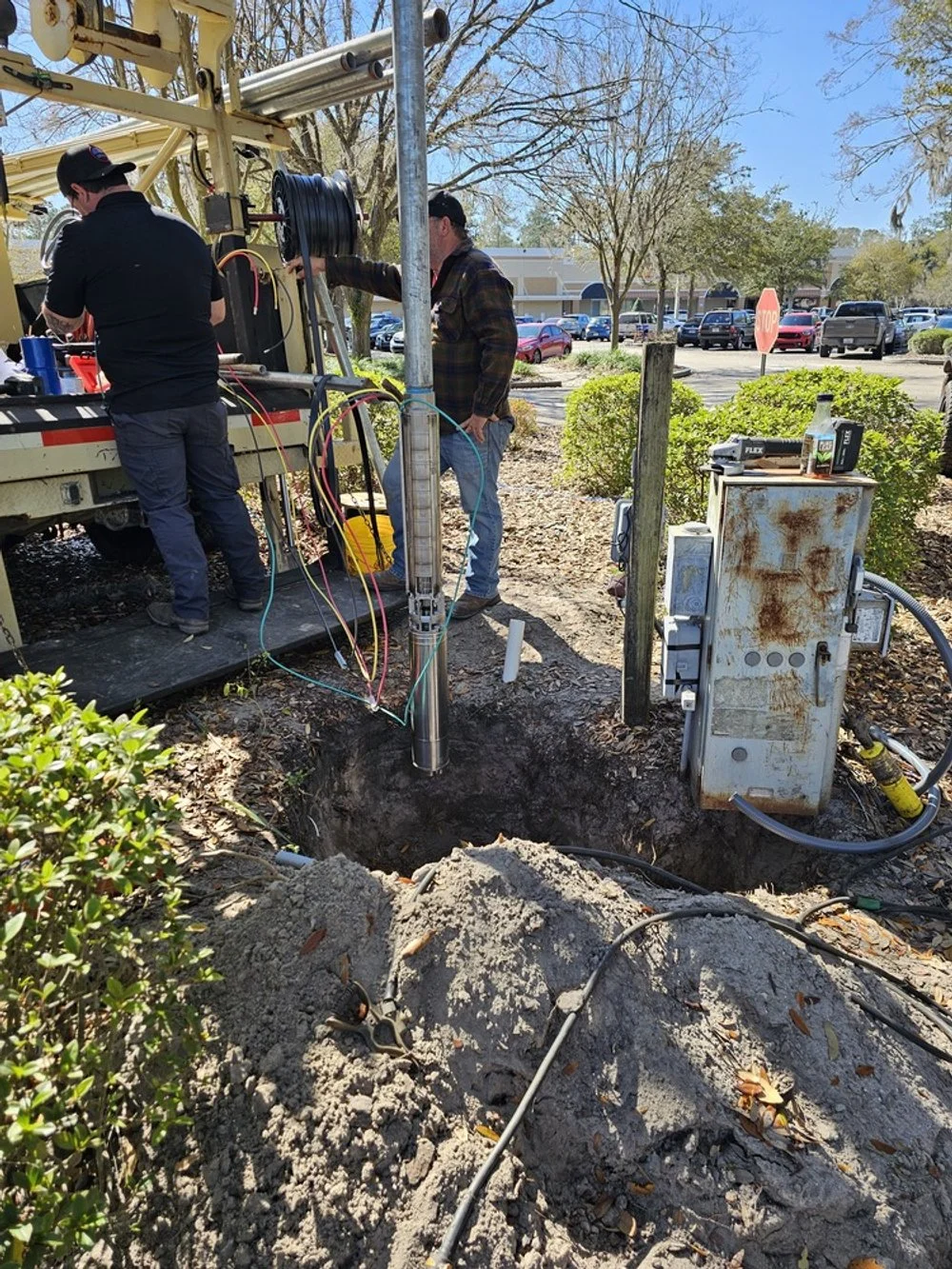

Well Pump Repair in Gainesville and Across North Florida
FL Water Well Contractor License #5016 · FGWA · NGWA · NCFWA Member · Google 5.0 Rated · Wisetack Financing

If your water just stopped, your pressure is wrong, or your pump is doing something it should not, you are on the right page. Perry-Pump Repair Service is a family-owned, state-licensed well pump shop based in Gainesville, serving 17 communities across Alachua, Union, Bradford, Columbia, Suwannee, Putnam, Clay, Baker, and Gilchrist counties. Eric Perry is a 3rd-generation water well specialist; the Perry family has been working North Florida wells for more than 50 years.
Most customers do not know whether they have a jet, a submersible, or a booster, and they should not have to. Tell us what is happening; we will tell you what is most likely wrong. No service call fee, no diagnostic charge on routine residential work, and the warranty goes on the invoice, parts and labor, before you sign.
Call (352) 320-2412 Mon–Fri 8 AM – 5 PM. After hours, leave a message and we'll return the call at our earliest availability.
FREE SERVICE CALL
$0 service call fee + $0 diagnostic on routine residential work.
Manufacturer-Authorized
Grundfos, Franklin Electric, Flint & Walling, Clack, Stenner.
5-Year Warranty
Parts and labor on Pressure Package and most residential submersibles.
17 North Florida Cities
Gainesville HQ to Lake Butler, Starke, Newberry, Lake City, and beyond.
All Pump Types
Jet (shallow + deep), submersible, booster, irrigation, pond.
FDEP-Licensed #5016
Fully state-licensed Water Well Contractor, public registry.
Three Things That Cause Most No-Water Calls, and Why It Usually Is Not the Pump
Across 15+ years of personal experience and three Perry-family generations of wells, almost every "my pump is broken" call we get traces back to one of three things. Two of them are not the pump.
Waterlogged pressure tank, about 80% of calls.
If your pump runs constantly, short-cycles (every 30-60 seconds), or your pressure has been dropping over weeks, the most likely cause is a waterlogged pressure tank: the bladder fails, the tank fills with water, and the pump loses the air cushion that holds steady pressure. Replacement is typically a few hundred dollars, not a $5,000 system swap.
Pressure switch fouled, pitted, or fire ants in the contacts.
First place we check on a sudden failure ("everything was fine, then nothing"). Switch points pit and burn over time. The #1 single cause we find in North Florida is fire ants in the contacts: they do not conduct electricity well and stop the points from closing. A new switch is a few-hundred-dollar repair.
Pump motor or control box failure, the real "I need a new pump" case.
When the pump itself is the problem, it is usually a shorted motor (often post-lightning), a failed control box capacitor, or a sediment-worn impeller. We test the control box and the cable down the well before pulling the pump. If we do need to pull, full submersible system replacement starts at $5,000: suppliers have been volatile lately, and we are upfront about that.
Symptoms and Component Failures We See Across the Service Area
If any of these sound like what you are dealing with, call us. Most diagnoses happen on the phone before we ever drive out.

-
• Faucets sputter for a few seconds, then run dry
• Sudden complete water loss with no warning
• Tripped breaker that will not reset (motor short, capacitor fault)
• Pump running audibly, but no water reaching the house (suction-side or drop-pipe leak)
• Power present at the box, the pump will not start at all
• Water present at one fixture, absent at another
• Lightning strike took out the control box (common after summer storms)
-
• Pump short-cycles (kicks on every 30–60 seconds)
• Pump runs constantly, never shuts off
• Low pressure throughout the house
• Pressure drops sharply when two or more fixtures run
• Pressure surges high then drops low
• Water hammer noise on shut-off
• Pressure tank feels heavy / waterlogged when tapped
-
• Pressure switch contacts pitted, burned, or fouled by insects
• Pressure tank bladder collapsed/waterlogged
• Control box capacitor failed (common after lightning)
• Drop pipe leak — pump sits lower than designed
• Wellhead seal damaged, surface contamination risk
• Casing damaged from sinkhole subsidence or root intrusion
• Submersible pump impeller worn from sediment
• Jet pump suction-line leak causing loss of prime
-
• Rotten-egg smell on the hot tap (sulfide/H₂S)
• Reddish-brown staining in tubs, sinks, laundry (iron)
• White scaling on fixtures and shower heads (hardness)
• Pump grinding or whining on startup
• Air sputtering after the pump cycles (drop-pipe leak or air entrapment)
• Sediment in the first pour of the day
What Actually Happens When You Call Perry-Pump
From the phone call to the final invoice, here is the path most customers walk. We try to do as much of the diagnostic work as we can before we ever drive out, so the visit is short, and the repair is right.
Phone diagnostic on the call.
Call (352) 320-2412 Mon–Fri 8 AM – 5 PM. Three or four questions (any water? sudden loss? unusual noises? tripped breaker?) usually narrow the cause to the tank, switch, pump, or controls. After hours, leave a message; we return at our earliest availability.
Schedule + en-route notification.
Most routine residential calls land within the same week, same day if we are already in your area. No-water emergencies move to the top. We will text or call en route.
On-site diagnostic
no service call fee, no diagnostic charge. We arrive in a marked Perry-Pump truck and walk the wellhead, tank, switch, and panel. Routine residential diagnostics are no charge: we tell you what we are seeing as we look, not at the end as a pitch. Paid pump-pull diagnostic applies to specific commercial situations only; we tell you before we start.
Written warranty + final paperwork.
Everything goes on the invoice before you sign. Pressure Package + most residential submersibles: 5-year parts and labor. Residential jet and commercial pumps: 1 year parts + labor. Some residential systems carry a shorter term due to system style, always in writing, explained up front. Wisetack terms shown before signing.
Plain-language quote on the spot.
No sales script, no push for the most expensive part. If a $300 switch fixes it, that is the quote. Full system: submersible from $5,000, jet from $4,000, shallow-well jet at $3,200. Prices are subject to change: suppliers have been very volatile lately, and we are upfront about that.
Follow-up — call us first if anything's off.
Pressure not right, unusual noise, warranty question after the visit, call us first. We answer warranty calls the same day on average; the worst thing for everyone is letting a small issue grow.
Repair done by the same crew — most jobs same-day.
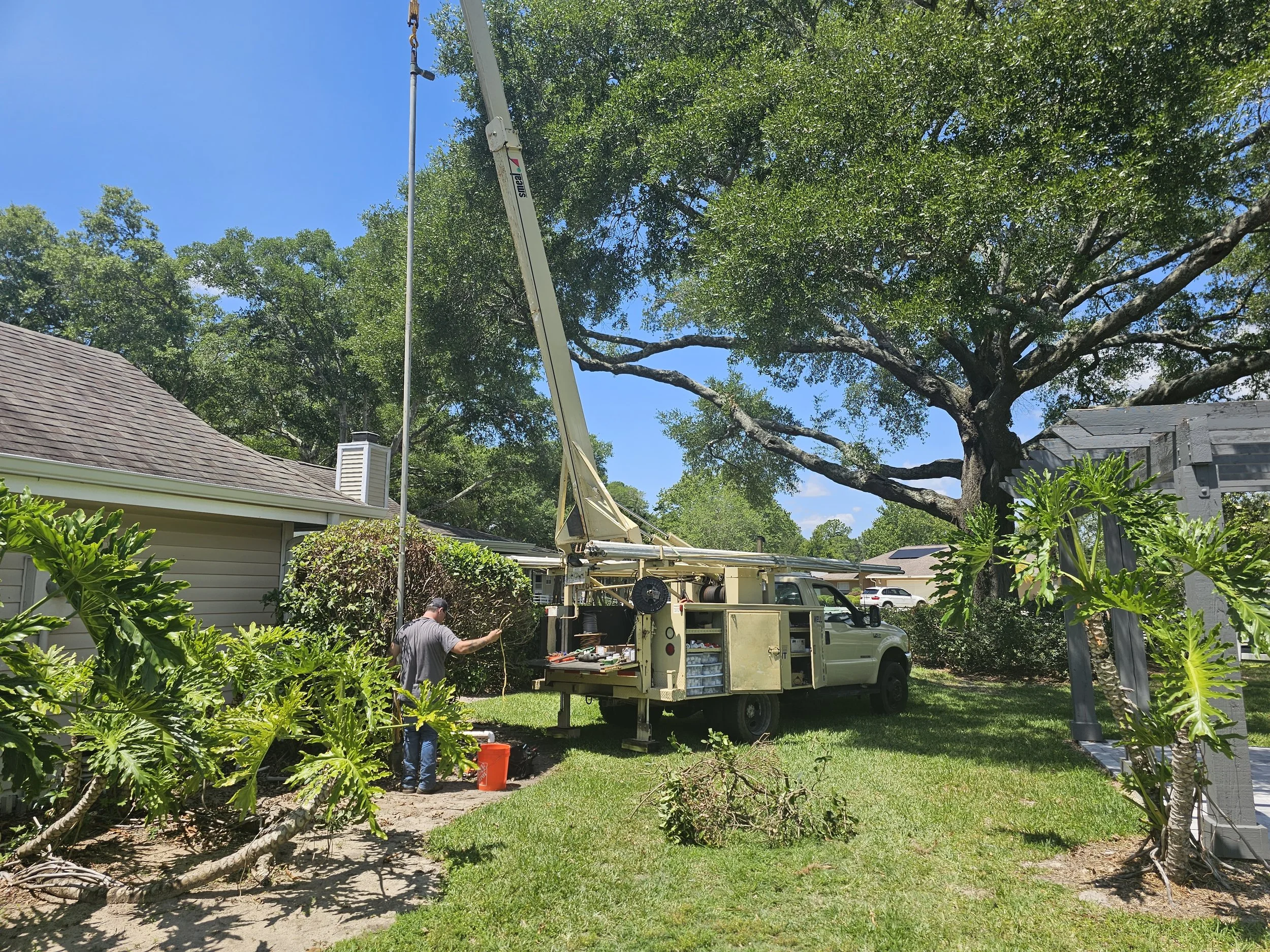
The crew that quoted the job does the job. Switch, tank, control box, and most jet repairs: same visit. Full submersible replacement: typically single-day on residential wells under 300 ft. We do not subcontract.
Well Pump Repair Pricing — What Things Cost
Every well is different, depth, brand, age, and what is wrong all move the number. Ranges below are accurate as of writing; we will quote the current number on the call. Routine residential diagnostic is free.
Diagnostic
$0 service call fee + $0 diagnostic charge on routine residential calls. The exception is a paid pump-pull diagnostic on specific commercial situations (multiple pump types on site, complex troubleshooting); we tell you that before we start.
Pressure tank & switch (the most common repairs)
Pressure switch replacement (FSG, Square D, Franklin): few-hundred-dollar range parts + labor
Pressure tank, standard residential (Amtrol, Wellmate, Flexcon): about $1,000 installed — sized to the pump for ~1 minute of run time per cycle, not to a fixed gallon count.
Pressure tank, high-demand (whole-house / irrigation booster): about $3,500 installed — larger pump output needs more drawdown to hold that same run time.
Control box capacitor replacement (3-wire submersible systems): under $500 typical
Pump-pull and pump-only repairs
Pump pull (no replacement, diagnostic only): $600–$1,000
Drop pipe replacement (PE-100 polyethylene preferred on new installs): pulled with the pump
Suction-side or check-valve repair on jet systems: typically same-visit
Full system replacement
Submersible system (pump + new drop pipe + install + reset pressure): starts at $5,000
Jet pump system: starts at $4,000
Shallow well jet pump: $3,200
Constant-pressure VFD retrofit (Franklin SubDrive or Grundfos drive): add $4,000–$5,000 to a base submersible install
Wellhead extension + cap-and-seal sanitary repair: $1,600–$2,400
Wisetack financing on larger repairs and full system replacements (minutes to apply, terms before you sign). Military and first-responder discounts case-by-case by scope; ask when you call.

Why homeowners choose Perry-Pump
Fully licensed and insured. Florida Water Well Contractor License #5016.
Experienced well repair specialists. Third generation, 50+ years working North Florida wells.
Quality workmanship and straightforward customer service.
Free service call and $0 diagnostic on routine residential work.
5-year parts and labor warranty on the Pressure Package and most residential submersibles, in writing on the invoice.
Our Reviews
Seven North Florida Conditions That Shape How We Diagnose and Repair
Working wells in North Central Florida means working around seven specific local conditions that do not apply the same way in other regions. These shape how we diagnose, what we install, and what we recommend customers do between visits.
1
Floridan Aquifer wells dominate at 100–400 ft
Almost every residential well in our footprint draws from the Floridan Aquifer at 100-400 ft, deeper east of Gainesville and shallower across the Suwannee basin. That is why submersibles dominate; a typical pump-pull in our market is a 200-foot Floridan well.
2
Hurricane and tropical storm season (June–November) damages wellheads
A spring annual inspection is a smart, low-cost way to catch a compromised cap or a debris-fouled vent before it becomes a bigger problem, whatever the eventual cause. We also do sanitary inspections after a storm or flood event when a customer asks for one.
3
Summer lightning peaks in July–August — control box failures spike
Direct lightning strikes are rare; nearby strikes that surge the power line can take out control box capacitors and relays, same as ordinary wear does over time. If your pump stopped working, the control box is one of the first things we check, storm or no storm.
4
Casing cracks trace back to installation quality — karst just accelerates it
North Florida sits on karst limestone, and most casing problems we see trace back to the original installation: a poor joint, the wrong materials, or a seal that wasn't done to spec. Karst subsidence can accelerate a marginal casing's failure, opening cracks, joint separations, or root-intrusion pathways faster than it would elsewhere. Casing repair and liner installation are a real share of our work, especially east of the Suwannee.
5
Iron, sulfide, and hardness are the default in our water
Most North Florida wells produce water with measurable iron (reddish staining), sulfide (rotten-egg smell), and hardness (white scaling). The chemistry accelerates wear on impellers and check valves, and corrodes galvanized drop pipe from the inside. We mention treatment when we see the signs.
6
Fire ants in the pressure switch are a real, recurring North Florida cause of failure
A lineman told Eric years ago that insects are attracted to the frequency in pump wiring, borne out by what we pull from switches since. Ant bodies wedged in the contacts stop the points from closing. We install pest-blocking foam in the conduit and silicone every opening.
7
Flood-zone properties need the wellhead 12+ inches above grade
Suwannee, Santa Fe, and St. Marys river basins, plus lower-elevation rural lots, sit in FEMA flood zones. Surface flooding overtops low wellheads and contaminates source water. Wellhead extension + cap-and-seal is the durable answer: most scheduled in spring before storm season.
Seven Technical Topics Where Most Pump Shops Pick a Default
Seven places where the easy answer isn't the right one. One-line take? Call us. The actual reasoning is here.
-
Galvanized was the historical standard, but it corrodes from the inside in iron-heavy water. Schedule 80 PVC works to about 150 feet but has thread-stress limits. PE-100 polyethylene is what we install on most new submersible jobs, flexible, corrosion-immune, with no threaded joints to leak. The drop pipe is covered under the 5-year warranty on most residential installs.
-
Gradually worsening pressure over months can be a worn pump or a well that no longer yields what it used to, and replacing the pump will not fix a low-yield well. We run a drawdown test: pump 1 hour at a known rate, watch the water level drop, and time the recovery. That tells us whether the pump matches the well or the well needs a different solution (deeper setting, lower-flow pump, separate storage).
-
All of our wellhead and casing work is performed in accordance with applicable Florida state code (Chapter 62-532 F.A.C., via Water Management Districts), including the sealed cap, sealed conduit, and grouted annular space it requires. Most of our extension and cap-and-seal work brings older wells back into current spec.
-
Waterlogged tank and worn pump look identical to the homeowner, low pressure, and the pump is running constantly. Diagnostic test: tap the tank. Healthy tank rings hollow on the top third; waterlogged sounds dull all the way up. We also check the Schrader valve pre-charge with the pump off and tank drained. Pump diagnosis comes after the tank is cleared.
-
A tank's job is not to store water: it is to keep the pump from cycling too often. Drawdown (gallons between cut-in and cut-out) times target cycle time (1 min minimum for submersibles) sets the minimum size. Typical 40/60 PSI residential: the tank is sized so a ½ HP pump gets about a minute of run time per cycle; irrigation boosters need a larger tank for the same reason. Undersized tanks, short-cycle pumps, and burn motors out years early.
-
Three paths to constant pressure. A traditional switch is the cheapest and cycles between cut-in and cut-out. A CSV is a mechanical valve that throttles flow before the tank, useful for irrigation and small fluctuations. A VFD (Franklin SubDrive or Grundfos) modulates pump speed to hold target pressure. We use VFDs for whole-home constant pressure and CSV for irrigation. No one-size-fits-all, and we do not install AquaVar.
-
2-wire submersibles keep the start components inside the motor: no above-ground control box. 3-wire systems use a separate Franklin or Pentek control box at the wellhead with a start capacitor and relay above ground, which is easier to service. When a 3-wire will not start, we test the control box before pulling the pump. We recommend 3-wire on most replacements at 1 HP and up.
Frequently Asked Questions
-
About 80% of "my pump will not shut off" or "low pressure" calls turn out to be a waterlogged pressure tank or a fouled pressure switch, not the pump itself. In the rainy season, the #1 single cause of a sudden failure is fire ants in the pressure switch. We diagnose before we quote, so you do not pay for a pump replacement you do not need.
-
Pressure tank: roughly $1,000 for a standard residential tank up to about $3,500 for a high-demand whole-house or irrigation booster setup — sized to your pump, not a fixed gallon number. Full system replacement: submersible from $5,000, jet from $4,000, shallow-well jet at $3,200. Prices subject to change: suppliers have been volatile lately.
-
No on routine residential work: $0 service call, $0 diagnostic. The exception is a paid pump-pull diagnostic on specific commercial situations (multiple pump types, complex troubleshooting); we tell you that before we start.
-
Most routine repairs are scheduled within the same week, sometimes the same day if we are already in your area. No-water emergencies move to the top of the queue. After-hours calls get scheduled for the next available day in most cases.
-
No, and we will not claim to be. Normal hours Mon. - Fri. 8 AM - 5 PM. After hours, calls may go to voicemail; we return at our earliest availability.
-
Grundfos, Franklin Electric, Flint & Walling, Clackwater treatment, and Stenner. We are an authorized installer for all five, parts move faster, and warranties get honored without an argument.
-
Pressure Package (tank + switch): 5 yrs parts + labor. Most residential submersibles (wire + control box + pump): 5 yrs parts + labor. Residential jet and commercial pumps: 1 yr. Always in writing, explained up front.
-
No — we don't drill new wells. We service and repair existing wells. When a customer needs a new well, we refer it out to a specific driller Eric can recommend based on the situation.
-
No. Economics and reliability do not compare favorably to standard electric for residential use in North Florida. For a specific off-grid case, call us, and we will walk through alternatives.
-
Yes — through Wisetack. Application takes minutes, terms shown before you sign. We don't push financing on small repairs; for full pump replacements it's a real option.
Ready to Get Your Water Back On? Call Perry-Pump Today.
Whether you woke up with no water, your pressure has been creeping down, or your pump is running constantly, call (352) 320-2412, and we will get you on the schedule. Routine residential work has no service call fee, no diagnostic charge, and the warranty goes on the invoice before you sign.