
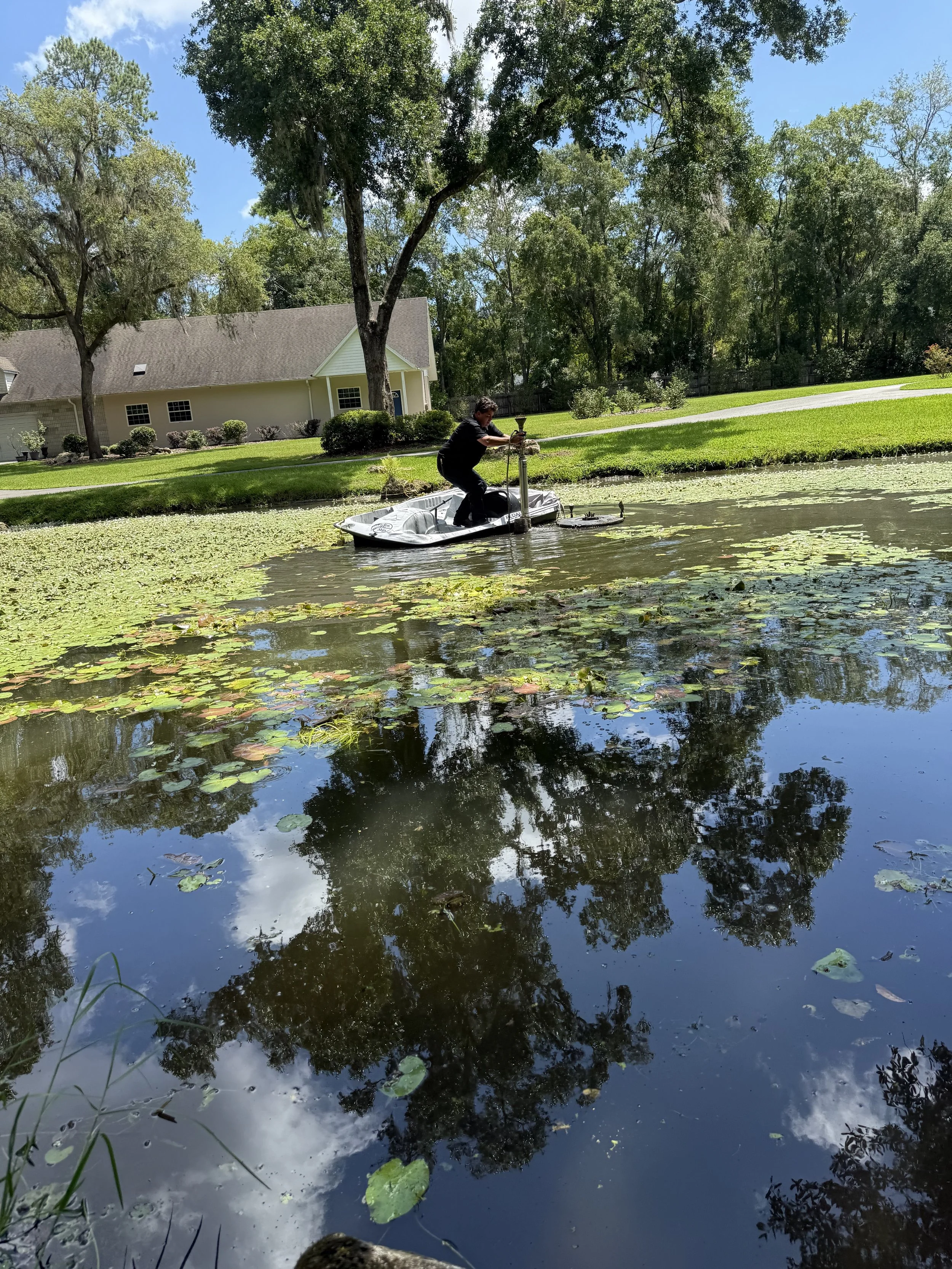

Fountain Pump Repair in Gainesville and Across North Florida
FL Water Well Contractor License #5016 · FGWA · NGWA · NCFWA Member · Google 5.0 Rated · Wisetack Financing


If your tiered fountain has gone silent, the pump on your wall feature hums but nothing reaches the top, or the pump in your disappearing-fountain basin quit after a hot week, you are on the right page. Perry-Pump Repair Service handles fountain pump repair and replacement for decorative statuary and tiered fountains, wall and courtyard features, disappearing (pondless) fountains, and commercial and HOA entrance fountains across 17 North Florida communities. We are a family-owned, state-licensed shop based in Gainesville. Eric Perry is a 3rd-generation water well specialist; the Perry family has worked on North Florida pumps for 50+ years.
Fountain pumps live a hard life in our climate. They recirculate the same water through a small basin, so North Florida's hard limestone-aquifer water and constant summer evaporation work against them every day. That is why most fountain calls we get are scale and low-water problems, not a dead motor. When a motor is genuinely gone, a small fountain pump is often cheaper to replace than to rebuild, and we tell you which way the math runs before any work starts. No service call fee, no diagnostic charge on routine residential work.
Call (352) 320-2412 Mon. to Fri. 8 AM to 5 PM. After hours, leave a message, and we will return the call at our earliest availability.
Free Service Callr
$0 service-call fee + $0 diagnostic on routine residential work.
Statuary, Wall, Pondless & Commercial
Tiered fountains, wall features, disappearing-fountain reservoirs, and HOA entrance fountains.
Descaling & Hard-Water Fixes
we clear the calcium and lime that lock up a fountain impeller.
17 North Florida Cities
Gainesville HQ to Lake Butler, Starke, Newberry, Lake City, and beyond.
Repair-vs-Replace Honesty
we run the small-pump math out loud before the work starts.
FDEP-Licensed #5016
Fully state-licensed Water Well Contractor - public registry.
Three Failures That Drive Most Fountain Pump Calls in North Florida
In 50+ years of Perry-family pump work, the fountain calls sort into a short list, and three causes cover most of what we drive out for. Two are usually quick, same-visit repairs. The third is the one where we sit down and talk replacement.
Mineral scale locking the impeller: the North Florida fountain classic.
The single most common fountain pump call in our market. Fountain water recirculates and evaporates all day, which concentrates the calcium and lime already heavy in North Florida's limestone-aquifer water. That mineral scale crusts onto the impeller, the shaft, and the pump housing until the impeller can no longer spin freely. The motor hums, but little or no water moves through the fountain. Most of the time this is a same-visit fix: pull the pump, dissolve the scale in a vinegar or descaler soak, clean or replace the impeller, and reset the flow. In hard-water spots we talk through a descaling routine so it does not come right back.
Ran dry and burned out: the replacement-decision call.
This is the fountain-specific version of a dead pump, and it almost always starts with a low basin. Small decorative basins lose water fast to summer evaporation, splash, and wind. Once the level drops below the intake, the pump pulls air, loses the water that cools it, and overheats. Most fountain pumps are magnetic-drive units with no serviceable seal, so a burned-out motor usually means a new pump rather than a rebuild. We quote the replacement and, when it makes sense, talk about a low-water float shutoff or an auto-fill so it does not happen again.
Airlock or a blocked intake and tubing: pump runs, no flow.
The pump runs fine, but the top tier stays dry. On a fountain the usual culprits are an airlock (air trapped in the pump after a cleaning or refill, common on tall stacked fountains), a debris-clogged intake grate, or flexible tubing pinched inside a stacked column. A diagnostic walk of the system, covering the pump, intake screen, tubing runs, and each tier, finds it, and the fix is same-visit in most cases.
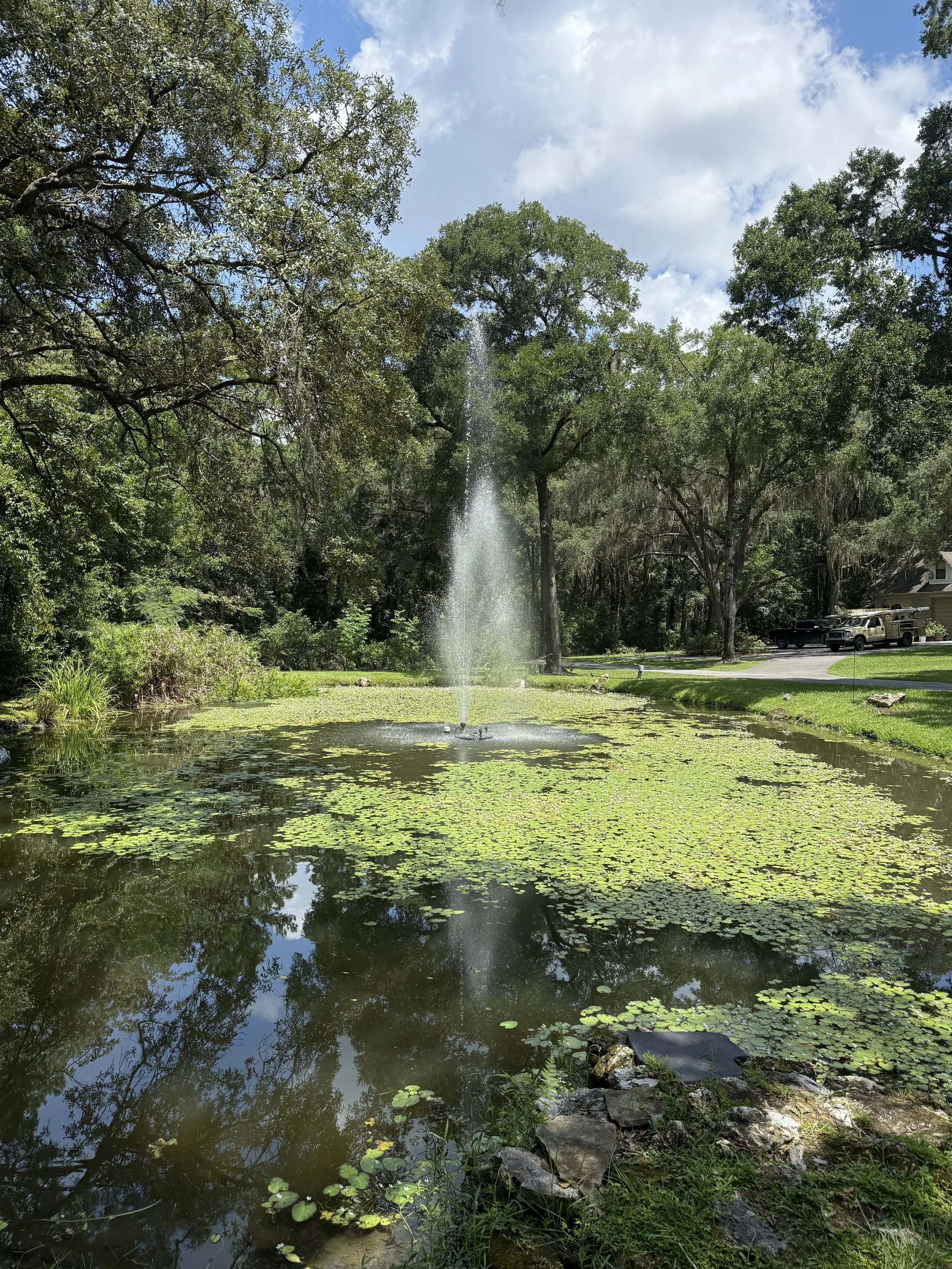
Symptoms and Failures We See Across the Service Area
If your fountain is doing any of the following, call us. We can usually narrow the cause over the phone before a truck rolls.
-
• No power at the outlet (GFCI tripped or breaker open)
• GFCI trips the moment the pump is plugged in (electrical fault in the pump)
• Motor hums but the impeller won't spin (scale or debris seizing the impeller)
• Outdoor cord damaged, cracked, or chewed at the plug or junction
• Wet plug-and-cord connector after heavy rain
• Capacitor failure on capacitor-start pumps for larger features
• Motor windings shorted after the pump ran dry and overheated
-
• Impeller crusted with mineral scale so it can't move water
• Airlock trapped in the pump after a refill or cleaning
• Intake grate blocked by leaves, algae, or oak debris
• Flexible tubing kinked or pinched inside a stacked tier
• Basin dropped below the intake, so the pump is pulling air
• Cracked fitting or split tube on the discharge side
• Fine spray nozzle plugged with grit or scale, so the pump runs but nothing comes out
-
• Summer evaporation on a small or sun-exposed basin (we confirm before quoting parts)
• Splash-out from a tier or spray head misaligned after a storm
• Cracked tubing connector or worn O-ring at the pump outlet
• A hairline crack in a cast-stone or resin bowl (we diagnose the pump side and flag the basin)
• Wicking, where water tracks over a lip or down an outside surface
• A basin liner or seam leak (out of our scope, but we confirm it so you can call the fountain builder)

-
• Bearing or bushing wear on an older mag-drive pump, heard as whining or grinding
• Scale grinding inside the housing against the impeller
• Pump running partly dry as the basin drops through the day
• Cavitation from an undersized or half-blocked intake
• External pump mounted on a hard surface transmitting vibration
• Motor running hot after a scale-choked impeller has stalled it
-
• Calcium and lime scale building on the impeller and housing (the North Florida default)
• Scale narrowing the tubing and nozzle over a season
• Hard-water film clouding the water and coating the pump body
• Weak spray that drops off a little more each week as buildup grows
• Buildup returning fast on features topped off with hard tap water
What Actually Happens When You Call About a Fountain Pump
Here is how a fountain job runs with us, start to finish. We do as much diagnosing as we can on the phone so the on-site visit is short and the repair-vs-replace decision is an easy one by the time we're standing at your fountain.
Phone diagnostic: pump, plumbing, or basin
Call (352) 320-2412 Mon–Fri 8 AM – 5 PM. A few quick questions (does the pump hum? Is any water moving? Is there white crust? Has the basin been running low?) usually point us at scale, a dry-run, or an airlock before we drive out. After hours, leave a message; we return at our earliest availability.
Schedule + en-route notification
Most fountain pump calls land within the same week, same day if we are already in your area. We will text or call en route.
On-site diagnostic: pump pulled, intake checked, tiers walked
We arrive in a marked Perry-Pump truck and walk the whole feature: pump body, impeller, intake screen, tubing, nozzle, and each tier or the pondless reservoir. Routine residential diagnostics are no charge; we tell you what we are seeing as we look, not at the end as a pitch.
Honest repair-vs-replace call on the spot
Fountain pumps sit at the small end of the catalog, so the math often favors replacement over a rebuild, and we say so out loud. If a descale, a fresh impeller, and a clean-out bring it back, that is the quote. If the motor cooked from running dry, we price the new pump instead of charging you to chase a dead one. No sales script. Prices are subject to change because our suppliers have been very volatile with pricing lately, and we are upfront about that.
Follow-up: call us first if anything is off
Flow weaker than it should be, an unusual noise, or the basin dropping again after the visit: call us first. We answer warranty calls the same day on average; catching a small issue early beats letting it grow.
Repair or replacement on the same visit when stocked
Descaling, impeller swaps, intake-screen cleaning, tubing and fitting repairs, and airlock clears happen during the same visit. Replacement on common residential fountain pumps usually lands within the same week; specialty or large architectural pumps are sometimes ordered in.
Written warranty + final paperwork
Workmanship parts and labor go on the invoice before you sign, for the term shown on the warranty matrix for that scope. We do not bury warranty language; it is on the page you sign. Wisetack terms are shown before signing on the rare larger jobs.
Fountain Pump Repair Pricing: What Things Cost
Fountain pumps span a wide catalog, from small tabletop and statuary pumps to large multi-tier and commercial architectural units, so fountain pump pricing on this page is call-for-quote. We give a real number on the call once we know the pump make, the fountain size, and what is wrong. Routine residential diagnostic is free.
$0 service-call fee + $0 diagnostic charge on routine residential calls. The pump pull, intake check, and tier-and-tubing walk are part of the visit, not a separate line item.
Fountain pump repair (the core service)
Descaling service on a scale-locked pump (soak, clean, reset flow): call for quote
Impeller replacement on mag-drive fountain pumps: call for quote
Intake-screen cleaning and pre-filter add-on: call for quote
Airlock clear and prime on a stubborn tiered fountain: call for quote
Outdoor junction-box or wet-connector repair: call for quote
Fountain pump replacement (when repair isn't the math)
Residential fountain pump replacement (statuary, tiered, wall): call for quote
Disappearing / pondless fountain pump replacement: call for quote
Commercial or HOA architectural fountain pump: call for quote (depends on flow, lift, and pump type)
Fountain plumbing and accessories
Tubing repair or replacement on existing flexible line: call for quote
Fitting or O-ring replacement at the pump outlet: call for quote
Nozzle or spray-head cleaning or replacement: call for quote
Low-water float shutoff or auto-fill add-on: call for quote
Wisetack financing is available on larger jobs (application takes minutes, terms before you sign); it rarely applies to a single small fountain pump, and we will tell you if it makes sense for your quote. Military and first-responder discounts case-by-case by scope; ask when you call. Prices are subject to change because our suppliers have been very volatile with pricing lately.
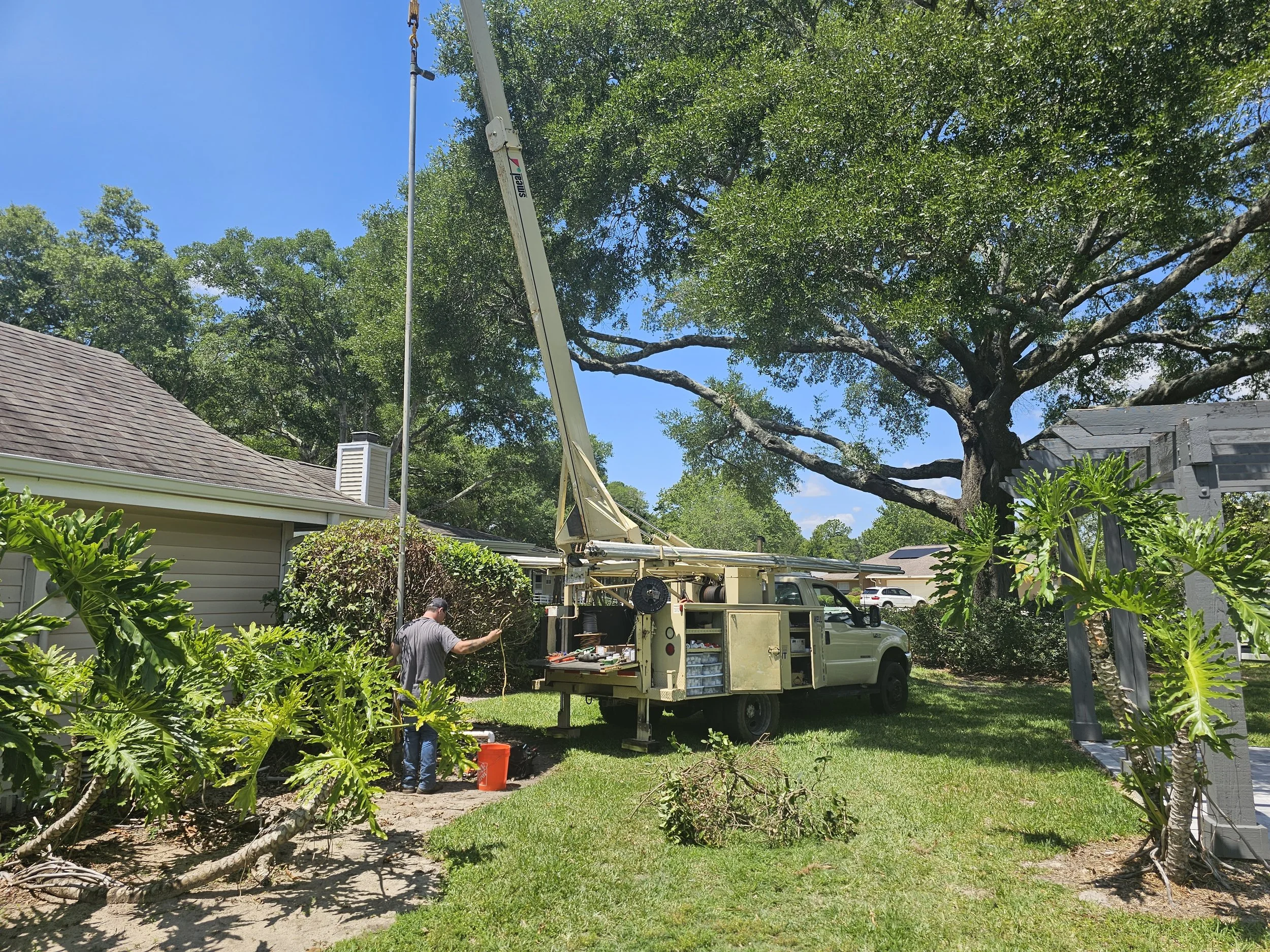
Our Reviews

Why homeowners choose Perry-Pump
Fully licensed and insured. Florida Water Well Contractor License #5016.
Experienced pump specialists. Third generation, 50+ years working North Florida pumps.
Quality workmanship and straightforward customer service.
Free service call and $0 diagnostic on routine residential work.
Warranty in writing on the invoice: the term for your scope, explained up front, before you sign.
Seven North Florida Conditions That Shape How We Service Fountain Pumps
Working fountains in North Central Florida means working around seven local conditions that shape what we see fail, when, and what we recommend customers do between visits.
1
Hard limestone-aquifer water scales fountain pumps faster than almost anything
Our water carries heavy calcium and lime, and a fountain concentrates it: the water recirculates, evaporates, and leaves the minerals behind in the basin and the pump. Scale is the number-one ongoing fountain issue in our footprint. We clear it, and we walk owners through a descaling cadence and topping off with softer water where it is practical.
2
Summer heat and evaporation drop small basins below the intake
North Florida sun evaporates a decorative basin fast, and a low basin is how most fountain pumps burn out here. We treat a repeat "it keeps running dry" as a design problem, not just a pump problem, and talk through a low-water float shutoff or an auto-fill on features that lose water quickly.
3
Warm-season algae fouls intake screens and clouds the water
Our long warm season grows algae and biofilm that coat intake grates and cloud fountain water. It clogs the screen, starves the pump, and drags flow down. Owners who rinse the intake on a regular schedule through the warm months get the longest pump life; a pre-filter helps but does not end the chore.
4
Summer lightning surges the outdoor GFCI and pump.
Nearby strikes that surge the power line can trip or damage the GFCI on the fountain circuit and the capacitor on larger pumps, same as ordinary wear can. GFCI protection reduces the risk but does not remove it. If your fountain quit after a storm, the outlet and the capacitor are among the first things we check.
5
Occasional hard winter freezes crack fountain bowls and pump housings
North Florida gets a handful of hard-freeze nights a year, and water left standing in a fountain or a pump can freeze and crack a cast-stone bowl or a pump body. Before a freeze, we recommend draining the feature and pulling the pump to somewhere protected; we take those calls ahead of a cold snap.
6
Fire ants find the outdoor GFCI and junction box.
The same fire ants that plague well-system wiring here go after a fountain's outdoor receptacle and junction box in the rainy season, and packed-in ant bodies are a poor conductor. Any time we have that box open, we foam the conduit and silicone the gaps to keep them out.
7
Spring oak pollen and leaf drop load fountain intakes.
Our heavy spring oak pollen and year-round leaf litter settle into open basins and pack the intake screen faster than most owners expect. That is a spring and fall cleaning rhythm we set up with customers, and a reason we size the pre-filter to the debris the feature actually catches.
Seven Technical Topics Where Fountain Pump Choice Actually Matters
Seven spots where the default pick isn't always the right one for a fountain. Here's how we actually think it through.
-
A disappearing fountain hides its water in a buried reservoir under gravel, so the pump's health depends on a reservoir that stays full and clean. Undersized or debris-filled reservoirs run the pump dry between top-offs. We check reservoir volume against the feature's flow, clear the basin, and add an auto-fill float where evaporation keeps outrunning the customer.
-
The cheapest fountain-pump insurance in our climate is a device that shuts the pump off before the basin empties. A low-water float switch cuts power when the level drops below the intake, so an evaporating basin does not cook the motor. We recommend one on any feature that has already burned out a pump or that sits in full sun.
-
Entrance fountains at businesses, subdivisions, and HOAs are a different animal, with bigger external pumps, higher flow and lift, timers, and filtration that a backyard feature does not have. We service and repair these on the same honest terms: diagnose first, quote the real fix, and put the warranty in writing. For a brand-new large fountain build, we point you to a fountain specialist.
-
Most decorative fountain pumps are magnetic-drive: a magnet spins the impeller with no shaft seal to fail, which is why fountain pumps almost never fail from a seal the way larger pumps can. Their weak points are different, namely mineral scale locking the impeller and bushing wear over time. On big multi-tier or commercial features that need more head and run continuously, a shaft-driven or external pump can be the better long-run choice. We pick by fountain size, run time, and how hard the water is.
-
A fountain pump is rated for gallons per hour, but the number that matters is GPH at the fountain's height. A pump that moves plenty of water at the surface can starve four feet up a tiered fountain, because flow falls off as lift rises. We size to the feature's max lift and the look you want (a full sheet over a spillway needs more GPH than a gentle bubble), not to a box rating.
-
A flow-control valve lets us dial the spray so a fountain does not overshoot the basin or splash itself empty. Nozzle choice matters too: bell, tiered, and geyser heads each want a certain flow, and the finer the nozzle, the faster our hard-water grit and scale plug it. We match the nozzle to the pump and show owners the quick clean-out that keeps a fine jet open.
-
Because scale is the fountain's main enemy here, how you fight it is worth doing right. A periodic vinegar or descaler soak dissolves buildup before it locks the impeller; topping off with distilled or softened water slows how fast it returns. We set a cadence to the water and the run time rather than a one-size interval, and we descale the whole path: impeller, housing, tubing, and nozzle.
Frequently Asked Questions
-
A hum with no flow almost always means the motor is getting power but the impeller can't move water. In North Florida the top cause is mineral scale locking the impeller; close behind are an airlock after a refill, a clogged intake screen, kinked tier tubing, or a basin that has dropped below the intake. We diagnose which one it is on the visit, and most turn out to be a same-visit fix, not a dead pump.
-
Plenty of fountain pumps are worth repairing: a scale-locked impeller, a clogged intake, or a tubing leak are routine fixes. The exception is a pump that ran dry and burned out the motor; most fountain pumps are sealed mag-drive units, so a cooked motor usually means replacement. We tell you which situation you're in before any work starts.
-
Fountain pump pricing is call-for-quote because these pumps span such a wide catalog, from small statuary pumps to large architectural units. We give you a real number on the call once we know the make, the fountain size, and what's wrong. Routine residential work has a $0 service-call fee and $0 diagnostic. Prices are subject to change: suppliers have been very volatile lately.
-
A residential fountain pump typically runs 2 to 5 years, and hard water is what decides where in that range you land. Scale wears the impeller and bushings, so a pump on untreated North Florida water lives toward the short end unless it's descaled regularly. Pumps on a timer and pumps kept fully submerged last noticeably longer.
-
Rinse the intake screen and impeller about once a month through the warm season, more often if your basin catches heavy leaf or pollen debris. Add a descaling soak on a schedule set to how hard your water is. That routine of a clean intake, a clear impeller, and a periodic descale extends fountain pump life more than any single equipment choice.
-
It's fine to run continuously as long as the pump stays fully submerged; running dry, even briefly, is what damages it, because the water is also what cools the motor. In our summer heat that means watching the basin level closely or fitting an auto-fill or a low-water shutoff. Many owners put the pump on a timer to cut run time and stretch its life.
-
Almost always because it's running dry. Evaporation and splash drop a small basin below the intake, the pump pulls air, and with no water to cool it the motor overheats and fails. If you've replaced more than one pump, the fix isn't a better pump; it's keeping the basin full, with a low-water float shutoff or an auto-fill. We size and install those.
-
You can't fully stop it on North Florida water, but you can slow it a lot. Top off with distilled or softened water instead of hard tap water, descale the pump and plumbing on a regular soak schedule, and keep the basin clean so scale has less to grab onto. We set up a descaling cadence matched to your water and run time on the visit.
-
No. Consistent with our solar policy across the catalog, the economics and reliability don't compare favorably to standard electric for fountains in North Florida; panels underperform in shade and cloud, and flow stutters as light changes. For a specific off-grid situation, call us and we'll walk through the alternatives.
-
Yes. We service and repair commercial and HOA entrance fountains, including external pumps, higher-flow and higher-lift systems, timers, and filtration, on the same terms as residential: diagnose first, quote the real fix, warranty in writing. We repair and replace existing systems; for a brand-new large fountain build, we'll point you to a fountain specialist.
-
We cover 17 communities: Gainesville (HQ), Lake Butler, Lake City, Alachua, Newberry, High Springs, Starke, Keystone Heights, Branford, Trenton, Waldo, Hawthorne, Glen Saint Mary, Bell, Brooker, Raiford, and Melrose. Not sure you're in our footprint? Call (352) 320-2412 and we'll tell you straight. Wisetack financing is available on larger jobs, with terms shown before you sign.
Ready to Get Your Fountain Flowing Again? Call Perry-Pump Today.
Whether your tiered fountain has gone silent, your wall feature hums but won't push water to the top, or your pump keeps burning out on a basin that runs low, call (352) 320-2412, and we'll get you on the schedule. Routine residential work has no service-call fee, no diagnostic charge, and the workmanship warranty goes on the invoice before you sign.
3RD-GENERATION FAMILY SERVICE · 50+ YEARS EXPERIENCE · FL License #5016 · 17 COMMUNITIES SERVED