
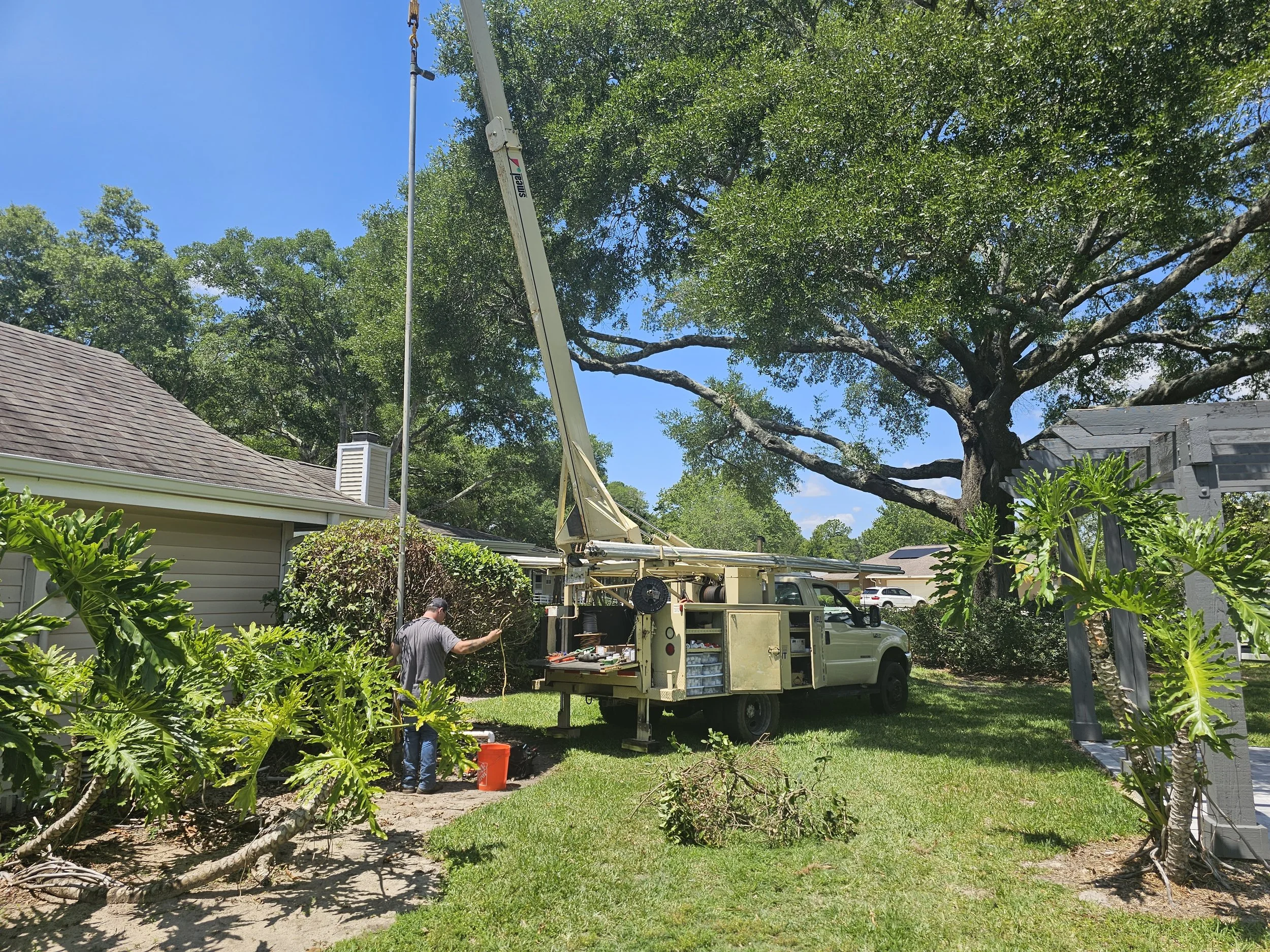

Submersible Pump Repair in Waldo, FL
FL Water Well Contractor License #5016 · FGWA · NGWA · NCFWA Member · Google 5.0 Rated · Wisetack Financing
We repair and replace submersible pumps, motors, control boxes, cable and drop pipe for Waldo and the surrounding part of Alachua County. Call (352) 320-2412, Monday through Friday, 8 AM to 5 PM. If you call after hours, leave a message. We will return the call at our earliest availability, which in most cases means a place on the schedule for the next available day.
A submersible is one of the few pieces of equipment on a property that nobody can look at. It sits in water at the bottom of a cased hole, wired to the surface through a hundred feet or more of cable, and often the first anyone knows about it is a tap that has gone quiet. Everything up to the moment the pump comes out is inference, made from the surface, in a particular order.
FL LICENSE #5016
Fully state-licensed Water Well Contractor — public FDEP registry.
3RD-GENERATION FAMILY TRADE
50+ years of Perry family well work; Eric is owner-operator.
5-YEAR PARTS + LABOR WARRANTY
Pressure Package + most residential submersibles. Always in writing.
FREE SERVICE CALL. $0 DIAGNOSTIC.
On routine residential work. Pricing built on the invoice, not the doorknock.
GOOGLE 5.0 RATED
Verified Google reviews from real North Florida customers.
Levy County Covered
Williston and the Nature Coast edge of Levy County are part of our service area.
What gets asked on the phone, and what each answer rules out
The questions are not small talk. Each one takes something off the table before anybody drives out. The first is whether there is any noise at all, at the pressure tank, at the control box if the system has one, at the panel. A silent system and a system trying to run with a motor are different failures and require different things on the truck.
The second is what the pressure gauge reads, and whether it moves. A gauge sitting at zero while the pump is trying says one thing. A gauge holding at forty with nothing coming out of the taps says something else entirely, and that second one can be above ground altogether.
The third is what changed. A storm, a breaker that tripped and was reset, work done on the well, a month with the house empty, a long dry spell. Submersible motors fail for ordinary reasons, and an account of the week the system changed will do more on a call than any description of the sound it is making.
The tests that come first all happen above ground
Voltage at the box, and voltage under load
The first reading is whether the pump is being offered power. The second is whether it still has it when it tries to start. A motor that drags the supply down when it energizes points somewhere very different from one that never sees voltage at all.
Two readings taken at the cable
With the power off, an ohmmeter across the motor leads gives winding resistance, and an insulation tester from each lead to ground gives insulation resistance. The second of those needs a proper insulation tester rather than a hand meter, because a hand meter will read fine across insulation that fails at line voltage. A low reading to ground determines the job, and it can come from a splice as easily as from the motor.
The pressure switch, and its contacts
A pressure switch is a mechanical part with burnt contacts, a sensing port that clogs, and a spring that drifts, and all three can cause a system that will not start or shut off. It is also the part closest to hand, which is why it comes early.
The control box, on the systems that have one
Three-wire submersibles keep a start capacitor and a relay at the surface, where they fail on their own schedule and simulate a dead motor in the process. Two-wire systems put that same equipment down the hole with the motor. Two installations can look identical from the yard but be different jobs.
What actually decides whether the well gets opened
If the surface equipment tests good and the readings at the cable are bad, the well gets opened. Good readings are less conclusive than they look, and it is worth being straight about that in both directions. They clear a large family of faults without anybody touching the wellhead. They do not put the fault above ground, and they do not clear the motor outright either: a turn-to-turn short can read within tolerance when cold, and a winding that opens when hot will read closed when not.
When the electrical side reads clean, what is left divides in two. Some of it is above ground: a pressure switch, a tank that has lost its air charge, a leak, a valve. Some of it is still down the hole and simply is not electrical: a worn pump end, a split drop pipe, a check valve that has stopped holding, or a pump sitting above a water level that has dropped away from it.
Those get separated by flow and pressure behavior, and by whether the water level is the question, based on a measurement taken in the well. That is a different reading with a different tool, and it gets named as such rather than folded into an assumption that the motor must be the answer.
Why a Waldo submersible job runs from the top down
The U.S. Geological Survey maintains a monitoring record at the Waldo Fire Department, located under 200 feet from the town center. It was measured twenty times between 1977 and 2009. Nobody draws water from it, the record stopped seventeen years ago, and the Floridan is confined here, so what it reports is a pressure level and not a water table. It describes neither your well nor this morning. What it does establish is an order of magnitude: across those twenty readings, the level sat between roughly 82 and 94 feet below land surface.
Where any particular pump hangs is the installer's decision, so that figure is in the context of that installation rather than a measurement of anybody's system. The context is still the point. A town drawing from that part of the aquifer is submersible country, and on a submersible the motor, the cable, the splices and the drop pipe are underground and out of reach until the string comes up. The pressure switch, the control box and the cable head are not. That asymmetry sets the order of the work above: the parts a meter can still reach get read first, and the wellhead comes last because opening it is the step nothing undoes.
What comes up with the pump, and what is worth changing while it is up
A pull brings up more than a pump. The drop pipe, the cable, the splices, the safety rope, the torque arrestor, and the check valve come out with it, and every one has been in the same water as long as the pump has.
Some are worth replacing while the well is open even though they still work, and some are not, and an honest version of that conversation names both. A set of splices that has been down twenty years sits in a different category from a check valve changed last spring. We say which is which and why, and the decision belongs to the owner.
The thing to avoid is hanging a new pump on the parts that aged around the old one. That is why the pull is the moment to make these choices; the next chance to make them is however many years away the next failure turns out to be.
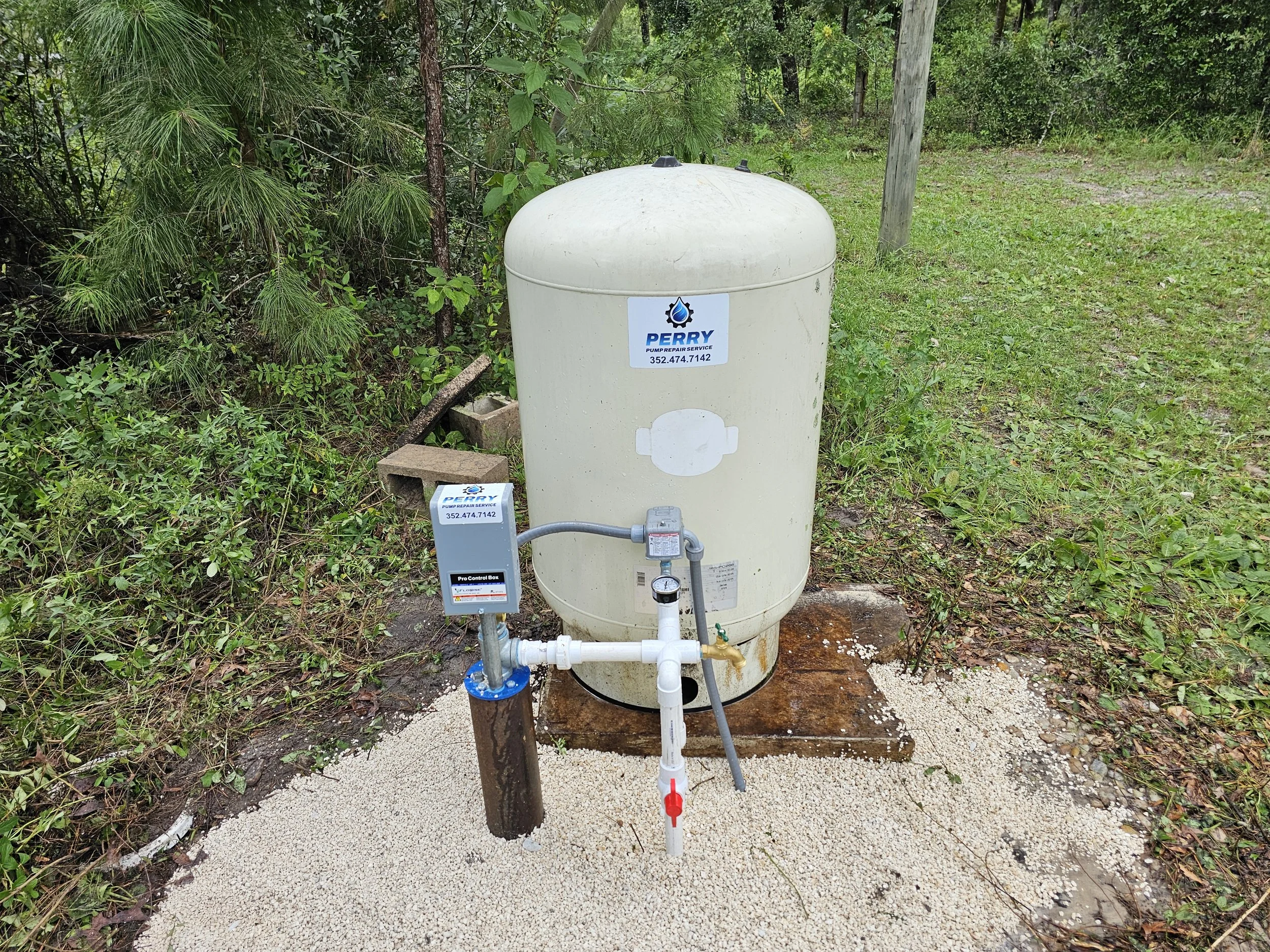
Why Waldo submersible work comes to Perry-Pump
-
The readings taken at the box and at the cable are reported back in plain language, along with what they ruled out and what they did not. An owner being asked to approve opening a well should be told what the surface already said.
-
Perry-Pump holds FL Water Well Contractor License #5016 and Eric Perry, a third-generation water well specialist, runs the business. Pumps, motors, drop pipe, cable, tanks, switches and control boxes are the work. Drilling a new well is not, and when a property turns out to need one, we say so and name a driller.

Every well and pump service we offer in Waldo
Submersible Pump Repair is one of many things we handle for Waldo and Alachua County. Anything on this list, one call covers.
Not sure which one fits? Call (352) 320-2412 and describe what is happening.
Our Reviews
Submersible down in Waldo?
The first visit works from the surface inward. Whatever can be read at the pressure tank, at the switch, and at the cable gets read first, and what those readings rule out gets said plainly before the well is opened. Call (352) 320-2412 and we will tell you what to expect from that visit.
Perry-Pump Repair Service, 747 SW 2nd Ave, Gainesville, FL 32601. FL Water Well Contractor License #5016. FGWA · NGWA · NCFWA Member.
Business hours: Monday through Friday, 8 AM to 5 PM. Weekends, late evenings, and holidays are handled as overflow and emergency only, not as scheduled service.