
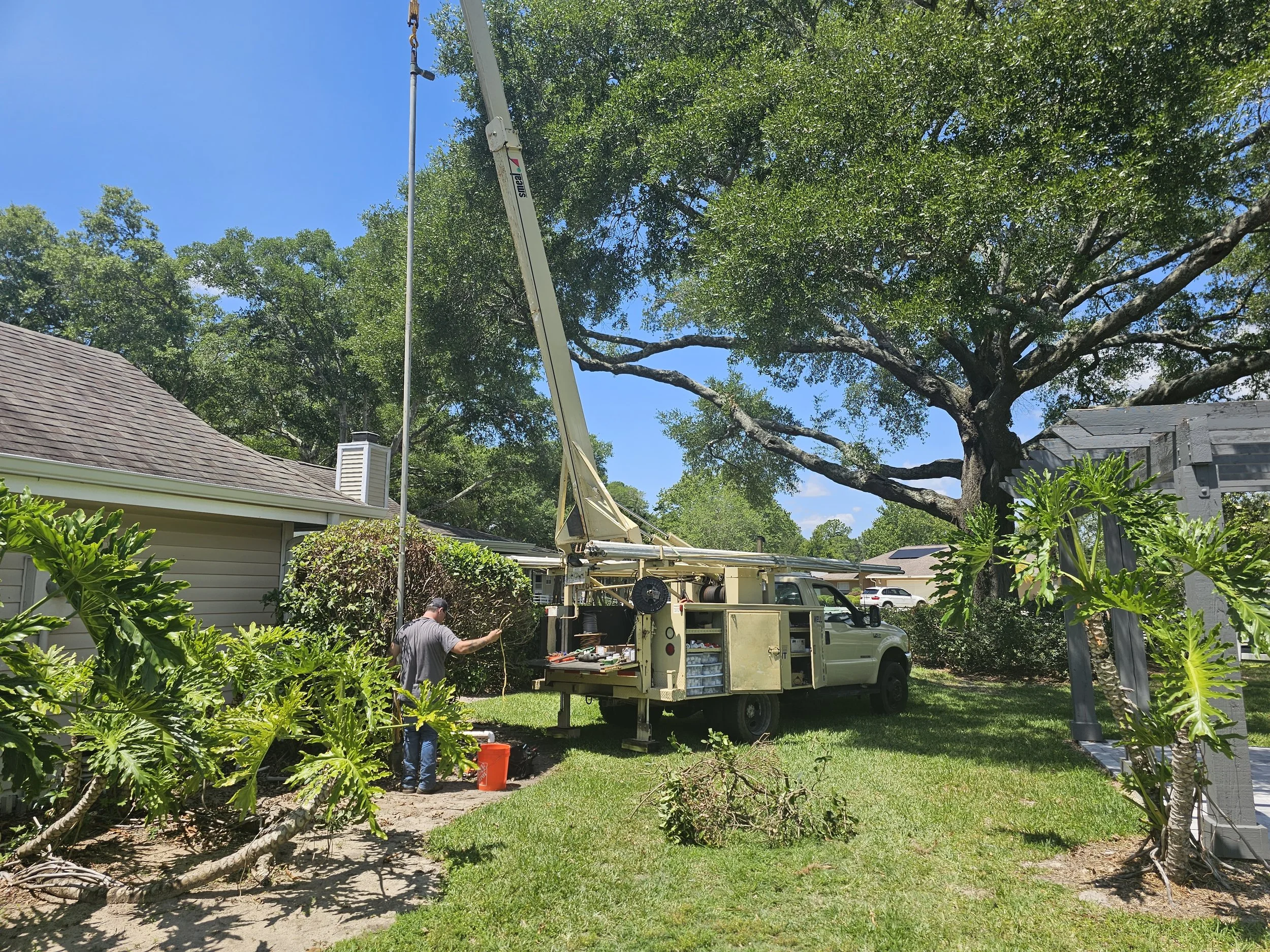

Wellhead Extension & Cap-and-Seal Repair in Bell, FL
FL Water Well Contractor License #5016 · FGWA · NGWA · NCFWA Member · Google 5.0 Rated · Wisetack Financing
We raise casings, install sanitary caps, and repair casing seals across Bell and Gilchrist Counties. Call (352) 320-2412, Monday through Friday, 8 AM to 5 PM. If you call after hours, leave a message. We will return the call at our earliest availability, which in most cases means a place on the schedule for the next available day.
A wellhead is the smallest assembly on a water system and the one with the least room for error. There is a specific reason for that in Bell, and it is worth knowing before deciding a cracked cap can wait.
FL LICENSE #5016
Fully state-licensed Water Well Contractor — public FDEP registry.
3RD-GENERATION FAMILY TRADE
50+ years of Perry family well work; Eric is owner-operator.
5-YEAR PARTS + LABOR WARRANTY
Pressure Package + most residential submersibles. Always in writing.
FREE SERVICE CALL. $0 DIAGNOSTIC.
On routine residential work. Pricing built on the invoice, not the doorknock.
GOOGLE 5.0 RATED
Verified Google reviews from real North Florida customers.
Levy County Covered
Williston and the Nature Coast edge of Levy County are part of our service area.
What actually fails at a wellhead, roughly in the order we find it
The cap and its gasket
A sanitary cap seals to the casing with a gasket and carries a screened vent. Gaskets harden, screens tear, and the bolts holding the assembly down back off over years of heating and cooling. A cap that lifts at one edge is an open well.
The conduit and the wire entry
Every penetration is a way in, for water and for insects alike. Unsealed conduit is a route for both, and it is easy to leave behind when other work has been done at the head.
The casing top, and how high it finishes
Casing that ends flush with the ground, or below it in a pit or hollow, puts the opening at the level where water runs and stands. Raising it is the change that reduces exposure the most, which is why an extension is a repair rather than a cosmetic upgrade.
The annular seal, which nobody can see
Between the outside of the casing and the wall of the borehole, there should be grout. Where it was never placed properly, or has channeled since, water can travel down the outside of the casing without ever passing the cap. This is a failure that a look from the top cannot rule out.
What the state maps under Bell, and what it means for a seal
The Florida Geological Survey maps the ground beneath Bell as part of the Chiefland Karst Plain Province. Its published description of that province holds the sentence that matters here: most of the province is internally drained, and the potentiometric surface of the unconfined to semi-confined Floridan aquifer system forms the water table.
Put plainly, that means there is no separate shallow water table sitting atop a protected aquifer below. Around here, the water table and the aquifer a well draws from are the same body of water. The same description puts a thin cover of Quaternary sediments over Eocene Ocala Limestone across most of the province.
The state's sinkhole mapping makes the point in blunter terms. It sorts the state by how much cover lies over the limestone, and Waldo, at the other end of our service area, comes back in the class it labels thirty to two hundred feet of cover. Bell comes back in the first class: bare or thinly covered limestone. Same company, same trucks, two towns in different categories of ground.
Internally drained means rain here does not mostly run off to a river. It goes down. Set that beside thin cover, and the barrier list gets short: sediment, limestone, and whatever the wellhead is doing. All of that describes a province and a mapped class and not a survey of your parcel. Where any particular well sits has to be settled on the property itself.
What a cap-and-seal or extension job involves
The visible half is straightforward. The old cap comes off, the casing top gets checked for cracks, corrosion, and distortion, and a new sanitary cap goes on with a fresh gasket and an intact screen. Where the casing finishes low, an extension is installed so the top stands above the ground and above where water collects.
The half that decides the scope is what is under the cap. Wire insulation gone brittle or chewed, an unsealed conduit, standing water inside the casing, a casing wall that has thinned at the ground line. Any of those changes the job, and they get shown to you before anything is priced.
The thing we will not do is guess at the annular seal from above ground. Where evidence points to water moving outside the casing, that is a different and larger piece of work, and saying so is better than sealing the top and calling the question closed.
One thing the geology here does not mean
Karst country is often described as sinkhole country, and the state's two datasets do not tell a single story about it. The sinkhole-type mapping that puts Bell in the thin-cover class describes its sinkholes as few, generally shallow and broad, and developing gradually. The geological survey's atlas calls them common in this province and adds that they are typically dry because the water table lies below the land surface. We would rather set both before you than quote whichever suits the argument.
Neither forecasts a collapse, nor does it describe a particular property. What they agree on is the part that bears on a wellhead: there is not much sitting between the surface and the water. So the case for a sound cap and a casing that finishes high is not a warning about the ground opening up. It is quieter than that, and it is about how short the list of barriers is.
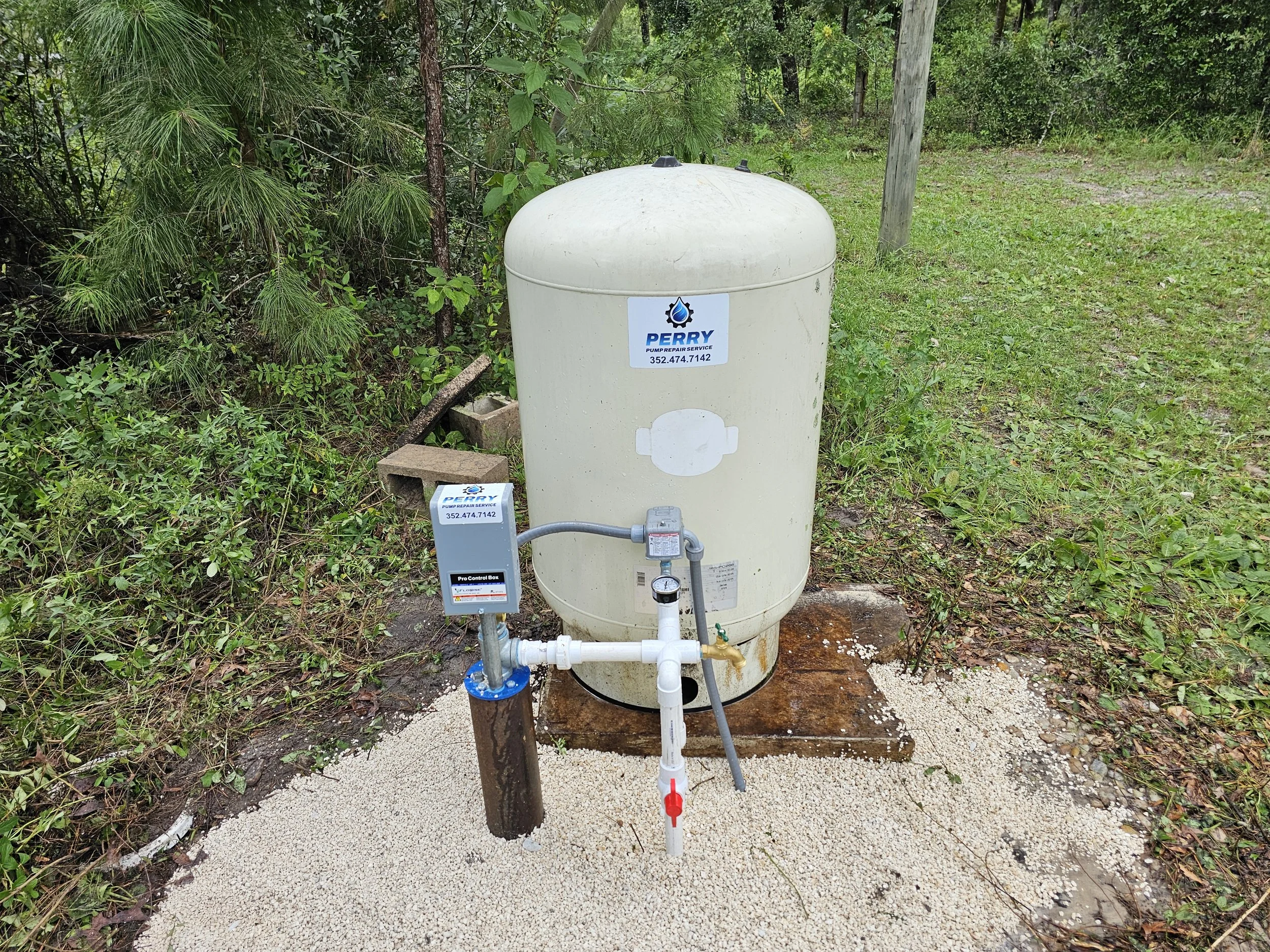
What we do at a wellhead in Bell
-
Perry-Pump holds FL Water Well Contractor License #5016. The cap, the casing top, and the seal are part of what we check while we are at a well, and what turns up gets described to you whether or not it is the thing you called about.
-
Cap, seal, casing height and the wiring at the head are ours. Drilling a new well is a driller's job, and where the evidence points below the casing top, the honest answer is that it is a larger job than the one you called about.

Every well and pump service we offer in Bell
Wellhead Extension and Cap-and-Seal Repair are among the many services we handle for Bell and Gilchrist County. Anything on this list, one call covers.
Not sure which one fits? Call (352) 320-2412 and describe what is happening.
Our Reviews
Two things worth asking about your own wellhead
-
Not by itself. Raising a casing and setting a new cap is work at the top of the well, and the wiring at the head is reached from above as well. A pump comes out when something below the head calls for it, which is a separate question, and we would say which of the two you are looking at before either job starts.
-
That depends on where the casing ends and what surrounds it. A cracked cap on a casing standing well clear of grade on high ground is a different situation from the same crack on a casing at ground level where water pools. It takes a couple of minutes on-site to tell which one you have, and a description over the phone will not suffice.
Wellhead work in Bell?
A casing finishing at or near ground level, or a cap that has been off and back on more than once over the years, is the case for getting this done ahead of the next wet season. Call (352) 320-2412.
Perry-Pump Repair Service, 747 SW 2nd Ave, Gainesville, FL 32601. FL Water Well Contractor License #5016. FGWA · NGWA · NCFWA Member.
Business hours: Monday through Friday, 8 AM to 5 PM. Weekends, late evenings, and holidays are handled as overflow and emergency only, not as scheduled service.