
Pond, Ditch, River-Fed Intake: Same Pump, Different Wear
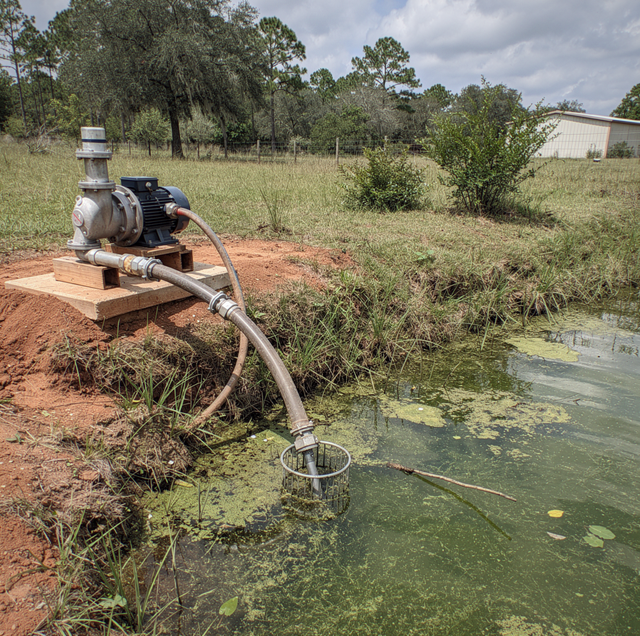
Two identical booster pumps, same make, same model, same horsepower, installed the same year, can reach very different ages before either one needs real work. Put one on a drilled well and the other on a farm pond feeding a pivot or a drip line, run them through the same duty cycle, and the pond-fed unit is very often the one that needs attention first. That is not because it is a lesser pump. It is because of what is actually moving through it every time it runs.
A well draws from water that has been filtered by sand and rock for years before it ever reaches the pump. A pond, ditch, or river-fed irrigation intake draws from water that is still carrying whatever the surrounding land put into it that week: last night's rain, whatever settled in the bottom of the ditch, whatever is growing on the surface. That difference in what the water is hauling along, more than anything about the pump itself, is what sets a surface-fed system on its own wear timeline. A well-fed pump can go a long stretch before anyone thinks about the wet end. A surface-fed one is dealing with some version of that same question almost continuously, in smaller, steadier amounts.
Suspended Solids and What They Do to the Wet End
Sediment and debris pulled in with surface water pass straight through to the pump's wet end. There is no equivalent of the sand and rock a well draws through to slow any of it down; whatever is suspended in the pond, ditch, or river at the moment the pump draws water is what reaches the impeller. Grit moving across the impeller vanes wears them down over time, and a pump running on a worn impeller pushes less water at less pressure than it was built to deliver. Discharge pressure sagging below the system's design is often the first thing you notice; the wear inside the pump is what causes it. Flooding or a heavy runoff event only adds to the sediment load moving through the intake at once, so wear that would otherwise build gradually can jump ahead in a single event, rather than accumulating at the steady pace it does on a normal day.
A foot valve that won't fully close is one of the more common reasons a surface-fed pump suddenly loses prime when nothing else in the system has changed; debris or biofilm is usually what's keeping it from seating.
Organic Load and Biofilm Build-Up
Sediment is not the only thing surface water carries that well water does not. Algae and biofilm, the slick growth that forms on anything sitting in open water, build up on and inside a surface-source intake during warm months, coating the strainer and narrowing the path water takes to reach the pump. It is a different kind of fouling than grit: less abrasive, more about restricting flow than eroding metal, and it can build up gradually enough that a drop in flow reads as a pump problem before anyone thinks to look at the intake itself. Warm months are when it grows fastest, but a surface intake still deals with sediment and floating debris the rest of the year, so it is a year-round part of running a surface-fed system rather than a summer-only concern. A pond or slow ditch tends to grow more of it than a moving river or creek, simply because the water sits still long enough for it to take hold.
Living Things and Floating Debris at the Intake
An open water source is, by definition, full of things a well never has to deal with: leaves, sticks, floating vegetation, and aquatic wildlife moving around the intake are ordinary background conditions for a pond, ditch, or river draw, not a sign that anything is wrong with the water itself. None of it needs to be dramatic to cause a problem; a single piece of debris in the wrong place at the intake can do it. The practical failure point is usually the foot valve at the bottom of the suction line: it is built to hold water in the line and seal against backflow, and once debris or biofilm prevents it from closing completely, the pump loses its prime rather than losing pressure gradually. If your pump primed fine yesterday and won't today, with nothing else changed, that is frequently a foot valve problem rather than a pump problem, which is why that valve gets checked before anyone assumes the pump itself has failed.
Water Levels and Quality That Shift Week to Week
A well has a static water level that moves in a narrow, predictable band. A pond, ditch or river does not. Rainfall raises the level and stirs up sediment that had settled out; a dry stretch drops it, sometimes far enough to change how deep the intake sits below the surface. None of that shows up on a well pump's radar. A surface-fed pump lives with it continuously, which is part of why the same service checklist gets used far more often on one than the other.
A tropical storm or heavy rain event can cause spikes in sediment, debris, and water levels at a surface intake all at once. Treat it as an intensified version of the season-long pattern, not a separate failure to plan around.
Why the Setup Is Designed Differently from the Start
A centrifugal booster pulling from a pond, ditch, or river sits above ground rather than in the water, and its setup has to account for what it draws from as much as what it needs to deliver downstream. How high the pump sits above the water surface and how far the suction line has to run both affect how reliably it can draw and hold a prime, apart from anything sediment or debris are doing to it. Getting the intake positioned where water stays available even as the level moves is as much a part of the design as sizing the pump itself, and it is a decision made with a source that changes in mind, not a fixed point the way a wellhead is.
What Regular Service Looks Like Through the Growing Season
Because the source keeps changing and the pump has no way to filter what it takes in, checking the intake and the impeller is a routine, recurring part of servicing an irrigation system that draws from open water, not a one-time fix. In practice, that means planning two or three intake looks into the growing season the way fuel and filters get planned, then adding one after any week that visibly changes the water. Each of those looks covers the same short list: pull and inspect the strainer, check that the foot valve is seating, and time how long the system takes to reach full pressure on the next start. When that time starts growing, the intake is where to look first, ahead of the pump.
Frequently Asked Questions
Not usually. The same wet-end pump models work on either source. What changes is what gets checked at each visit: on a surface-fed system, the mechanical seal and the wear rings get checked along with the impeller, because grit erodes those surfaces before an impeller looks visibly worn.
A change in how quickly the system reaches full pressure after start-up, rather than a change in pressure once it's running, is worth watching. It often means something is restricting flow at the intake before the impeller itself shows the kind of wear that drops pressure outright.
Yes, and the pattern to watch for is a pump that primes and runs on the first cycle of the day, then fails to pick up on the second. What often decides whether that happens at all is how the valve is hung. A foot valve suspended within a foot or so of the pond or ditch bottom draws settled silt into its seat on every start, while the same valve on the same source seats reliably when it is held higher in the water column, clear of the mud and off the bank. A technician confirms a partial seal by filling the suction line and timing how long it holds with the pump shut off, which answers the question without pulling the line to look.
Both matter, and neither replaces the other. Suction lift on a centrifugal booster is generally capped around 25 feet at sea level, less on a long horizontal run, so a pump set too high above a low pond or ditch surface can lose its ability to draw prime at all, independent of anything sediment or debris are doing to it.
No. Treating or dredging the water source itself isn't part of this work, and the water body is left alone. When organic buildup is a recurring problem, the equipment-side answer sits at the intake and the pump; in some setups, adding or replacing a sediment filter ahead of the pump is the option worth discussing instead.
There's no single interval that fits every property, and the trigger matters more than the calendar, because the two common triggers call for different checks. After a turbidity spike, the work sits at the wet end: strainer cleared, impeller vane edges and wear-ring clearance looked at for fresh grit erosion, and the mechanical seal checked, since suspended solids reach the seal faces before the wear ever shows up as lost pressure. After a level drop, almost none of that applies. The questions become how much submergence the foot valve has left, whether the intake now sits close enough to the bottom to pull silt, and whether the added suction lift has moved the pump toward cavitating. Same pump, same visit, different checklist.
Put your intake on a service interval that matches the source — impeller, seal, and foot-valve wear caught on a schedule instead of mid-season. Perry-Pump Repair Service LLC serves Lake Butler, Gainesville, and Alachua. Call (352) 320-2412.
