
Running Two Sprinkler Zones at Once: Is Your Pump at Risk?
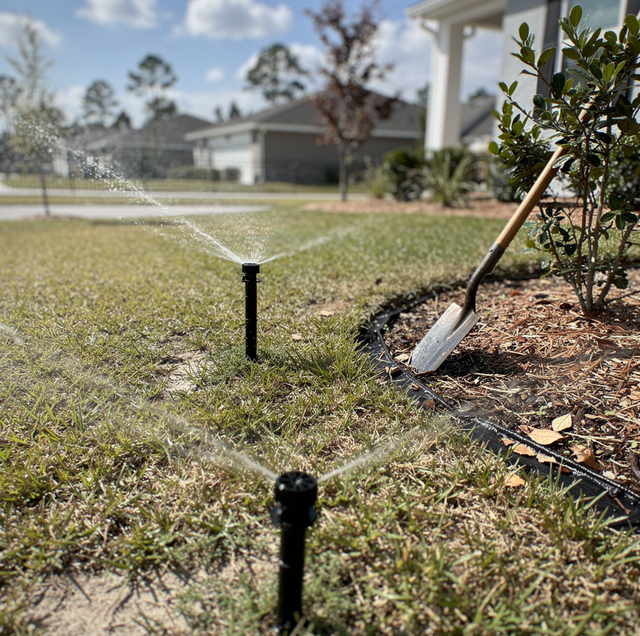
Running two sprinkler zones at once can damage the pump, but only if the pump was never matched to handle both zones together. On a system where the pump was sized with overlap in mind from the start, two zones firing at the same time is routine operation, not overwork.
The difference comes down to four things that change the moment a second zone opens: how much water the pump is being asked to move, how that demand lines up against what the pump can actually deliver, how long the motor has to keep running to satisfy both zones, and what the well has to keep feeding the pump while it does. Get those four right and overlap causes no harm. Get one of them wrong, and the pump is the part that pays for it, not the zone valve or the sprinkler heads.
Which Zone Pairings Overlap Safely and Which Do Not
How a pump gets sized for simultaneous zones is settled ground covered elsewhere, and so is what happens to a pump asked to serve more flow than it was matched to. What that math never answers is the question an owner actually faces at the controller: given the zones already in the ground, which two can share a start time.
Pairing is about the combination, not the count. A micro-spray or drip zone paired with a rotor zone is the safest overlap on most properties, because the low-flow zone adds little to the combined draw while the rotor zone carries the working load. Two fixed-spray zones are the hardest pairing, since spray heads deliver water in a short window at high flow, and stacking two of them puts the largest simultaneous demand the system can produce on the pump.
Where the zones sit matters as much as what they contain. Two zones fed off the same mainline branch compete within that one pipe before either reaches its head, so a pairing that looks reasonable on the controller can be starved by a shared lateral that was never sized to carry both. Pairing zones fed from opposite legs of the manifold avoids that. Elevation stacks the same way: two zones on the high side of a property both ask the pump for the same static lift on top of the flow, while pairing a high zone with a low one splits that load.
Three pairings are worth avoiding outright: the two largest spray zones together, the two zones farthest from the pump together, and any two zones downstream of the same undersized branch line. Everything else is worth testing head-by-head rather than assuming.
Why the Far End of the Line Feels It First
Pressure loss from overlap does not land evenly across a property. The pattern that points at overlap specifically: heads on the zone farthest from the pump start getting noticeably less water while heads on the nearest zone still look normal. That gap between the near end and the far end of the line tends to widen the longer both zones stay open together, since the far heads are competing for water the whole time rather than just at the moment the second zone kicks on.
The gradient builds because friction loss in the mainline increases with flow, and the pipe feeding the far zone carries both zones' water for most of its length. Every foot of that shared run costs pressure that only the far heads pay for. A rotor at the far end that is turning slowly, throwing short, or not completing its arc is reading that loss directly, while a spray head near the pump can look untouched at the same moment.
That uneven result is what makes overlap easy to miss during a quick walk-through. Everything near the pump can look like it is working, while the far end of the system quietly runs short every time both zones are open. Checking the last head on the longest run, during an actual overlapping cycle rather than a manual single-zone test, is the observation that settles it.
If zones were added to a system after the original pump went in, the pump specs were probably never rechecked against the new zone count. That gap is worth confirming rather than assuming the pump was resized automatically.
Run Time and How Often the Motor Cycles
Residential sprinkler pumps typically run 30 to 60 minutes per zone. Overlap zones together and the pump serves that demand in one continuous stretch instead of two separate, shorter runs with a cooling break between them, which is the change overlap actually makes to the motor's day. A pump matched to the combined load handles the longer stretch without complaint; a pump that is not can end up cycling on and off inside it, a failure pattern that is generally characteristic of pump sizing rather than of overlap. What overlap contributes on its own is the loss of the pause. Two shorter runs let the motor shed heat between them, and a single stretch covering the same total minutes does not.
What the Suction Side Has to Keep Supplying
None of the flow or pressure math matters if the source can't keep feeding the pump. Two zones drawing together for a longer stretch ask the well, pond, or other source to sustain a higher combined draw throughout the cycle, not just during a brief peak. A source that can supply a single zone's draw comfortably may not be able to sustain the combined draw of two zones for the full run time. Wells carrying fine sand or sediment add another layer to that limit: a sustained pull from two zones running together gives the water less time to settle or clear between draws than a single zone with a natural pause built into the schedule would. When the source can't keep up, the pump starts working against air or a thinning supply before either zone finishes its cycle, which stresses the pump in a way unrelated to how the pump itself is sized.
When Overlap Is Fine and When It Is Not
Overlap is fine when the pump, the source, and the schedule were all built around zones running together from the start. That's the case for most properties with a 1.5- to 2-HP pump and a program designed for it. Overlap is not fine when a system originally programmed for one zone at a time gets a second zone added to the same start time without anyone rechecking whether the pump and source can carry the combined load. A quick way to tell which situation applies is to look at when the second zone was added to the schedule: a pump and program designed together from day one were already tested against that load, while a second zone added later to an existing single-zone schedule almost never was. The fix in that case isn't to avoid overlap forever. It's to confirm the pump, source, and program actually match the zone count being asked to run together, and correct whichever one doesn't.
Frequently Asked Questions
Most sprinkler pumps are switched by a pump start relay wired to the controller's master valve or pump terminal, and that terminal energizes whenever any station anywhere in the controller is active. Two programs running concurrently, which many controllers allow by default, keep the relay pulled in continuously across both, so the pump never sees the off interval that a single program's schedule appears to give it. Relay contacts also carry the motor's starting load, and a pitted or welded set can keep the pump running after every station has closed.
A pressure tank sized for single-zone draw empties faster when two zones are pulling from it together, so the pump ends up cycling on sooner and more often than it would if running zones one at a time, even when the motor itself has the capacity to serve both.
A zone solenoid valve that's sticking partly closed narrows its own flow path, which can produce the same low-pressure symptoms as an overloaded pump, but only on the one zone downstream of that valve while every other zone runs normally.
A constant pressure system adjusts motor speed continuously to hold a target pressure as demand changes, so two zones opening together shows up as the drive ramping up to compensate rather than pressure dropping the way it does on a fixed-speed pump.
The foot valve or check valve on the suction line must hold a prime between the pump's on and off cycles. A valve that's already worn can leak enough to let the pump lose prime intermittently, as overlap pushes it through more cycles in a shorter span, which reads as a random loss of water rather than steady low pressure.
Every motor start draws a current surge through the start relay and capacitor. Cycling more often under overlap-driven short-cycling adds more surges over the same stretch of time, which is a different kind of wear than the winding heat that comes from one long, continuous run.
Find out what your pump was actually sized for — a zone-capacity review tells you whether overlap is safe on your system or already costing you at the far heads. Perry-Pump Repair Service LLC serves Lake Butler, Gainesville, and Alachua. Call (352) 320-2412.
