
7 Signs Your Well Pump Is Starting to Fail
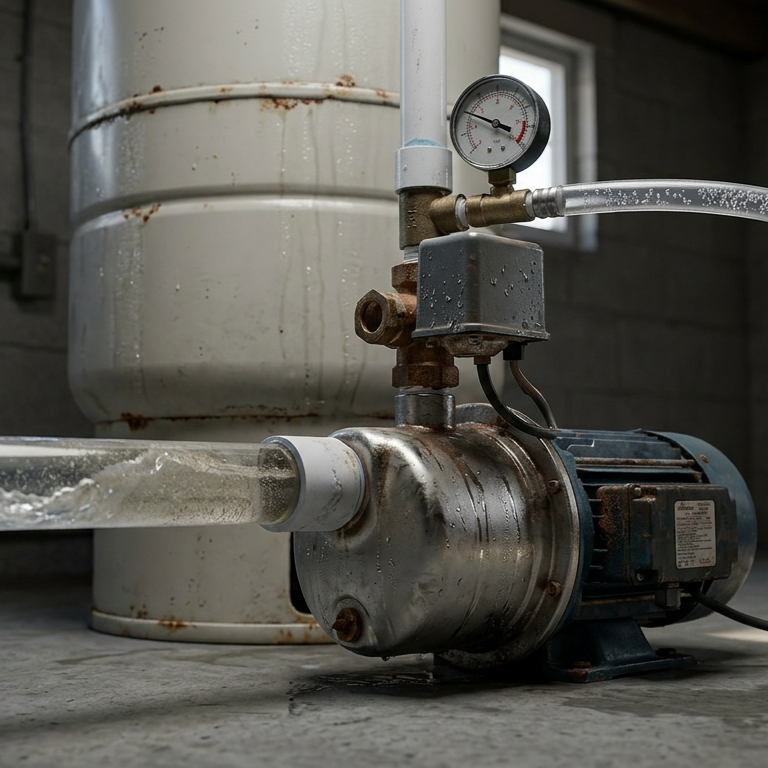
Quick Answer: A well pump rarely dies without warning. Early signs include weak or fluctuating water pressure, air sputtering from faucets, the pump running constantly or cycling on and off rapidly, sand or cloudy water, strange noises, a jump in your electric bill, and water that comes and goes. Catching these early lets you repair the cause — a switch, tank, or wiring issue — before the pump burns out and leaves you without water.
A well pump usually gives you a heads-up before it quits — the trouble is the early signs are easy to dismiss until you're suddenly without water. Knowing what those signals look like lets you act while it's still a manageable repair, rather than an emergency replacement. Here are the warning signs worth paying attention to.
Why Pumps Give Warning Signs
A well pump works hard and wears gradually, and a failing pump (or a failing part of the system around it) usually changes how your water behaves before it stops entirely. Pressure, sound, water clarity, and even your power bill all shift as the pump struggles. Reading those changes early is the difference between a planned repair and a no-water emergency.
The Warning Signs
Weak or Fluctuating Water Pressure
One of the earliest signs is pressure that drops or fluctuates. A pump losing its ability to build and hold pressure shows up as weak showers and inconsistent flow. If pressure has been gradually weakening, the pump (or the pressure tank) is a prime suspect.
Air Sputtering From the Faucets
Spitting, sputtering faucets that cough out air mean air is getting into the system — often because the water level has dropped near the pump, the pump is losing prime, or there's a leak drawing air in. It's a classic sign of a pump or well-level problem developing.
The Pump Runs Constantly or Cycles Rapidly
A healthy pump cycles on and off as needed. A pump that runs nonstop (can't reach cutoff pressure) or short-cycles (turns on and off rapidly) is a strong warning sign — often a failing pressure switch, a waterlogged tank, or a pump that's wearing out. Both patterns also accelerate wear, so they shouldn't be ignored.
Sand, Grit, or Cloudy Water
Sediment or cloudiness that wasn't there before can signal the pump is drawing from too low, the water level has dropped, or a screen is failing — all problems that stress the pump. Sand also wears the pump faster, compounding the issue.
Strange Noises, High Power Bills, and On-Off Water
Other tells include unusual noises from the pump or pressure tank, a noticeable jump in your electric bill (a struggling pump runs longer and draws more power), and water that comes and goes intermittently. Any of these points indicates a system working harder than it should.
| Sign | What it often means |
|---|---|
| Weak or swinging pressure | Worn pump or failing tank |
| Air sputtering at faucets | Dropped water level/lost prime/leak |
| Pump runs nonstop | Leak, failed switch, or worn pump |
| Rapid on-off cycling | Waterlogged tank or switch issue |
| Sand or cloudy water | Low pump position, dropped level, failing screen |
| Higher electric bill | Pump running longer/struggling |
Why Catching It Early Pays Off
A pump showing warning signs is still repairable— the cause might be a pressure switch, a tank that needs recharging, a wiring problem, or a pump that can be serviced. Wait until it fails completely and you're dealing with a sudden no-water emergency, often at the worst possible time, plus the strain of a pump that may have run itself to burnout. Acting on the early signs protects the pump and avoids the scramble.
If you're noticing any of these, it's worth having the system checked. A well professional can test the pressure switch and tank, inspect the pump and wiring, and assess the water level to find the cause while it's still a planned repair. Regular well maintenance — having the system looked at periodically — catches many of these issues before they reach your faucets at all.
Frequently Asked Questions
Watch for weak or fluctuating water pressure, air sputtering from faucets, the pump running constantly or cycling on and off rapidly, sand or cloudy water, strange noises, and a rising electric bill. These usually appear before the pump quits entirely. If you notice several of them, have the system checked so the cause can be repaired before it becomes a no-water emergency.
Air at the faucets means air is entering the system — commonly because the well's water level has dropped near the pump, the pump is losing its prime, or a leak is drawing air in. It's a classic early sign of a pump or well-level problem. Because running a pump that's pulling air can damage it, it's worth having the cause diagnosed promptly.
No — rapid on-off cycling (short cycling) is a warning sign, not normal operation. It's often caused by a waterlogged pressure tank that's lost its air charge or a pressure switch problem, and it wears out the pump quickly. A pump that runs constantly is the opposite problem and also a red flag. Either pattern is worth having checked before it causes damage.
Yes. A pump that's struggling or running longer than it should — because it can't build pressure, or because of a leak or tank issue — draws more power, which can show up as a noticeable jump in your electric bill. An unexplained increase, paired with other signs such as low pressure or constant running, is a reason to have the pump and system inspected.
Lifespan varies with the pump type, water quality, usage, and maintenance, but well pumps generally last quite a few years with proper care, and regular maintenance helps them reach the upper end of that range. Sand, hard water, frequent cycling, and electrical issues shorten it. Watching for the warning signs and servicing the system periodically is the best way to get the most life from a pump.
Don't Wait for the Water to Stop
A failing well pump almost always warns you first through weak pressure, sputtering air, constant running or rapid cycling, sandy water, odd noises, or a higher power bill. Those signals are your chance to fix the cause while it's still a repair, not an emergency. If your water is behaving differently, have the system checked, and consider periodic well maintenance so problems get caught before they ever reach your tap.
Think of it the way you'd think about a vehicle: the strange noise, the rising fuel use, the rough idle are all cheaper to address than a breakdown on the side of the road. A well pump is no different — the sputtering faucet and the creeping electric bill are inexpensive to investigate now, but ignoring them until the pump quits turns a routine service call into an urgent, no-water scramble. When your water starts behaving differently, treat it as the early warning it is, and you'll usually trade a small planned repair for a large unplanned one. That trade alone is reason enough to keep an eye on how your water behaves and to act the moment something changes.
Noticing the early signs of a failing well pump? — Get the system inspected and the problem fixed before you lose water. Perry-Pump Repair Service LLC serves Lake Butler, Gainesville, Alachua. Call (352) 474-7142.