
Three-Phase vs. Single-Phase Irrigation Pumps: Who Decides
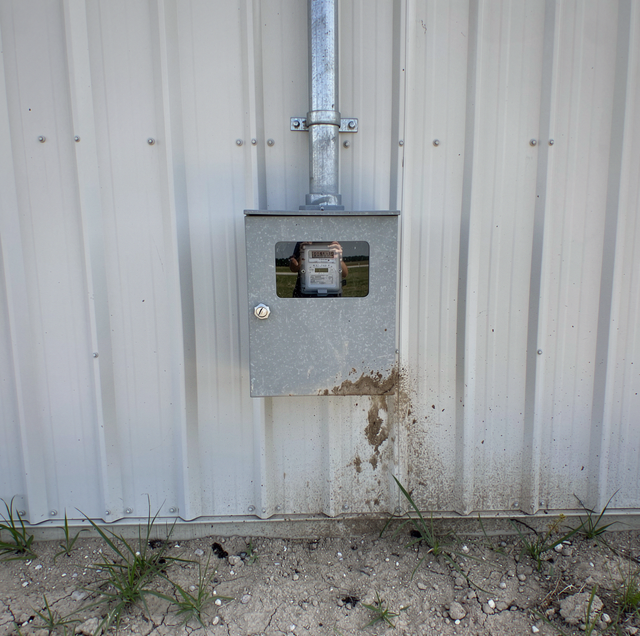
Quick Answer: The phase question is decided by what the utility supplies at the pump location, not by preference. The motor size comes from the hydraulics, and the phase comes from the service. Confirm the supply at the meter with the utility first, then settle the hydraulics, then match the motor.
Most equipment decisions on a working property start with a preference. This one usually does not. By the time anyone is standing at a wellhead weighing a three-phase motor against a single-phase one, the answer has often already been set by a decision the power company made years earlier, out on a pole at the road, for reasons that had nothing to do with irrigation.
That catches growers off guard. Someone does the hydraulic homework, picks the pump that matches the acreage and the head, then learns the motor it normally ships with cannot be supplied there. The reverse happens just as often: three-phase has been sitting at the meter since the place ran a dairy, and nobody asked before ordering a single-phase replacement to match what came out of the hole.
The phase question gets a lot easier in the order in which the decision is actually made.
What Is Already at the Service
The first fact in this decision is not about the pump at all. It is what the utility brought down the line and terminated at the meter.
Single-phase distribution is the ordinary rural build. Three-phase tends to exist where something already asked for it: an old packing house, a dairy barn, a grain dryer, a welding shop with a large compressor, or an industrial spur that happened to run past the property line on its way somewhere else.
Whether it can be brought in is a utility question, and only the utility can answer it. Distance from the nearest three-phase line, what is already hanging on the poles, and whether the equipment feeding that line can carry a new load all sit outside what anyone can determine by looking at a pump.
Ask the utility to confirm what is at the meter and what is available on that line before any pump is ordered. That single phone call often settles the motor question for you.
There is a second trap on larger properties: having three-phase somewhere does not mean having it everywhere. Farms frequently carry more than one meter. A three-phase service feeding the shop yard tells you nothing about a well set half a mile out in a field, which may sit on its own single-phase service fed from a different point on the line. The supply that matters is the one at the pump location.
Everything from the line through the service entrance, the panel, and the disconnect belongs to the utility and a licensed electrician. Confirm it with them at the start rather than working backward from what the pump end assumed.
What the Size of the Job Demands
Once the supply is known, the hydraulic work sets the rest. How much water, against how much total head, for how many hours: acreage, nozzle or emitter demand, lift from the pumping level, and friction through the mainline. Those numbers produce a pump. The pump produces a motor size. Motor size is what pushes the phase question, not the other way around.
At the small end of the range, essentially everything is available in single-phase. Yard systems, modest sprinkler sets, and small booster pumps are built that way because most services can feed them.
As the load climbs, the choices narrow. Larger ag irrigation loads are common on this kind of ground, and as motor sizes climb, the single-phase options inside a manufacturer's line thin out and eventually stop, while the three-phase options in the same line keep going. That is a manufacturing reality rather than a rule about what will physically work.
Run hours belong in the conversation too. An ag pump feeding a crop throughout the growing period commonly runs four to eight hours a day, and that duty pattern calls for a continuous-duty-rated motor. Duty rating is a separate specification from phase, decided on its own merits, and it does not substitute for this decision. A continuous-duty motor is available in both.
What Changes about How the Motor Starts
This is where the two stop being variations on one machine and become different machines.
A single-phase supply delivers one alternating current. A motor fed that way produces a field that pulses rather than rotates, so at a standstill it has no direction to turn. To get the rotor moving, it needs a start winding, and with that winding comes a start capacitor and a start relay. On a submersible, those parts live in the control box mounted at the surface. Once the rotor reaches speed, that starting circuit drops out, and the motor runs on its main winding.
Three-phase is different in kind. The three legs arrive offset in time, so the field rotates on its own from a dead stop. There is no start winding, no start capacitor, no start relay, and no switching event at every single start.
Two consequences follow that matter in the field:
Starting draw: A single-phase motor pulls a heavier inrush for the same output than the three-phase equivalent. Every start is a larger event on the service.
Torque delivery: Three-phase produces torque that is continuous through each revolution, while single-phase torque pulses as the current alternates. On a heavily loaded pump, smoother delivery translates to less mechanical stress on the coupling and shaft.
One behavior surprises people: a three-phase motor will happily turn either direction, depending on the order the three legs arrive in. Rotation is verified at start-up by whoever commissions the system, because a centrifugal pump running backward still moves some water and still sounds alive.
What Changes about Service and Parts
The differences carry through to what breaks and what is on the shelf when it does.
Wear items: The single-phase system carries start components that three-phase does not have at all. On a submersible set, those parts sit in a surface control box, which means a start-side failure is usually addressed without pulling the pump out of the well. That is a real advantage on a deep set.
Protection gear: Three-phase moves the protective hardware to the starter side. A magnetic starter with overload elements matched to the motor, and often a phase monitor alongside it, does the work that start components and a simpler control do on the other side.
A three-phase motor that loses one leg can keep turning while it overheats on the remaining two. Phase-loss protection at the starter is what catches that condition, not the sound of a motor that still appears to run.
Stocking: Common single-phase motors and control boxes are carried broadly by supply houses. Larger three-phase motors and their starters are more often ordered in, and any large ag motor can turn into a lead-time item regardless of phase.
Physical build: For the same output, a three-phase motor uses less winding material and typically comes in a smaller frame than the single-phase version. That matters where the motor has to fit inside a casing, or bolt to an existing base and line up with an existing coupling.
End of life: Larger three-phase motors are routinely sent to a motor shop and rewound. Smaller single-phase motors are generally replaced outright, because a rewind rarely makes sense at that size.
When the Supply and the Motor Do Not Match
Three mismatches account for most of the trouble.
The pump you need is only offered in three-phase, and the service is single-phase. The options here are worked out with the utility, which can specify what extending the line to that point entails, and with a licensed electrician, who owns any equipment that would sit between the service and the motor. Neither part belongs to the pump end of the job, and neither is something to attempt on your own.
Three-phase is available at the pump location, but a single-phase motor gets ordered anyway. This usually happens when the replacement is matched to what came out of the hole rather than to what is at the meter. It puts start components back into a system that did not need them, gives up the smoother start, and often lands on a physically larger motor than the space was built for.
The motor and the existing control gear do not agree. A starter left over from a previous motor, or a panel arrangement sized for a different load, is a licensed electrician's call before anything is energized, not a detail to work around at the wellhead.
The pattern in all three is timing, and all three are headed off by the same order of operations. Confirm the supply at the pump location with the utility first, not at the shop yard meter. Settle the hydraulics next, so motor size comes from the acreage and the head rather than from whatever came out of the hole. Have a licensed electrician check the existing starter, panel, and disconnect against the proposed motor. Order last. Every one of these three mismatches gets caught somewhere in that sequence, and none of them gets caught after the set is already in the well.
Frequently Asked Questions
No. The winding arrangement is set when the motor is built. Dual-voltage motors are common; dual-phase motors are not. On a submersible, the motor is sold matched to a specific pump end, so changing phase means a new motor, often a re-coupled pump end, and pulling the entire set out of the well to do it.
The PH field states it outright. Read the service factor and the locked-rotor code letter on the same plate while you are there, since they describe how much margin the motor carries and what class of starting inrush the manufacturer rates it for. Photograph the plate before anything is ordered, because it is unreadable once the set is back in the ground.
Sometimes. Some drives accept a single-phase input and deliver a three-phase output to the motor, a principle similar to that of constant pressure systems. It only holds up if the drive is rated for single-phase input at that load and the motor is rated for drive duty, meaning its insulation system is built for it. That pairing is a selection question for your pump contractor and a licensed electrician together.
Yes, and the two can differ on the same property. A submersible in the well and a surface booster feeding the system are separate motors with separate nameplates. It is common to find one on three-phase and the other on single-phase, usually because the booster was added later and tied in at a different point on the property.
Not the ground, only how much of it runs at once. Designs that stay on single-phase generally split the demand rather than concentrating it: more zones running in sequence, a longer total run time, or a second, smaller set at another point. What you give up is calendar time in the watering window, not acreage.
It has to match. A standby unit or a tractor-driven PTO generator must supply the same phase the motor expects, and it must be sized to the starting demand rather than the running demand, since the moment of start is the peak the generator must survive. Sizing the generator itself belongs to the generator supplier or a licensed electrician, not to the pump end of the job. What the pump side contributes is the input they need to do it: the motor nameplate, its locked-rotor code letter, and the starting demand at the load the pump will actually run.
Talk through the motor before the pump gets ordered — get the supply, the load, and the motor matched in one conversation instead of at the delivery gate. Perry-Pump Repair Service LLC serves Lake Butler, Gainesville, and Alachua. Call (352) 320-2412.
