
Repair or Replace: When Is a Well Pump Worth Fixing?
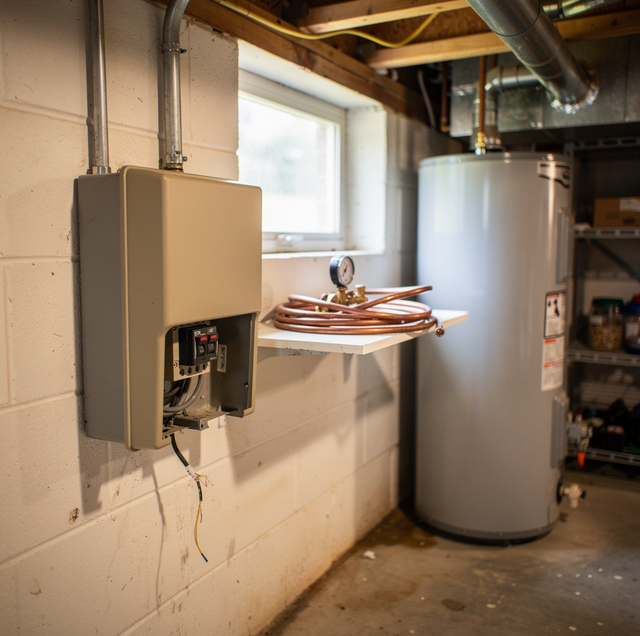
A well pump acting up puts you in front of a real decision, and it's rarely obvious which way to go from the surface. Low pressure, a strange noise, or a breaker trip can come from a single worn part that a technician swaps out in an afternoon, or it can be the pump telling you its motor is on its way out. Treating every symptom the same way, either replacing at the first sign of trouble or repairing again and again out of habit, wastes money in one direction and risks a sudden loss of water in the other.
The good news is that this decision isn't a guess. Pump age, how often it's already needed attention, and which specific symptoms are showing up all point to one answer or the other. Here's how those pieces fit together and how a well pro sorts through them on an actual visit.
Why Pump Age Sets the Baseline
Age is the first filter, because it tells you how much runway is realistically left before other factors even come into play.
A submersible pump, the type sitting down in the casing on most residential systems, typically runs eight to fifteen years with reasonable upkeep. A jet pump, mounted above ground, often lands on the shorter side of that range because its components experience greater temperature swings and physical wear than a submersible unit fully surrounded by water. Those numbers aren't fixed rules; a pump that's been serviced consistently and hasn't been forced to fight sediment or a failing tank can run past the high end, while one that's been neglected or strained can fail well short of it.
What age really does is set expectations for what a repair buys you. A pump three or four years into service that develops a bad capacitor or a failing pressure switch has most of its working life still ahead. Fixing that part is a clear call, since the pump itself, the motor, the bearings, the seals, still has years left in it. A pump pushing past twelve or thirteen years telling the same story is a different conversation. The part causing today's symptom might still be fixable on its own, but a pump that old is also closer to a motor failure on its own timeline, and a targeted repair on an aging unit sometimes buys a matter of months rather than years.
This is where a repair decision starts to feel less like a single yes-or-no and more like weighing a repair's cost against how much pump is left to protect. A young pump with a bad part is money well spent on that part. An old pump with a bad part raises the question of whether it's worth fixing that piece only to have the motor go a season later.
What A Repair History Tells You
One data point rarely tells the whole story, but a pattern across several visits usually does.
A pump that's needed one repair in the past several years, a switch replaced here, a capacitor there, isn't showing a pattern. Isolated failures happen to healthy equipment; parts wear at different rates, and a single component failing doesn't mean the rest of the system is following suit. That kind of history supports fixing the part in front of you and moving on.
A pump that's been repaired two or three times in a single year is telling a different story. When the same system keeps needing attention, even for what look like unrelated parts, it often means something else is driving all of it: a motor that's straining and taking out its own capacitor and start components along the way, sediment working its way past a screen that's letting grit reach and wear the pump internals, or an aging unit that's simply reaching the point where every part is wearing out close together. In that situation, each repair might look small and reasonable on its own, but the total picture is a pump that's failing on multiple fronts rather than one that had a bit of bad luck.
A useful way to think about it: one repair is a data point, and a second repair within a short stretch is a trend. A well professional checks past service records for this reason, since a system's history is often a better predictor of what's coming than the symptom that brought them out this time.
Symptoms That Usually Point To A Fixable Part
Some symptoms appear when a specific component fails while the rest of the pump is fine, and these tend to make the repair decision easy.
A pump that hums, tries to start, but never spins up often points to a bad run or start capacitor. The capacitor's job is to give the motor the extra push it needs to get moving, and when it fails, the motor is left straining against a load it can't overcome. Swapping the capacitor is a targeted fix, and a motor that was otherwise fine before the capacitor failed usually runs normally again once it's replaced.
Rapid clicking or chatter at the pressure switch, paired with wildly fluctuating pressure, points to the switch itself or, more often, to a pressure tank that's lost its air charge. Either way, the pump motor is being asked to short cycle over and over, which is hard on it, but the wear that's already happened is often limited if the switch or tank is replaced before the cycling has gone on for months.
A control box that's tripping a breaker, showing burn marks, or has visibly corroded terminals is frequently an isolated electrical fault rather than a sign the pump itself is failing. Control boxes take a disproportionate hit from lightning and power surges, since they sit at the point where household wiring meets the pump circuit, and a control box damaged by a surge can leave a perfectly healthy motor unable to start.
Reduced flow that returns to normal after a filter or screen is cleared points to a blockage rather than a pump problem. Sand and sediment build up on screens and intakes, and once that's cleared, the pump was never actually the issue.
The common thread across all of these is that the symptom traces back to one component, and once that component is addressed, the rest of the system returns to normal operation. That pattern is what repairs the sound call rather than a stopgap.
Symptoms That Usually Point To A Pump Nearing The End
Other symptoms point elsewhere entirely: not to a single failed part, but to a motor and pump assembly that's wearing out as a whole.
Flow that's been declining gradually over months, not a sudden drop, is one of the clearer signs. A single bad part usually causes a sudden change, working fine one day and not the next. A slow decline in flow or pressure over an extended stretch, especially without a clear single cause like a clogged filter, points more toward internal wear inside the pump itself: worn impellers, a bearing losing tolerance, or a motor that's gradually losing its ability to do the work it once did.
Frequent cycling that isn't due to a waterlogged tank or a faulty switch is another red flag. If the tank and switch have already been checked and test fine, but the pump is still running far more than it should to satisfy normal household demand, the pump may simply be working harder than it used to to move the same amount of water, a sign of internal wear rather than an external cause.
A motor that runs hot, draws higher current than its rating, or strains audibly under load signals the motor itself is laboring. A technician measuring amp draw against a pump's rated specification can catch this even before it turns into a full failure. A motor pulling noticeably more current than it should, with no external cause found, is a motor wearing out from the inside.
Grinding, chattering, or scraping noise from the pump itself, rather than a switch clicking, suggests bearing wear or a mechanical bind. Metal-on-metal wear inside a submersible pump only moves one direction, and a pump making that kind of noise is generally past the point where a targeted part swap resolves it.
The pattern behind all four: the issue isn't isolated to a single component. It shows up as the whole assembly working harder, running hotter, or performing worse over time, and no single repair addresses that kind of broad decline.
How A Well Pro Weighs The Decision
In an actual service call, none of these factors are judged in isolation. A technician looks at the pump age, the repair history on file for that system, and the specific symptom together, because any one of them, in isolation, can point in the wrong direction.
A young pump showing an isolated-part symptom is the easiest case: fix the part. An old pump showing a broad decline is close to as easy in the other direction: a replacement is the sounder investment, since the part causing today's call is unlikely to be the last thing to fail. The harder calls sit in between. A mid-life pump with a fixable-looking symptom but a recent history of repeated repairs deserves a closer look at the whole unit before assuming this fix will be the last one. An older pump with what appears to be an isolated capacitor failure but no prior repair history might still be worth fixing, since age alone doesn't guarantee trouble is coming soon.
Measurement matters more than a visual check at this stage. Amp draw compared against the pump's rated specification, pressure tested at the wellhead versus at the tap, and a look at how the pump has performed on past visits all give a clearer read than symptoms alone. A pump that tests within its normal range, even if it's older, often has more life left than its age alone would suggest. One that's drawing high current or showing declining output on the gauge, even if it's relatively young, is telling a more urgent story than its age would imply.
The goal on both sides of the decision is the same: match the fix to what's actually happening inside the pump, rather than defaulting to the same answer every time, regardless of what the pump shows.
Frequently Asked Questions
Yes, as long as the repairs are for unrelated parts spread out over a reasonable stretch of time. A switch replaced one year, and a capacitor replaced two years later, isn't unusual for a system with several parts that each wear out on their own schedule. What raises a flag is multiple repairs bunched close together, since that pattern more often points to a pump under broader strain rather than a string of coincidences.
Pulling a pump gives a direct look at the impellers, seals, and housing that a technician can't see or measure from the surface, and it's sometimes done when above-ground testing points toward internal wear but doesn't confirm it. Most of the time, though, amp draw, pressure readings, and a pump's service history give enough of a picture that pulling it isn't needed just to make the repair-or-replace call.
Not always. A grinding or scraping noise from the pump body usually does point to bearing wear or a mechanical bind, but a clicking or chattering noise often comes from the pressure switch or a waterlogged tank instead, both of which are separate from the pump itself. Where the noise is coming from matters as much as the fact that there's noise at all.
Not automatically. A control box and a motor can fail independently, and testing each one separately is what determines whether both need attention or just one. Replacing a control box that's still working fine adds unnecessary cost, while leaving a damaged one in place after a motor swap can put a new motor at risk from the same fault that affected the old one.
Sand, grit, and mineral content in the water increase wear on impellers, seals, and screens compared with clean water, which can shorten a pump's working life even with regular upkeep. A pump pulled from sediment-heavy water sometimes shows more internal wear than its age alone would suggest, which is one more reason testing and inspection matter more than a birth date on a service tag.
The repair may restore normal operation for a short stretch, but if the motor is truly wearing out, another symptom typically shows up within weeks or months rather than years. This is part of why looking at the whole system, not just the part that failed today, matters before committing to a repair on an older pump.
Get a straight answer on repair versus replacement — a full system check that measures pump performance instead of guessing from symptoms alone. Perry-Pump Repair Service LLC serves Lake Butler, Gainesville, and Alachua. Call (352) 474-7142.
