
Signs Your Pressure Tank Has Failed Before the Pump Does
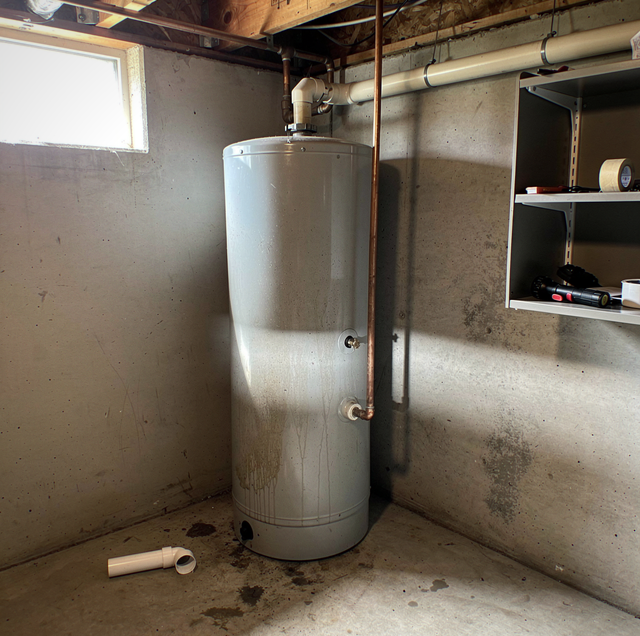
You reach for a glass of water, and the pump kicks on before the faucet is even halfway open. A minute later it clicks off, then on again, then off, in a rhythm that never used to be there. Nothing about the water itself looks wrong, yet something in the system has clearly changed. That change is almost always the pressure tank quietly losing the one thing it depends on to do its job: a cushion of compressed air sealed away from the water.
A pressure tank does not store water so much as it stores air pressure. Inside sits a rubber bladder or diaphragm holding back a pocket of air, and that air compresses as the pump fills the tank and pushes back out as your fixtures draw it down. When the seal holding that air fails, or the air simply bleeds away over the years, the tank stops acting as a buffer and starts acting like a plain pipe. Every symptom below traces back to that single mechanical loss, and each one is a reason to get the tank checked before the pump takes the damage instead.
When the Pump Won't Stop Clicking On and Off
The clearest sign of a failed tank is a pump that starts and stops every few seconds rather than running in long, steady stretches. A healthy tank holds enough pressurized water between the pump's stop point and its restart point that a shower or a load of laundry barely wakes the pump more than once or twice. Once the air cushion is gone, there is nothing left to absorb that swing. The smallest draw, even a toilet refilling, drops pressure to the restart point almost instantly, so the pump fires, satisfies the tiny demand, and shuts off again within seconds. Homeowners usually describe it as a clicking or humming that repeats in a fast, steady beat rather than the occasional single run they are used to hearing.
A Tank That Feels Waterlogged and Heavy
Tap the outside of the tank, or try rocking it slightly, and compare what you feel to what you remember from before. A tank with a working air charge feels noticeably lighter toward the top, where compressed air sits above the water line, and it will shift or tip more easily because part of its volume contains nothing but gas. A waterlogged tank feels solid and dense from the base all the way to the top fitting, because water has filled the space the air charge used to occupy. Some tanks even develop a faint sloshing sound when nudged, a giveaway that there is no longer a sealed pocket of compressed air keeping things quiet inside.
Pressure That Surges Then Falls at the Tap
Watch the pressure gauge near the tank, or just pay attention to the flow at a sink, during a period of normal household use. A tank that is still doing its job holds the reading in a narrow band the whole time water runs. A failing one lets the needle swing widely: pressure climbs high right after the pump shuts off, then drops fast as soon as a fixture opens, sometimes low enough that a shower goes from strong to weak within a few seconds of someone else turning on a tap. That swing is the tank's inability to hold a reserve, and it tends to get more noticeable, not less, the longer it goes unaddressed.
A Rusty, Watery Thud When You Tap the Shell
With the system powered down, run your knuckles or the handle of a screwdriver along the tank's side, moving from top to bottom in a line. A healthy tank rings out with a hollow, almost drum-like note near the top, then turns dull lower down where the water sits. A failed tank gives you the same dull, watery thud the entire way up, with no hollow note anywhere. On an older galvanized tank, that thud is sometimes accompanied by a faint grainy rattle, a sign that rust flaking from the inside of the steel shell has settled into the standing water. That gritty sound, paired with a uniformly heavy tap test, points to a tank that has lost its air charge and picked up internal corrosion at the same time.
Pipes That Bang the Moment a Faucet Shuts
Water hammer, the loud thud or series of knocks that runs through the pipes right after a faucet or valve snaps shut, is one of the least obvious signs of a failed tank because homeowners tend to blame the plumbing instead. A properly charged pressure tank acts like a shock absorber for the whole system: its air cushion soaks up the sudden pressure spike that occurs when moving water is stopped abruptly, so the energy dissipates quietly rather than slamming through the pipe walls. Once that cushion is gone, the same abrupt stop has nowhere to go but straight into the pipe, and you hear it as a bang or a rattling knock, sometimes strong enough to feel through a wall. A house that never used to hammer and suddenly does, especially right around the time the pump started cycling more, is telling you the tank's shock-absorbing air charge is no longer there to do its job.
Quick Reference: Sign, Likely Cause, Next Step
| What You Notice | What It Usually Means | What to Check |
|---|---|---|
| Pump clicks on and off every few seconds | Air cushion is gone; tank is waterlogged | Air pre-charge with the tank drained and power off |
| Tank feels heavy and solid top to bottom | Bladder or diaphragm has failed, or air has leaked out | Weight and sound test against a known-good tank |
| Pressure surges high then sags fast at the tap | Reduced usable drawdown between pump cycles | Pressure gauge readings during normal use |
| Dull, watery thud with a gritty rattle when tapped | Lost air charge plus internal rust or sediment | Tap test from top to bottom; look for rust-colored water |
| Pipes bang when a faucet or valve shuts | No air cushion left to absorb the pressure spike | Whether hammering started alongside more frequent pump cycling |
How a Torn Bladder Drains the Air Charge
Most modern tanks separate air from water with a flexible bladder or a diaphragm, a rubber membrane that keeps the two from ever touching directly. As long as that membrane holds, the air side stays sealed and the pre-charge, the air pressure inside the tank with no water in it, stays close to whatever it was set at during installation. Rubber fatigues with age and with every pressure cycle it flexes through, and eventually it develops a small tear or pinhole. Once that happens, water pushes into the air side a little at a time, air escapes through the same opening, and the cushion that used to separate cut-in from cut-out collapses. On older tanks without a membrane at all, the air and water share the same space, so the water slowly absorbs the air molecule by molecule with no rupture required, which is why those designs waterlog even faster than a bladder tank with a healthy seal. Either path ends the same way: a tank that can no longer store pressure, only pass it straight through.
Why a Failed Tank Burns Out the Pump Motor
None of the signs above are cosmetic. A pump motor is designed to start a limited number of times per day, and each start draws a heavy current surge through the windings, several times the current the motor draws once running. That inrush is the hardest moment in its duty cycle. A tank that has lost its cushion forces the pump into hundreds of extra starts a day instead of a few dozen, and the windings heat up faster than they can shed that heat between cycles. Over time, winding insulation breaks down, the switching components on an aboveground jet pump wear out, and a submersible motor loses the water flow around it that normally carries heat away during longer runs. A pump rated for a decade of service can fail in a fraction of that time once a waterlogged tank puts it on a start-stop cycle it was never built to survive.
Fixing a failed tank usually means confirming the air pre-charge with the tank drained and the pump powered off, then recharging a tank that simply lost air or replacing one whose membrane has torn. Either way, the fix restores the cushion that protects the motor, and the sooner it happens after the first click, thud, or bang, the fewer extra starts the pump has already absorbed.
Frequently Asked Questions
It varies with how the tank lost its charge in the first place. A slow air leak through the Schrader valve can take months to go from a mild pressure swing to a fully waterlogged tank, giving you time to catch it during routine cycling checks. A torn bladder tends to fail much faster, sometimes within days, because water is actively pushing into the air side rather than air slowly seeping out. A sudden jump from occasional short cycling to constant clicking within a day or two usually points to the faster, membrane-tear path rather than a gradual air leak.
It depends on why the air is gone. If the pre-charge simply drifted low over the years through the Schrader valve, a technician can drain the tank, cut power to the pump, and refill the air side to the correct setting, typically about 2 pounds per square inch below the pump's cut-in pressure. If water sprays or spits out of that same air valve when it is pressed, the membrane has already torn and water has crossed into the air side, which means recharging will not hold and the tank needs replacing.
Yes, and that can work against you. A larger tank holds more usable drawdown, the water it can deliver between pump cycles, so it may take longer before losing air charge shows up as short cycling. A smaller tank with the identical air loss shows symptoms almost immediately because it had less reserve to lose. A large-capacity system can quietly run through months of reduced air charge before anyone notices the pump running more than it should.
They do. A bladder tank uses a bag-style membrane that only touches the water at its opening, so wear concentrates around that connection point and a bladder tank often fails there first. A diaphragm tank uses a membrane sealed across the full width of the tank shell, splitting it into a permanent air chamber and a permanent water chamber, so its failure point is more often a crack along the seam where the diaphragm is clamped. Both end in the same lost cushion, but a technician checking for the failure point looks in a different spot depending on which style is installed.
Indirectly, yes. A pump forced into near-constant cycling by a waterlogged tank spends more total time running per day, even though each run is short. If the well's water level is marginal, that added runtime raises the odds the pump draws down far enough to pull air or fine sediment into the intake, adding abrasive wear on top of the electrical strain the cycling already causes.
Somewhat. Jet pumps rely on a start capacitor and switching contacts to get the motor moving, so those parts tend to show audible strain, a harder clunk or a buzzing hesitation, before the motor itself gives out. Submersible pumps are cooled partly by water flowing past the motor during a run, so constant short starts deny it the longer runs it needs to shed heat, and trouble more often shows up as a pump that runs weaker overall than as a loud mechanical noise, since the strain happens underwater out of earshot.
Hearing your pump click constantly or pipes bang when a faucet shuts — get the pressure tank checked before it takes the motor down with it. Perry-Pump Repair Service LLC serves Lake Butler, Gainesville, and Alachua. Call (352) 474-7142.
