
Shallow vs Deep Wells: Which One Is Feeding Your Pump?
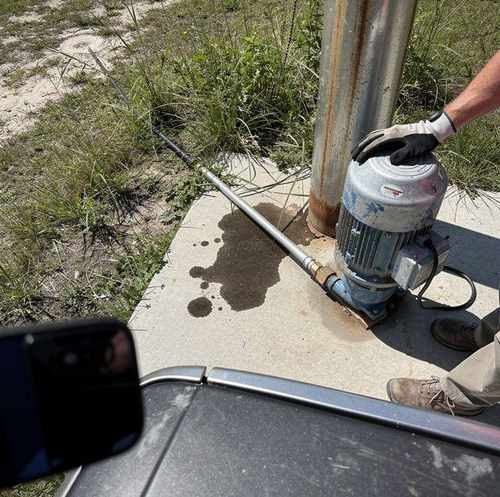
Quick Answer: A shallow well draws from water within roughly 25 feet of the surface and uses an above-ground jet pump that suctions water up. A deep well reaches a much lower aquifer and uses a submersible pump that pushes water up from inside the well, or a two-pipe deep-well jet pump. Shallow wells cost less to drill but react faster to drought and surface contamination; deep wells give a steadier, often cleaner supply but are pricier and harder to service.
If your home runs on well water, the single most useful thing you can know about your system is how far down it reaches to find the water. That one number shapes almost everything else: the kind of pump sitting on or in your well, how steady your supply stays through a dry stretch, and even how the water tastes coming out of the tap. Two homes on the same road can pull from wells that behave nothing alike, and the reason usually comes down to depth.
What The Water Table Actually Means
Underground, water does not sit in open caves. It fills the tiny spaces between grains of sand, gravel, and cracked rock, the way water fills a soaked sponge. The depth where those spaces stay fully saturated all the time is the water table. Above it, the ground is damp but not full; below it, every pore is holding water.
A well is simply a hole drilled down past the water table so water can seep in and collect. The distance from the surface down to that saturated zone is what separates a shallow well from a deep one. The water table is not fixed, though. It rises after wet stretches when rain soaks in from above, and it drops during dry spells or when many nearby wells draw hard at once. A layer that sits close to the surface swings more with the weather; a deeper layer, protected under clay and rock, holds far steadier. Depth, in other words, is really a question of how close your water source sits to the changeable surface.
Depth decides the pump, not the other way around: Here is the part most homeowners miss: you do not pick a pump and then dig to suit it. The depth of the water dictates which pump can physically do the job. That is because of a hard limit in how far water can be pulled upward by suction, and it sets the dividing line between the two well types.
Shallow Wells And The 25-Foot Ceiling
A shallow well taps water that sits within about 25 feet of the surface. It relies on an above-ground jet pump, a unit that lives in the well house, basement, or a pit near the wellhead rather than down in the water.
A jet pump works by suction. It creates low pressure in a pipe running down into the well, and atmospheric pressure pushing down on the water surface forces water up that pipe. That is the same principle as drinking through a straw. The catch is that atmosphere can only push water so high, roughly 25 to 28 feet at sea level under perfect conditions, and real-world friction and altitude shave that down further. Past that ceiling, no amount of suction will lift the water, because there simply is not enough pressure behind it. That physical wall is why a shallow-well jet pump and a shallow water table go together.
Why people choose a shallow well: When the water table sits high, a shallow well is the sensible option. The hole is shorter and cheaper to drill, the pump sits in the open where it is easy to reach and service, and a homeowner or technician can get to it without pulling anything out of the ground. For a property with reliably high groundwater, that accessibility is a real advantage.
Where a shallow well gets exposed: The trade-off is exposure. Because the water source sits close to the surface, it feels every swing the surface throws at it. A long dry spell that drops the water table even a few feet can pull the level below the pump's reach, and the supply sputters or stops until the ground recharges. The same closeness to the surface also means rainwater, runoff, septic seepage, fertilizer, and road contaminants have a shorter path to travel before they reach the water. A shallow well is not automatically unsafe, but it sits nearer to trouble and deserves closer watch.
Deep Wells And Pushing Water Up
A deep well reaches down past that 25-foot ceiling into a lower aquifer, sometimes tens or hundreds of feet down, where a thicker cushion of soil and rock sits between the surface and the water. Suction cannot lift water from that distance, so a deep well flips the strategy: instead of pulling water up from above, it pushes water up from below.
The usual tool is a submersible pump, a sealed cylinder that hangs on the drop pipe down in the water itself. It does not fight the atmospheric limit at all, because it is already at the bottom, driving water upward with pressure rather than suction. A submersible can move water up from depths a jet pump could never reach, and because it runs underwater, it tends to be quiet and efficient. A second option is a deep-well jet pump, which uses two pipes and places part of its mechanism down in the well to help lift water from a middle range too deep for a shallow jet pump but not always deep enough to justify a submersible.
The steadier-supply payoff: The deeper aquifer is the reason many homeowners tolerate the higher cost. Sitting well below the surface, that water layer barely notices a dry month or a busy neighbor's pump. Recharge is slower, but the reserve is larger and more stable, so the tap keeps flowing through the same drought that would leave a shallow well gasping. For a household that cannot afford an unreliable supply, that steadiness is often worth the price.
The service trade-off: That reliability comes with a real downside when something breaks. A submersible pump lives at the bottom of the well, wired to line voltage and fastened to a long, heavy string of drop pipe. Reaching it means pulling that entire assembly up out of the casing, which is not a job for a homeowner with a wrench. The deeper the pump, the more pipe, wire, and weight involved, and the more the repair leans on proper equipment and trained hands. You trade easy access for a supply you rarely have to think about.
How Depth Changes What Comes Out Of The Tap
Depth affects water quality in two directions at once, which is why deeper is not simply "better." As water soaks down through layers of soil and sand, that ground acts as a natural filter, straining out surface bacteria, sediment, and organic matter. Water from a deep aquifer has usually made a longer trip through that filter, so it often arrives clearer and less exposed to what happens at ground level.
The same long trip through rock, though, gives water more time and contact to dissolve minerals out of the earth it passes through. Deeper water frequently carries more dissolved iron, sulfur, calcium, and magnesium, the culprits behind hard-water scale, rusty staining, and a rotten-egg smell. Shallow water can be softer in mineral content but sits far closer to surface contamination. Neither depth guarantees clean or problem-free water, which is why any well, regardless of depth, is worth testing rather than assumed safe.
A safety point worth its own line: A shallow well's nearness to the surface makes bacterial and surface contamination a genuine concern. Test the water on a regular schedule, and if a test comes back positive for bacteria, the well needs proper disinfection or treatment before the water is safe to drink. A sound, intact well cap and casing seal is the barrier that keeps insects, runoff, and debris out of the well, so it should stay in place and in good condition. Do not pop a well cap off casually to peer inside; that seal is doing quiet, important work.
Signs A Shallow Well Is Struggling
A shallow well usually warns you before it quits, and the signals tend to show up during the driest stretch of the year, when the water table sinks toward the bottom of the pump's reach.
- Air spitting from the taps: When the water level drops near the intake, the pump starts pulling in slugs of air along with water. Faucets cough, sputter, and spray unevenly. That is often the first sign the level is getting low.
- Sediment or cloudiness: As the level falls, the pump draws from nearer the bottom of the well, where sand and silt settle. Gritty or murky water can mean the intake is sitting too close to the muck.
- Running dry in dry spells: A well that flows fine most of the year but loses pressure or stops during a long dry stretch is telling you the water table has dropped below what a shallow well can reliably reach.
When a shallow well spits air, turns cloudy, or loses pressure only during a long dry stretch, the signs point to the water table dropping toward the bottom of the pump's reach rather than to a failed pump. Diagnose why the level fell before spending on parts.
Matching The Pump To The Depth
The whole comparison comes back to one rule: the pump has to match how far down the water sits. A shallow-well jet pump on a deep water table will run itself ragged and never deliver, because suction cannot beat the atmospheric ceiling. A submersible built for depth in a shallow well is overkill and needlessly hard to service. When a well underperforms, the real question is whether the pump still suits the water table it is drawing from, and the water table can shift over the years as regional groundwater changes. That is the judgment call worth getting right, because the correct pump for the depth is what turns a hole in the ground into a dependable water supply.
Frequently Asked Questions
Not by swapping the pump alone. Reaching a deeper aquifer means drilling a new, deeper borehole, since the original shallow casing does not extend down far enough. In some cases a driller can deepen an existing well if the geology cooperates, but often the practical answer is a new well drilled to the lower water-bearing layer, then fitted with a submersible sized for that depth.
Well depth is how far the drilled hole goes into the ground; pump setting depth is how far down the pump or intake actually hangs. A pump is usually set below the water table with room to spare but above the very bottom, so it stays submerged during drawdown without sucking up the sediment that collects at the base of the casing.
A common guideline is once a year for bacteria and nitrates, and more often if you notice a change in taste, color, or smell, if there is flooding nearby, or after any repair that opened the well. Shallow wells generally warrant more frequent testing than deep ones because they sit closer to surface contamination.
It can, since lifting water from a greater depth takes more work, but a submersible pump is efficient enough that the difference is often smaller than people expect. Short-cycling, where a pump switches on and off too frequently because of a failing pressure tank or switch, usually wastes far more power than depth alone, on either type of well.
That is typically dissolved iron, which deeper wells often carry more of after the water spends time in contact with iron-bearing rock. The iron is clear in the water but oxidizes into a reddish-brown stain once it hits air on fixtures and laundry. A treatment system sized to the iron level in a water test is the usual remedy, not a pump change.
Yes, and it is common. Water-bearing layers are not flat sheets; they dip, pinch out, and vary over short distances. One property may hit reliable water at a shallow depth while a neighbor has to drill much deeper to reach a dependable aquifer, which is why well depth is decided by test drilling on the specific lot rather than copied from next door.
Get a straight answer on your well's depth and the right pump for it — before a dry spell forces the question. Perry Pump Repair Service serves Lake Butler, Gainesville, and Lake City. Call (352) 474-7142.
