
Why Is My Well Water Pressure Low? 7 Causes to Check
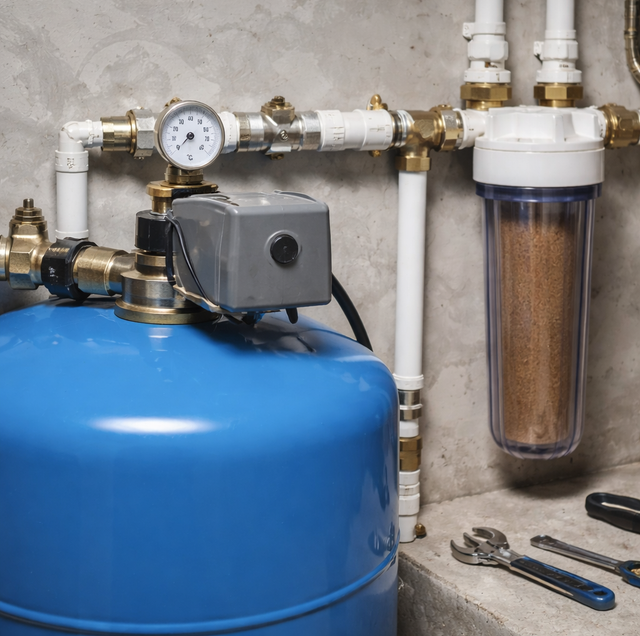
Quick Answer: On a private well, pressure is created by the pump, buffered by the pressure tank, and controlled by the pressure switch. Low pressure means one of those three parts is off, or something is restricting flow, such as a clogged filter, a partly closed valve, or a leak. Check the pressure gauge, listen for the pump snapping on and off rapidly, and swap the sediment filter before assuming the pump has failed.
City water arrives at your house already pressurized by the utility. A private well does not have that luxury. Everything you feel at the faucet is produced and held right on your own property by a small chain of parts, and when the shower goes weak, or the washing machine takes forever to fill, one link in that chain has slipped. The good news is that the chain is short, so low pressure usually traces to a single culprit once you know how the pieces work together.
How a Well Actually Makes Pressure
Three parts do the work. The pump, down in the well or beside it, pushes water up and out. The pressure tank stores a reserve of that water under a cushion of compressed air, so you can run a tap without the pump firing every second. The pressure switch is the referee: it watches the pressure and tells the pump when to start and stop. It kicks the pump on at a low number called the cut-in pressure and shuts it off at a higher cut-out, commonly a 30/50 or a 40/60 psi range.
When those three work together, pressure stays in a comfortable band. Low pressure means the band has dropped or collapsed, and the reason is almost always one of a handful of faults. Some you can safely spot yourself. Others involve the electrical side of the switch or the pump, and those belong to a technician.
The Seven Usual Causes
1. The pressure switch is set too low or failing: The switch decides the whole house's pressure. If someone sets the cut-in and cut-out low, or the switch is worn and tripping early, every faucet feels weak at once. It is the first thing to suspect when the whole house is soft, not just one fixture.
2. A waterlogged or failed pressure tank: The tank holds its reserve against a bladder of compressed air. When that bladder loses its charge or tears, the air cushion is gone, so the tank can no longer buffer the pump. Pressure then swings, and the pump snaps on and off in rapid bursts instead of running in steady stretches.
3. A clogged sediment filter or screen: A whole-house sediment filter or an inlet screen catches sand and grit before it reaches your plumbing. As it loads up, it chokes the flow, like a pinched garden hose. The pump is working fine, but everything downstream of the filter runs weak until the cartridge is changed.
4. A worn or struggling pump, or a clogged intake: A pump that has lost performance with age, or whose intake screen is packed with sand, cannot move the volume it once did. This shows up as pressure that is low everywhere and slow to recover after you draw water.
5. A partly closed valve or a leak in the line: A main shut-off left half-closed after service, or a leak between the pump and the house, bleeds off pressure and volume before the water reaches your taps. A hidden leak also makes the pump run more than it should.
6. Scale or iron narrowing the pipes: Over the years, mineral scale and iron can build up inside older pipes and fittings, shrinking the passage. The same buildup can plug the pressure switch's tiny sensing port, so the switch misreads the pressure and manages the pump poorly.
7. A dropping water table: In a dry stretch, the water level in the well can fall toward the pump intake. As it does, the pump starts pulling in air along with water, so it delivers less. This one is about the well itself, not the equipment bolted to it.
Notice that these split into two camps. A tank problem announces itself with swinging pressure and a pump that cycles fast. A restriction, like a filter or valve, drops pressure steadily while the pump runs normally. A pump or well problem shows up as low volume that struggles to recover. Sorting your symptoms into one of those buckets is most of the diagnosis.
Weather Plays a Part, But Not the Lead
It is tempting to blame the weather, and sometimes the weather earns a share of it. During a long dry spell, the water table can drop and nudge a marginal well toward pulling air. But equipment faults do not wait for a season. A tired switch, a failed bladder, a filter packed with the fine sand common in many wells, these fail in any month, dry or wet. So treat drought as one contributor among several rather than the whole explanation, and check the equipment before you decide the aquifer is the problem.
How to Tell the Causes Apart
You can do a fair amount of narrowing down before anyone opens a panel.
Start at the pressure gauge on the tank. Watch it while the water runs. If the needle swings widely and the pump audibly snaps on and off every few seconds, that rapid cycling points straight at the pressure tank losing its air charge. Steady low pressure with a pump that runs normally, points away from the tank and toward a restriction or the switch setting.
Check the tank's air charge next, because it is a clean, safe test. With the power off and the water drained from the tank, press a tire gauge onto the air valve on the tank. It should read about two psi below the pump's cut-in pressure. A reading near zero, or water spitting out of that air valve, means the bladder has failed.
Then look at the sediment filter. A cartridge dark with sand and iron is a common and easy find. Swapping it and seeing the pressure jump back tells you the filter was the restriction all along.
Finally, walk the house. If one faucet is weak but the rest are strong, the problem is local to that fixture, not the well. If every tap is soft at once, the trouble is back at the pump, tank, or switch.
What You Can Safely Check, and Where to Stop
Reading the gauge, listening for short cycling, testing the drained tank's air charge with a tire gauge, and changing a sediment cartridge are all homeowner-safe jobs. They cost nothing but a few minutes and often reveal the answer.
Stop at the electrical parts. The pressure switch carries live line voltage, and pulling a submersible pump is heavy, specialized work. Adjusting or replacing a switch, recharging or replacing a tank correctly, servicing or pulling the pump, and measuring the well's drawdown are all technician tasks. Opening an energized pressure switch or trying to pull the pump yourself invites a shock or a dropped pump, and neither ends well. When your safe checks point to the switch, the tank, the pump, or the well level, that is the line where you hand it off.
Frequently Asked Questions
A pressure switch turns the pump on at the cut-in pressure and off at the cut-out. The gap between those two points, the differential, is adjustable at the switch with two nuts: a large nut raises or lowers both points together, while a small nut changes only the gap. Because that adjustment happens on a switch carrying live line voltage, it is a pro task, not a homeowner tweak, and it governs the whole house rather than any single fixture.
That rapid cycling means the pressure tank has lost its air charge and gone waterlogged, so it can no longer buffer the pump. With no cushion to store pressure between draws, the pump slams on and off in seconds instead of running in steady stretches. Beyond the swinging pressure you feel, those repeated starts wear the pump out fast, so it is worth fixing quickly rather than living with it.
Drain the tank's water first, open a faucet, and let it empty before you read anything, or the gauge will show water pressure instead of the air charge, and the test will be meaningless. With the power off and the tank empty, press a tire gauge onto the air valve. It should read about two psi below the pump's cut-in pressure; a reading near zero, or water spitting from the valve, means the bladder has failed, and the tank needs recharging or replacement.
Yes. A clogged sediment filter, or an inlet screen packed with sand and iron, restricts flow the way a pinched hose does, so pressure downstream falls even though the pump is working perfectly. Because the restriction sits after the pump, the pump never signals a problem. Swapping the cartridge for a clean one often restores pressure on the spot, which is why the filter is worth checking before you suspect anything deeper.
When one fixture is weak while the rest are strong, the trouble is local to that spot, not the well. Usually, it is a scaled-up faucet aerator you can unscrew and clean, or a supply valve under the sink left partly closed. A genuine pump, tank, or switch problem shows up everywhere in the house at once, so a single weak faucet actually rules the well system out.
It can. During a dry stretch, the water level can fall toward the pump intake, so the pump starts drawing in air along with water and delivers less water. The tell is falling pressure paired with sputtering, air-filled bursts at the tap. This one is diagnosed by measuring the actual water level in the well rather than testing the equipment, since the tank, switch, and pump may all be fine while the aquifer has dropped.
Book a well pressure diagnosis — get steady water pressure restored fast. Perry-Pump Repair Service LLC serves Lake Butler, Gainesville, and Alachua. Call (352) 474-7142.
