
What Size Sprinkler Pump You Need: It Isn’t Horsepower
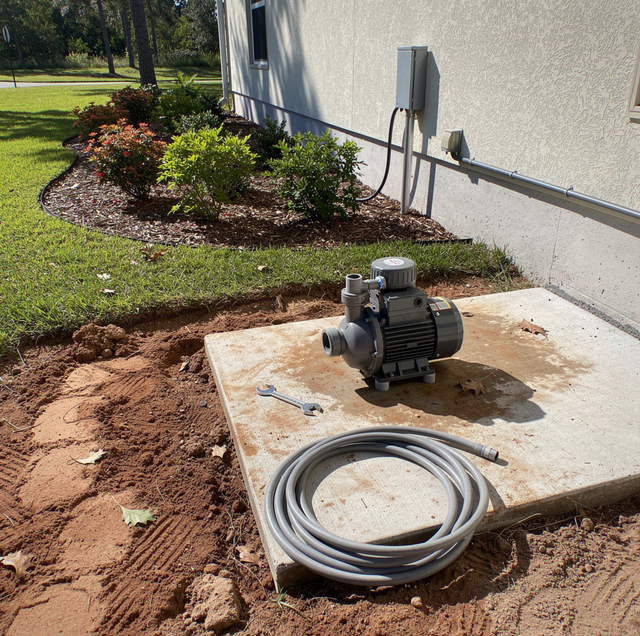
Quick Answer: A sprinkler pump is sized by the flow one zone demands, multiplied by how many zones run at once, against the pressure the heads require. Horsepower is what that math produces.
Three numbers do almost all the talking when shopping for sprinkler pumps: 1 HP, 1.5 HP, and 2 HP. They sit on the box and in the online listing, turning a technical decision into what looks like a simple one. Pick the middle one if the yard is average, the big one if the spray at the far corner has gone weak.
That is not how size is chosen, and it is not how a long-lasting pump is specified. Horsepower is the last number in the calculation, not the first. It falls out of three other numbers gathered from the irrigation system itself, and none of them are printed on the pump.
A wrong-size pump is the second most common reason a sprinkler system underperforms. Only foot valve trouble beats it. That means a large share of weak-spray complaints are not failures at all. They are systems doing exactly what the pump on them was built to do, which was never what the yard needed.
Flow: What One Zone Actually Demands
Every sizing conversation starts at the heads, not the pump.
A zone is a group of heads fed by one valve. Each head passes a certain volume of water per minute through its nozzle, and the zone's demand is the sum of every head on it. That total, measured in gallons per minute, is the first hard number a technician needs.
There is no shortcut to it. The figure depends on which nozzle sits in each head, what pressure that nozzle sees, and whether the head is a rotor throwing a long stream or a fixed spray covering a short radius. The nozzle manufacturer publishes a chart for each combination. Where the heads are mixed, or the design has been modified over the years, running the zone and measuring what it actually delivers beats trusting what the plan said in year one.
#### Why the biggest zone sets the floor
Zones rarely have equal head counts, and a front lawn of rotors wants a very different volume than a bed zone of small sprays. The pump does not get to negotiate between them. If one zone demands more flow than the pump can supply at working pressure, that zone underperforms every time it runs, no matter how well the other seven behave.
Simultaneous Zones: The Multiplier Nobody Accounts For
The second number is how many of those zones are open at the same moment.
Most residential controllers run zones in sequence: one valve opens, waters, closes, and the next begins. If that is truly how the system is programmed, the flow requirement stays at whatever the largest single zone demands.
Larger properties often do not work that way. A system with many heads may be set to open two valves simultaneously to complete a watering window in a reasonable time. Some controllers overlap the tail of one zone with the start of the next. Some properties have a second controller, or a manual valve someone opens during dry stretches, and both draw from the same pump.
Two zones open together is not a small adjustment to the requirement; it is roughly a doubling, and a pump chosen for single-zone operation will not hold pressure through it. This input most often explains why an apparently reasonable pump behaves as though it is undersized: the flow math was right for how the system was designed and wrong for how it is being run.
Pressure at the Heads, Not Pressure at the Pump
The third number is pressure, and it has to be measured at the far end of the system to be useful.
Sprinkler nozzles operate inside a pressure range. Below it, a rotor stops rotating properly and dribbles instead of throwing. Above it, the stream breaks into fine droplets that drift on the wind. The nozzle manufacturer states that range is a requirement rather than a preference.
That pressure has to exist at the head after the water has traveled the full distance from the pump. Between the two sits every foot of lateral pipe, every fitting, every zone valve, and any rise in grade. Diameter matters as much as length, because a narrower line moving the same volume gives up more pressure to friction over the same run, and height gained is a straight subtraction that never comes back. A pump reading comfortably on a gauge at its own discharge port can still starve the last head on the longest run.
So the target is not what pressure the pump makes. It is what the head requires, plus everything the plumbing picks up along the way. A technician works backward from the far head toward the pump, because working forward from the pump hides the losses.
The Suction Side Sets a Ceiling Before the Water Arrives
Everything above concerns what the pump has to push. The suction side governs what it can pull, and it sets a ceiling that no amount of horsepower can get around.
A pump does not lift water. Atmospheric pressure pushes water up into the space the pump evacuates, which caps practical suction lift at roughly 25 feet at sea level. That is the theoretical edge, and real installations never get all of it. A long horizontal run, an undersized suction line, elbows, a strainer, and a foot valve each account for part of that budget in friction loss. The longer and more restricted the run, the less vertical lift remains.
The water source decides how much of that budget is gone before anything is sized. A shallow well, a pond, and a surface intake each present a different vertical distance and suction path, so the same yard lands on a different pump for each one.
Ask the pump to pull harder than the suction side can deliver, and the water on the impeller side drops below its vapor pressure and begins to boil at ambient temperature. Vapor bubbles form, travel into the higher-pressure region of the impeller, and collapse. That is cavitation, and it is destructive rather than merely inefficient. It pits the impeller vanes and removes capacity from a pump that is otherwise healthy. Fitting a larger pump to a suction line already at its limit will reach that point sooner, rather than fixing the shortfall.
The suction line sets the ceiling, not the motor. Sizing up without widening that line or shortening its run leaves less margin above the inlet pressure the pump needs, so the bigger impeller pits faster than the one before it.
#### Where sizing and diagnosis blur
A system that has lost performance is not automatically a sizing problem. Foot valve trouble produces symptoms that closely resemble an undersized pump: slow recovery, weak pressure, a pump that runs but does not deliver. Since that is the single most common cause of a sprinkler system underperforming, it gets ruled out first. Replacing a correctly sized pump over a failed foot valve leaves the owner with the same symptom.
Why Horsepower Is the Output, Not the Input
Once the flow requirement, the simultaneous-zone multiplier, the required pressure at the heads, and the suction conditions are on paper, the selection nearly makes itself. Those numbers point to a required flow at a required pressure, and only certain pumps produce that combination. Horsepower is simply the label attached to the pumps that can. It is closer to an engine's displacement than to a promise about the spray reaching the far corner of the yard.
| What the yard looks like | Where the math usually lands | What has to be true for it to hold |
|---|---|---|
| Standard residential lot, zones running strictly one at a time | Around 1 HP | The largest single zone's flow is modest, and the suction lift is short |
| Larger lot, more heads per zone, or long lateral runs | 1.5 HP and up | The pressure lost across the laterals is measured, not assumed |
| Two or more zones overlapping, or higher-pressure nozzles throughout | 1.5 to 2 HP | The suction line can feed the higher flow without cavitating |
Treat that as a description of where the arithmetic tends to land, not a selection guide. Two properties that look identical from the street can have different sizes because one runs its zones in sequence while the other overlaps them. The math decides. A default never does.
What the Wrong Size Actually Does to the System
Both directions of error do damage, and they damage different parts of the system.
An undersized pump cannot meet the demand placed on it at shutoff pressure, so it either runs continuously at the edge of its capability or reaches pressure, drops out, and restarts immediately. Short-cycling is the harder of the two on the motor. Motor starting current runs far higher than running current, and heat builds in the windings with every start. A motor cycled that way does not fail dramatically. It fails years early, which is harder to attribute and easier to blame on the brand.
An oversized pump is not the safe choice people assume. It moves more water than the piping was designed to carry and imposes surge stress on laterals, valves, and fittings sized for gentler conditions. It also overpressures nozzles, which turns spray into mist.
Neither outcome is visible on installation day. Both show up later, which is precisely why sizing is done with measurements rather than estimates.
A Sizing Visit Is Mostly Measurement
A proper sizing visit is mostly measurement and very little opinion. Head count and nozzle type per zone. Controller programming, to establish whether zones ever run together. A pressure reading taken at the heads rather than at the pump. Depth to water, suction line length and diameter, and intake condition. The existing pump's electrical supply and controls.
Only then does a horsepower figure get spoken out loud, and by then it is a conclusion rather than a guess.
Frequently Asked Questions
Not without checking what the existing controls are rated for. A pressure switch has contacts rated for a specific motor load, and the control box holds components matched to that motor. Move up in horsepower, and those contacts carry more current than they were built for, which burns and eventually welds them shut, leaving the pump running with no way to stop itself. Control gear gets evaluated and replaced alongside the pump, not inherited. That evaluation happens with the box open and the circuit dead, which is licensed-technician work: the supply is 240 volts and a control capacitor can hold a charge after the power is cut.
It changes what happens between cycles. A self-priming centrifugal retains water in its volute after shutdown, so it re-establishes prime on the next start without external assistance. A standard centrifugal keeps prime only as long as the foot valve below it holds the column. On a system that starts and stops several times a week, that decides whether a lost prime is a minor event or a service call.
It changes pressure delivery, not water availability. A constant pressure controller varies motor speed to maintain a set pressure as demand shifts, thereby smoothing the swings between zones. What it cannot do is create flow the source does not have. The horsepower still has to cover the peak demand zone, and the suction side still limits the total. Constant pressure solves an inconsistency problem, not a capacity problem.
Look at the rotors and the risers rather than the throw distance. A rotor driven above its rated inlet pressure turns faster than its gear drive was built for, so it finishes its arc early, wears that drive out well ahead of schedule, and often stops returning to the same start point each cycle. Riser seals take a pressure spike every time a valve slams shut, and on an oversized pump those spikes are what finish a seal off, showing up as a wet ring in the turf around a head that is otherwise working.
Frequently. Abrasive sediment passing through the pump erodes the impeller vanes and widens internal clearances, causing water to slip backward inside the pump rather than move forward. Capacity falls off gradually while the nameplate still reads the same horsepower. A worn impeller and a truly undersized pump produce nearly identical complaints, which is why a technician takes a pressure reading and inspects the wet end before recommending a different size.
Only if it was sized for both loads occurring together, which is rarely how these systems get built. Household fixtures and an irrigation zone can open at the same moment, and the pump then has to satisfy the sum, not the larger of the two. Many properties are better served by keeping the irrigation supply on its own pump, so a long watering cycle does not drop pressure at the shower.
Book a sprinkler pump evaluation — get the size determined by measurement, not guesswork. Perry-Pump Repair Service LLC serves Lake Butler, Gainesville, and Alachua. Call (352) 320-2412.
