
Why Your Well Water Filter Clogs So Fast (And the Real Fix)
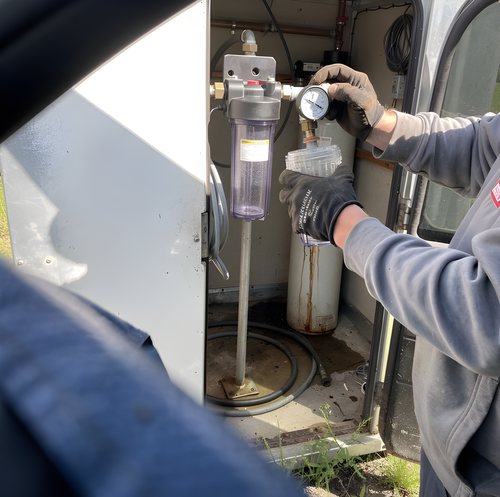
Quick Answer: A sediment filter clogging in days usually means the water carries too many solids for that cartridge, or the micron rating is too fine for the job. Read what's caked on the used filter to find the cause, then match filtration to the water instead of swapping cartridges faster.
You buy a sediment filter rated to last a month, and it's brown and choked within a week. You swap it, and the new one browns out just as fast. At that point, the filter isn't the problem; it's the messenger. A cartridge that clogs in days instead of weeks is telling you one of two things: the water reaching it carries more solids than that filter was built to catch, or the filter you picked is the wrong tool for what's actually in your water. Get the diagnosis wrong, and you can spend a small fortune on cartridges while nothing improves.
How a Sediment Filter Actually Loads Up
A cartridge filter works by physical straining. Water pushes through a wall of pleated or spun material, and anything larger than the pore size gets trapped in the fibers. Every particle that stops there stays there. As the pores pack with debris, less open surface remains, pressure drops across the filter, and flow falls off. When the load is light, that packing takes weeks. When the water is loaded with solids, or the pores are too small for what's coming at them, the same packing happens in days.
Picture a kitchen colander. Rinse a handful of rice through it, and it drains fine. Dump a pot of cooked oatmeal in, and it plugs immediately. Same colander, wildly different result, because the second load overwhelms the holes. Your filter is that colander, and something in your well is sending oatmeal instead of rice. The useful question is not "why does it clog," it's "what specifically is doing the clogging," because the answer changes the fix completely.
Read the Filter Before You Replace It
The spent cartridge is the best diagnostic tool you own, so look at it before it goes in the trash. What's caked on the surface points straight at the cause, and the causes fall into a few clear families.
The first family is mechanical: sand and grit. This is physical material the pump is pulling out of the aquifer, and it usually comes from a worn pump, a failing or damaged well screen, or a pump set too low in the casing where it draws from the sandy zone near the bottom. Sand is abrasive. It clogs filters, and it also scours pump impellers, valve seats, and faucet cartridges as it goes.
The second family is chemical or biological: iron. Dissolved iron comes out of the ground clear, then oxidizes on contact with air and precipitates as fine rusty particles that pack a filter tight. The nastier version is iron bacteria, living organisms that feed on iron and secrete a reddish-brown slime. That slime doesn't just fill the pores; it coats the whole filter surface and seals it, which is why an iron-bacteria filter can go blind almost overnight.
Manganese and sulfur round out the picture, often showing as darker deposits, and they tend to travel alongside iron. Sorting mechanical solids from chemical and biological fouling is the single most important call you make here, because sand is a well or pump problem while iron and its relatives are a water-chemistry problem, and the fixes share almost nothing.
When the Filter Is Simply the Wrong One
Sometimes the water isn't unusually dirty at all, and the filter is fighting itself. Micron rating is where this goes sideways. A filter's micron number is the size of particle it stops, and smaller is not automatically better. A very fine cartridge grabs everything, including the fine silt a coarser filter would have passed harmlessly, so on silty water, it fills almost as fast as you can install it.
The fix is staging. A coarse pre-filter takes the big particles first and shoulders most of the load, then a finer stage behind it polishes what's left. Split across two cartridges sized for their jobs, each one lasts far longer than a single fine filter trying to do everything at once. A related mistake is asking one small housing to handle a heavy load. A compact single-stage unit simply hasn't got the surface area for water carrying a lot of iron or grit, and it plugs on schedule no matter how good the cartridge is.
Match the Fix to the Cause
Once you know what's on the filter, the repair path is direct.
If it's silt and the water is otherwise fine, adjust the micron strategy. Put a coarser pre-filter ahead of your fine stage so the bulk of the material is caught up front, and step the fine stage down only as far as your water actually needs. You'll often go from weekly changes to a normal service interval with nothing more than the right cartridge sequence.
If it's iron, filtering alone is a losing game because dissolved iron keeps arriving and keeps precipitating. The water needs treatment built for iron: a system that oxidizes the dissolved iron and then filters out the resulting particles, sized to your water's iron load. A sediment cartridge downstream of proper iron treatment stops seeing the flood and returns to a sane replacement schedule.
If it's iron bacteria, no filter change ever wins, because the organisms keep growing and re-fouling. Clearing them takes shock chlorination of the well and plumbing, followed by treatment aimed at keeping them from coming back. Shock chlorination involves the well, the pump, and the electrical system, so it is a job for a licensed well and pump professional, not a weekend project.
If it's sand, the answer is at the well, not the filter. Depending on what's happening, that can mean raising the pump higher in the casing so it stops drawing from the sandy bottom, addressing a damaged well screen, or servicing a worn pump that's breaking down and shedding grit. Anything involving the pump or its wiring is professional work, both for safety and because a pump pulled and reset incorrectly creates new problems.
Staging Protects Everything Downstream
The through-line in all of this is order of operations. A sediment pre-filter isn't only about clean water at the tap; it's a bodyguard for whatever sits behind it. Put the sediment stage first; it takes the abrasive and bulk load, protecting finer cartridges, softeners, and any iron or bacteria treatment from being buried in grit. Skip that first stage, or size it wrong, and every component downstream pays the price in shortened life and faster clogging. Diagnose the cause, stage the treatment to match, and the fast-clogging cycle ends instead of repeating on a shorter and shorter clock.
Frequently Asked Questions
Read the cartridge like a lab slide. Tan or gray grit that feels sandy is mineral sediment, actual sand, and silt from the well. A rusty red or orange stain is oxidized iron that precipitated out of the water. A slimy reddish sludge that smears rather than brushes off points to iron bacteria. Black particles suggest manganese or sulfur. What's caked on the cartridge is the most reliable clue you have to what's clogging it, so inspect it before you toss it.
Quite possibly. A very fine filter, such as a 1-micron filter, traps everything, including fine silt that a coarser filter would let pass without harm, so in silty water, it clogs quickly. A coarser pre-filter, such as a 20-micron filter, catches the large particles first, and a finer stage behind it handles the rest. That combination lasts far longer than one very fine cartridge doing the whole job, because the load is split across two filters sized for their tasks.
Iron bacteria are nuisance organisms that are generally harmless to drink, but a headache for equipment. They feed on iron in the water and form a reddish-brown slime, and that slime coats and blinds a filter surface far faster than loose particles ever would. Because it's a living, growing colony, you can't out-swap it with fresh cartridges. It takes shock chlorination of the well and plumbing, plus follow-up treatment, to knock it back and keep it from returning.
Yes, and it's more common than people expect. A worn pump, a damaged well screen, or a pump set too close to the bottom of the casing can all draw sand and grit up into the system. That sand clogs filters and also wears out faucets, valves, and fixtures over time. This is a well or pump issue to diagnose and service, not a filter you keep swapping, because the source keeps sending sand until the well side is corrected.
A single sediment cartridge can only strain particles, so it can't cope with heavy iron or a steady flow of sand on its own. When the water carries a real load, it needs staged treatment: a sediment pre-filter to catch solids, plus dedicated iron treatment or bacteria control for the chemistry side. Asking one filter to do all of that at once guarantees fast clogging, because you've handed a straining device a problem that straining alone can't solve.
It can. Drawing the well down hard, especially during dry stretches, stirs up sediment that was sitting quietly and can pull the water level down near the sandy zone at the bottom of the well. When that happens, the pump draws in more suspended material and filters foul noticeably faster. Easing off on heavy simultaneous demand can reduce the churn, but if drawdown is chronic, it's worth having the well and pump depth evaluated.
Call for a well and water diagnosis — get the right treatment instead of endless cartridge changes. Perry-Pump Repair Service LLC serves Lake Butler, Gainesville, and Alachua. Call (352) 474-7142.
