
Worn Irrigation Pump Impeller Symptoms: 5 Warning Signs
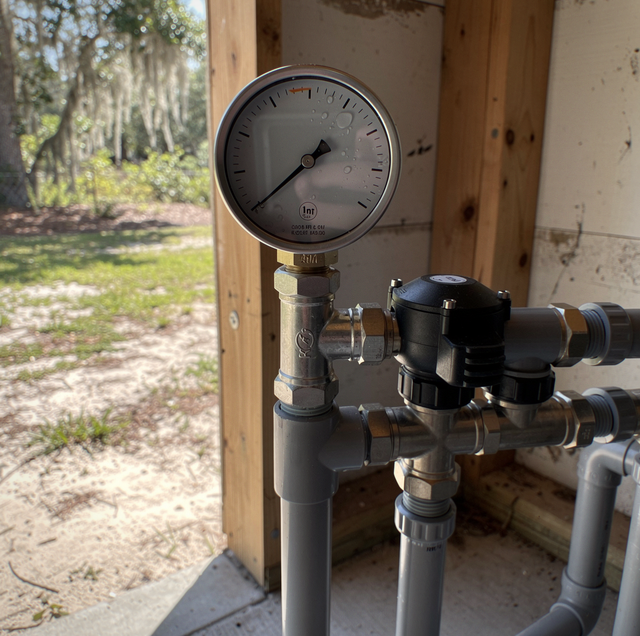
An irrigation pump that used to soak the far end of a field now leaves the last zone or two looking dry. The cycle that used to finish in twenty minutes now takes closer to thirty to put down the same amount of water, and if there's a gauge on the manifold, it reads lower than it did a season or two ago. None of that takes a meter to notice. It shows up as a field that no longer looks the way it used to, on a schedule that used to be enough and now isn't.
That kind of slow, creeping decline is the signature of a worn impeller. The vanes inside the pump are what actually move water, and every pass of grit and fine sediment in the source water takes a little material off their edges. Continuous-duty ag irrigation work in season only speeds that along. It's rarely a single dramatic failure. It's a curve: the motor still turns, the pump still runs, and everything looks normal at a glance, while the actual output quietly falls short of what the system was built to deliver.
Discharge Pressure Doesn't Hold Where It Used to
Pressure is the force generated by the impeller's vanes as they fling water outward, and the pump housing converts that motion into force. A vane with rounded, eroded edges imparts less energy per revolution than a sharp, full-profile one, even though the motor is spinning it at the same speed. The result is a lower discharge pressure reading at the same point in the system, most noticeable at the highest or farthest fixture on the line, where there's the least reserve to spare.
If pressure sags only right after the pump starts and recovers within a minute, ask about the pressure tank or switch first. A steady, season-over-season pressure drop that never fully recovers points toward the impeller instead.
This tends to show up gradually rather than as a sudden drop-off. A homeowner or field manager usually notices it as "the sprinklers don't reach as far" or "the far nozzles barely mist" well before anyone puts a gauge on the line to confirm it.
Delivered Flow Comes Up Short at the Nozzle
Flow and pressure are related, but not the same measurement, and a worn impeller affects both. Where pressure is about force, flow is about volume, how much water actually moves through the system per minute. Worn vanes push less volume per rotation, so even a zone that still shows acceptable pressure at the pump can come up short on delivered flow by the time the water reaches the last head on the line.
Hard well water plays a role here too. Mineral deposits can build up inside the pump housing and along the vane surfaces over time, narrowing the same clearances that wear opens up from the other direction. Scale buildup and vane erosion aren't the same mechanism, but they result in the same symptom: a pump that moves less water than the system was designed for.
Zones Take Longer to Finish Their Cycle
Runtime is where the first two symptoms compound into something an owner actually schedules around. If a zone is getting less flow than it used to, watering it to the same effect takes longer, so irrigation timers set for the pump's original output start falling short unless someone extends the run time to compensate. That stretched schedule is itself worth paying attention to. A zone that quietly crept from twenty minutes to thirty, and then to forty, over a couple of seasons is tracking the same decline the pressure and flow numbers are showing, just measured on a clock instead of a gauge.
The Pump Works Harder to Do the Same Job
A worn impeller doesn't make the motor spin faster or draw more instantaneous torque. What changes is how much of the day the motor spends running. A pump that can't reach its cut-out pressure as quickly, or can't quite reach it at all, stays under load longer per cycle and cycles more often trying to satisfy the same demand. Over a season, that adds up to meaningfully more running hours for the same amount of water actually delivered, hours that wear on bearings, seals, and motor windings the same way any extra duty cycle does.
It's a bit like a set of worn tires that still hold air and still roll fine on a straightaway: the shape looks about right, but the fine edge that used to do the actual gripping work is gone, so the whole system has to work harder to get the same result the tread used to deliver on its own.
The Pump's Sound Changes Under Load
Water moving smoothly across a full, sharp vane profile makes a fairly consistent hum. Water moving across a pitted, rounded, or partially eaten-away vane edge doesn't flow as cleanly, and that shows up as sound: a rougher hum, an intermittent whine, or a rattle that comes and goes with demand rather than staying constant. It's not a precise diagnostic on its own; plenty of other pump problems change the sound too, but a sound that's drifted away from what the pump used to sound like, layered on top of the pressure, flow, and runtime changes above, adds weight to the impeller as the cause.
Confirming It's the Impeller and Not the Well
Everything above describes what a worn impeller does. Confirming that it actually is the impeller, and not something else entirely, is a separate step, and it's the one that matters before anyone pulls a pump apart.
Don't open the pump housing, remove the impeller, or work inside the control box yourself to check this. Confirming impeller wear means pulling and inspecting the pump end, and that's a technician's call, not a homeowner project.
A technician confirms impeller wear by pulling the pump end and comparing the vane profile against what a new impeller of that model looks like, rather than guessing from symptoms alone. Part of that same visit rules out the other common causes of the same complaints so nobody replaces a good impeller for nothing. Suction lift gets checked against the roughly 25-foot practical limit, since a suction problem can mimic a flow and pressure drop without touching the impeller at all. The pump's rated output gets checked against the system's actual demand too, because an undersized pump for the job is the second most common cause of exactly this kind of underperformance, and no amount of impeller replacement fixes a pump that was never sized to do the work in front of it.
A few other causes get ruled out the same visit, without being treated as this article's territory: where sand and grit in the source water are actually coming from, whether a fouled screen or iron bacteria buildup is choking yield before water ever reaches the pump, and whether the well itself is drawing down under demand. Those are each their own diagnosis with their own fix. This article's job is narrower: recognizing the performance pattern a worn impeller produces, and knowing that confirming it takes a hands-on inspection rather than a guess from the yard.
Frequently Asked Questions
It depends on the design. Some semi-open impellers can be adjusted closer to their wear plate to partly restore lost clearance, buying some performance back without a full swap. An enclosed impeller with grit-eroded vane edges usually can't be trued up the same way, since the missing material can't be added back, so replacement is the more common outcome for that style.
A failing pressure switch or a tank that's lost its air charge causes pressure symptoms too, but they tend to show up as short-cycling, the pump kicking on and off rapidly, or a specific reading at the tank's air valve that doesn't match spec. Impeller wear instead produces a gradual decline in pressure, flow, and runtime together, not a sudden cycling pattern tied to a single component.
No. Cavitation occurs when a pump runs starved of water, often due to a suction-side restriction, and tiny vapor bubbles form and then collapse violently against the vane surfaces. That collapse pits the metal in a rough, localized pattern. Grit wear from sediment in the source water instead rounds and smooths the vane edges evenly over time. Both can affect the same pump, and a technician looks at the wear pattern to tell them apart.
Yes. Bronze and brass impellers generally hold up to abrasive grit longer than the plastic or composite impellers found in some pump models. What the pump shipped with, more than the pump's age alone, is part of why two systems pulling similar source water can wear at noticeably different rates.
A well inspection in a high-use agricultural system typically includes pulling the pump end for a visual check of the impeller, not just a check of the well itself, since by the time all the symptoms above are obvious in the field, the wear behind them has usually been building for a while.
It can, and the pressure switch is usually the first to show it. A pump that labors to reach cut-out makes and breaks that switch's contacts far more often than the switch was built around, and contacts that have pitted from repeated heavy inrush start producing intermittent faults of their own, so a technician arrives for one complaint and finds two. There is a quieter path as well. Water that slips backward through an opened running clearance instead of leaving the discharge gets picked up and worked a second time inside the housing, and that repeated work turns into heat in the water sitting at the seal faces, which shortens seal life on a pump that still sounds and behaves like it is running fine.
Find out whether the pump is worn or was never sized for the work in front of it — the two look identical in the field, and only one of them is fixed by a new impeller. Perry-Pump Repair Service LLC serves Lake Butler, Gainesville, and Alachua. Call (352) 320-2412.
