
Sprinkler Pump Won’t Pull Water? Check This Part First
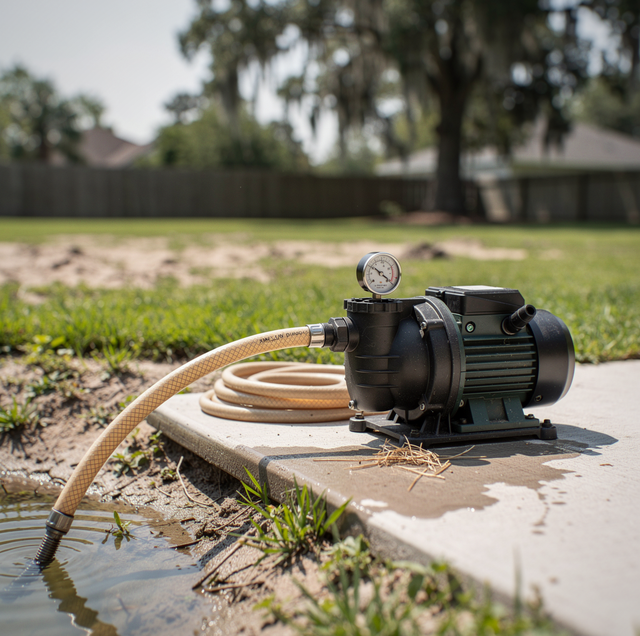
You are standing at the irrigation controller before the coffee's finished brewing, watching zone one kick on the way it has every morning for years. The valve clicks. The pump should hum to life and throw water within a few seconds. Instead, you get a strained whine, a sputter, or nothing at all: the heads never pop up, and the pressure gauge on the pump housing sits flat at zero. You cycle the controller again. Same result. The pump ran fine the last time you tested it manually, maybe even the evening before. Now, twelve hours later, it acts as if it has never seen water in its life. That gap- worked fine, then suddenly won't pull water, with nothing touched in between- is the biggest clue in the whole problem, and it points almost every time to one small part sitting at the bottom of the suction line: the foot valve.
Why an Overnight Failure Points to the Suction Side
A sprinkler pump isn't plumbed to pressurized city water. It has to pull water up from a pond, canal, or shallow well before it can push any of it out through the heads. The pipe running from that water source to the pump is under negative pressure the moment the pump runs, and it stays full of standing water when the pump is off only because something below is holding that column up against gravity. A drinking straw with a fingertip capping the top holds its liquid the same way: break the seal at either end and the column drops.
That distinction matters because of where the failure shows up. A leak on the discharge side sprays water out in plain sight; you'd see the puddle. A leak or a bad seal on the suction side does the opposite. It lets air work its way in, or lets the water column slide back down toward the source, and it does this quietly, with no spray and no obvious sign. By morning, the column that should still be primed and ready is simply gone, and the pump spins against air instead of pulling water. Three things cause that overnight loss, and the first one accounts for the large majority of these calls.
If the pump won't prime, resist the urge to cycle the controller over and over hoping it catches. Running a pump dry for more than a couple of minutes can score the mechanical seal. Shut the zone off and call for service.
The Foot Valve Loses Its Grip on the Water Column
The foot valve sits at the very bottom of the suction line, submerged at the water source. It's a one-way valve (a flapper or disc pressed against a seat, held shut by a light spring or by gravity) that lets water flow up into the pipe when the pump is running, then swings shut the instant the pump stops to trap that column above it. When it's doing its job, the line stays full and the pump primes instantly the next time it's called on.
It fails in three physical ways. Sand and fine sediment, common in surface water sources, lodge between the flapper and its seat and prop it open just enough for the trapped column to bleed back down through the gap overnight. Algae and leaf debris do the same thing on a slower timeline. The spring itself fatigues after years of opening and closing every time the irrigation schedule runs, and eventually it stops seating the flapper firmly even with a clean valve. And the rubber or synthetic seal on the flapper hardens and warps with age until it no longer forms a tight seat regardless of spring tension. Any one of these lets the column siphon back to the source overnight, and by morning there's air in the line where there should be water. It is the single most common cause of a "won't pull water" call, and it's almost always a same-visit fix once we're on site.
A Pinhole Leak Bleeds the Line the Same Way
A small crack or a corroded spot in a fitting between the foot valve and the pump produces the identical morning symptom through a different mechanism. Because that stretch of pipe is under vacuum while the pump runs and holds a standing column at rest, even a pinhole is enough to let air seep in, or water seep out slowly enough to drain the column over several hours without anyone noticing. It's a real challenge to catch by eye: the leak point may be buried, submerged, or just too small to leave a visible puddle by the time anyone looks. The pump behaves exactly like it does with a bad foot valve: it loses prime overnight, sputters, or runs dry in the morning, so ruling this in or out is part of the same visit, not a separate trip.
A Loose Fitting Lets Air In Instead of Water Out
Threaded unions and glued joints on the suction line can work loose over time due to vibration, thermal expansion and contraction, or simply from having been opened for a prior repair and not fully re-seated. On the discharge side, a loose joint under pressure sprays water and announces itself immediately. On the suction side, it does the opposite: instead of losing water outward, the joint draws air inward once the pump starts pulling a vacuum on the line, even if it sat perfectly dry and sealed-looking all night. That air collects at the high point of the run and breaks the pump's prime before it can build suction, which can look identical to a foot valve problem until the line itself is checked joint by joint.
What We Check First, and Why It's Usually Solved the Same Day
Because the foot valve causes the vast majority of these calls, it's the first thing we pull and inspect on any "won't pull water" diagnostic, and it's quick to check compared to tracing the whole suction run. If it's clogged or worn, replacing it typically resolves the problem in the same visit. If the valve is clean and seats properly, the suction line gets checked section by section (fittings, unions, and any exposed pipe) to isolate a pinhole leak or a loose joint before anything gets reassembled. We replace the foot valve as standard practice on new residential sprinkler pump installations, and we check its condition on every irrigation pump diagnostic we run, whether or not it turns out to be the cause. Either way, you get a straight answer about which of the three it is before any part gets ordered or any repair starts.
The pump's control box and any 240-volt wiring are not a DIY project. Never open the box or touch components inside it. Capacitors can retain a charge after the power is switched off. Leave that work to a licensed technician.
Fine one evening, dry by morning, no visible sign of a leak anywhere: that sequence is what narrows the diagnosis before a single tool comes out. The foot valve is pulled and inspected first; the suction run is walked joint by joint if the valve turns out to be clean and seating; and the line is only reassembled and re-primed once the column holds on its own overnight.
Frequently Asked Questions
A scored seal rarely announces itself the day it happens. It shows up later as a slow weep at the shaft where it exits the pump body, a rust stain running down the casing under that gap, or, further along, water inside the motor housing that leaves the bearings rough and the motor humming without spinning up. A submersible cannot fail this way from a lost prime, since it sits underwater and its seal never runs against air in the first place.
Re-priming a casing by hand is a technician step taken during a diagnostic, not a homeowner repair, and it masks the fault rather than fixing it. Refilling the pump does nothing to a failing foot valve, a pinhole leak, or a loose suction fitting, so the system runs one cycle and loses prime again on exactly the same schedule. The casing is also sitting inches from live 240-volt controls, which is a second reason it stays a service call.
Most foot valves have a built-in strainer basket surrounding the flapper to keep larger debris out of the suction line. The holes in that strainer are sized for coarse debris like leaves and twigs, not for fine sand, which is why sediment fine enough to pass straight through the strainer can still lodge in the flapper seat itself.
No. That points to a different mechanism. A pump that primes normally but produces weak flow usually has worn impeller vanes that are losing their grip on the water, or a clogged intake screen at the pond or canal restricting flow, rather than a suction-side seal that's failing to hold a column overnight.
Not always. Some setups also have an in-line spring check valve mounted closer to the pump head, performing the same drain-back function from a different location. When that valve is the one worn out instead of the foot valve, the overnight symptom looks identical, but the repair happens at the pump rather than down at the water source.
Cycle count and water quality, more than calendar age. A valve on a system running six or eight zones every day opens and closes thousands more times a year than one on a small yard, and that is what fatigues the spring. Sustained UV exposure hardens the rubber seal on any portion of the valve near the surface, and suspended grit grinds the seat itself, so a heavily used valve in dirty water can be worn out in a fraction of the life of a lightly used one.
Schedule a foot valve and suction-line check — get a same-visit diagnosis before your irrigation schedule misses another cycle. Perry-Pump Repair Service LLC serves Lake Butler, Gainesville, and Alachua. Call (352) 320-2412.
