
Sprinkler Pump Runs But No Water: What the Gap Means
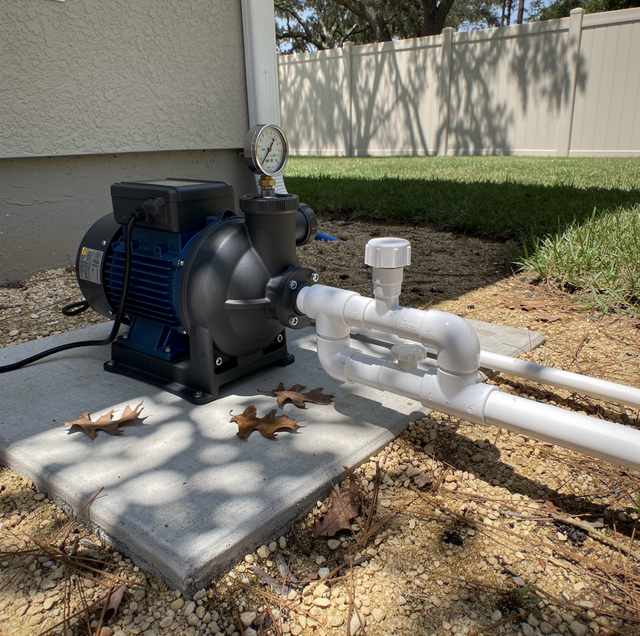
The pump kicks on. You can hear it, maybe even feel a faint vibration through the housing. The pressure gauge climbs the way it's supposed to, the motor doesn't strain, nothing trips a breaker. By every sign the equipment is built to give you, the pump is working exactly as it should.
Then you check the heads and get a dribble, a spurt that dies in three seconds, or nothing at all.
That contradiction isn't a mystery to shrug off. It's the diagnosis. A pump that runs but delivers little or nothing is telling you, plainly, that somewhere between the water source and the sprinkler head the flow is breaking down. The motor spinning proves the electrical side is fine. It proves nothing about whether water is actually moving through the pump and out into your zones. The job, for you or a technician, is to find the exact point where the breakdown occurs, because the fix depends on where the water stops.
It Never Entered the Suction Line at All
If the pump lost its prime, or never had it to begin with, water had no chance to enter the suction line. An impeller spinning in air behaves almost identically to one spinning in water from the outside: same sound, same current draw, same lack of drama. The difference is entirely on the inside, where there's nothing but air being pushed around in circles.
A clogged intake screen or strainer produces the same outcome for a different reason: the pump can be perfectly primed and mechanically sound and still have nothing to draw on once sediment, debris, or scale blocks the opening.
Suction lift itself has a hard ceiling. A pump pulling water up and over into its intake can only lift it so far before the column can't be sustained, roughly 25 feet at sea level under ideal conditions, and less than that once a long horizontal run of suction pipe is factored in. A setup that's marginal on paper can fail intermittently depending on how far the water level has dropped that day.
A foot valve that won't hold, letting the suction line drain back between cycles, is one more way water never makes it into the line before the pump starts. That failure has its own symptoms and its own fix, worth tracking down separately.
It Entered the Line but Came Out as Froth
Sometimes water does make it into the suction line, and the pump still can't move it in any usable volume. Air pulled in through a pinhole or a loose joint on the suction side is one way that happens, and it carries its own set of symptoms and its own fix, worth tracking down separately. What is useful standing at the pump is the other half of it: what air does once it is already inside.
Air and water mix at the impeller eye, and the pump ends up moving froth rather than a solid column. Froth has a discharge signature that is readable without opening a single fitting. The pressure gauge needle hunts rather than holding, drifting across a range instead of parking on a number. Flow at the heads surges and dies in a rhythm rather than running weak but level, and pop-up heads may rise and sink repeatedly through a single cycle instead of standing up and staying there. The pump itself usually sounds lighter and higher pitched than it does moving solid water, because there is less mass passing through the impeller with each revolution.
Catch the discharge in a clear container. Aerated water looks milky and clears from the bottom upward in about a minute as the air escapes, while the sediment settles downward and leaves a layer on the bottom.
That combination is what separates an air problem from a plain restriction, and the distinction matters because the two get fixed in different places. A blockage starves the pump evenly and gives a low but steady reading. Entrained air gives an unsteady one, on the gauge and at the heads both. Noting which of the two you have before the call is the single most useful thing you can hand a technician, because it decides whether the search starts on the suction side or downstream of the pump.
The Pump Is Moving Water, Just Not Enough of It
There's a third category that's easy to miss because it doesn't look like a failure at all: the pump is pulling water, pushing it out the discharge side, and still not delivering enough to run your zones properly. A worn impeller is the most common reason. Every impeller is built to a specific clearance and blade profile that generates a specific discharge pressure. As the vanes erode from sediment passing through over time, or the clearance between the impeller and the pump housing opens up from wear, the discharge pressure drops below the system's design rating.
The pump doesn't stop, and it doesn't display an obvious warning. It quietly does less work than it used to, cycle after cycle, until the shortfall becomes obvious at the heads. This kind of wear is gradual, which is part of why it's easy to rule out other explanations first. A pump that used to run your whole zone rotation without issue and now leaves the last head or two starved isn't broken in the on/off sense. It's underperforming its own spec.
The Water Left the Pump and Went Somewhere Else
There's a fourth possibility, and it trips people up most, because the pump looks fine and the water is moving. It's just not moving to your sprinkler heads.
A pressure relief or unloader valve fouled with sediment can stay partly open when it should be shut, continuously bleeding flow off to a drain, a bypass line, or back toward the source instead of sending it downstream to your zones. The pump can be working exactly as designed and still deliver almost nothing to the heads because most of what it produces is being dumped somewhere it does no good.
Discharge piping itself can narrow from the inside over the years, particularly where the water's iron content leaves mineral buildup along the pipe wall, or where sediment settles and cakes in low spots and elbows. A pipe that's visually intact and shows no external sign of trouble can still be carrying a fraction of its original volume.
Zone solenoid valves add one more layer, because they sit downstream of everything above and can fail on their own. A solenoid stuck partly closed, rather than fully open or fully shut, restricts flow to that zone without ever throwing an error or tripping anything electrical. If only one zone is affected while the others run close to normal, the solenoid on that zone is a more likely explanation than anything upstream at the pump itself.
What You Can Check Before You Call
A few observations, made without opening or disassembling anything, can save time once a technician is on site. Note whether the problem is happening on every zone or just one; that detail narrows the search, since a single-zone problem points toward that zone's valve or lateral line rather than the pump. Note whether the flow, however weak, is steady or surges and dies in pulses, which points more toward air in the system than a plain blockage. Note whether the problem showed up gradually over weeks or appeared all at once between one cycle and the next.
Do not attempt to prime the pump, open a port, or dismantle any fitting yourself. Running the pump dry to see what happens risks the mechanical seal, turning a seal replacement into a full pump-and-motor rebuild.
None of this requires touching the pump itself. If it's been running for more than a few cycles with little or no output, shut it off and call rather than letting it keep spinning while you investigate further.
Why Waiting Longer Changes the Repair
Every cause above shares one thing in common: none of them improve on their own, and several get worse the longer the pump runs without a real water column behind it. A mechanical seal relies on a thin film of water for lubrication and cooling at the point where the rotating shaft passes through the pump housing. An air-bound pump, or one starved by a clogged intake, has little to no film. The seal faces run dry and start to heat, and heat is what turns a seal that would have been fine into one that needs replacing.
A worn impeller follows a similar arc in slow motion. It wears a little further with every cycle it runs while already worn, which is why a flow problem that's been building often turns out worse once a technician gets the housing open than the symptoms alone suggested.
None of this is a reason to panic. It's a reason to treat "running but not delivering" as a stop-and-call signal rather than something to leave cycling for days while you wait for a convenient afternoon.
Frequently Asked Questions
Yes. A booster pump that receives water already under positive pressure from a submersible well pump doesn't have a true suction lift to lose in the first place, so an air-bound intake or a marginal lift distance usually isn't the explanation. In that kind of setup, a fouled relief valve, an obstructed discharge line, or a stuck zone solenoid is the more likely place to look first.
Not always, and the ground itself separates the two. A broken or disconnected lateral past the valve is still putting water somewhere, so run that zone and walk it looking for a surfacing wet patch, ground that gives underfoot where it used to be firm, or a strip of grass noticeably greener than what surrounds it. A solenoid stuck partly closed sends nothing downstream at all, so the soil along that zone's run stays as dry as the heads do. A dead zone over dry ground points at the valve; a dead zone with a soft spot on the run points at the pipe.
If the irrigation pump draws from its own dedicated source, a well, pond, or separate tap, indoor pressure at the house should stay unaffected by an irrigation-side problem. If indoor pressure drops along with the sprinklers, that points toward something shared upstream, like drawdown or the intake itself, rather than a problem isolated to the irrigation pump.
It changes what's most likely clogging the intake. A well-fed system usually deals with sand and fine sediment at the screen. A pump drawing from a pond, ditch, or other open water source also picks up floating leaves, algae, and organic debris at the strainer, which can choke flow off faster and more unpredictably than sediment alone.
Yes. Age isn't a requirement for any of this. A newly installed impeller can still be mismatched to the system's actual head and flow needs, a fresh suction fitting can develop a pinhole leak from vibration, and a recently serviced pump that wasn't fully purged of air during startup can show the same symptoms as a decade-old one.
Usually not, if it's caught early. Seal damage from dry running is progressive: the faces heat and can glaze over time, which eventually causes a permanent leak. But a pump that shuts down within the first few cycles of showing this symptom typically hasn't run long enough to reach that point. What makes it hard to confirm either way is that a glazed face often weeps only while the pump is under pressure and looks perfectly dry the moment it stops, so a seal inspected on the bench at zero pressure can read as fine and still leak on every run. Judge it on whether it stays dry through a full cycle, not on how it looks at rest.
Get the flow problem traced from start to finish — a technician can pinpoint exactly where water stops between the source and the sprinkler heads before the pump causes further damage. Perry-Pump Repair Service LLC serves Lake Butler, Gainesville, and Alachua. Call (352) 320-2412.
