
Well Screen Fouling: Why Irrigation Output Falls Each Year
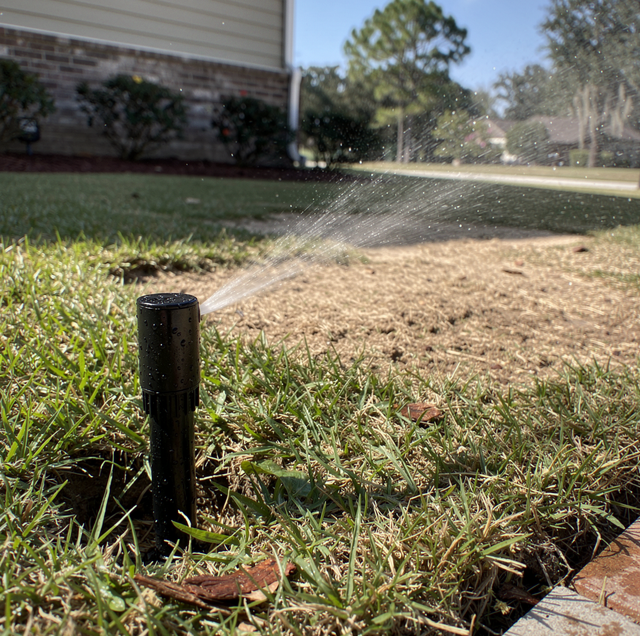
Nothing broke.
That is what makes it hard to name. Three seasons ago, the far heads on that zone threw water to the fence line. Now they mist, and the last few feet stay dry unless the zone runs longer. No line blew. No breaker tripped. Nobody heard a bad bearing or smelled a hot motor. The system does a little less each year, and each year it is easy to write off as heads needing a cleaning.
A decline with no event in it is its own category of problem, and it points somewhere the dramatic failures do not. Water has to get out of the ground and into the well before a pump can move it, and when that opening narrows, output falls without anything failing.
What Open Screen Area Actually Does
Every well has an intake: a slotted or perforated screen, or a section of borehole where water enters from the formation. Add up the openings across it, and you get the well's open area; the open area sets the entrance velocity.
That transition is where a well loses head. Water moving slowly through sand or fractured rock is doing easy work. Water turning sideways and accelerating through a narrow slot is not. The energy that turn costs shows up as a lower water level inside the casing while the pump runs, which the pump feels as more lift.
Take away part of that open area and the arithmetic turns unfriendly. The same volume squeezes through fewer openings, moving faster through each, so head loss at the entrance climbs steeply rather than in step with the area lost. Scale inside an old galvanized supply line behaves the same way: the pipe is still there, the bore is not, and the fixture at the end runs thin long before anything looks broken. The pump has no way to know why the level is lower. It lifts from wherever the water is.
Write down how long a zone needs to cover its ground this season, and how long the tank takes to recover after it shuts off. A number from today makes next season's comparison real rather than just remembered.
How Deposits Get Started in the First Place
Two families of deposits build at a well intake, and in iron-bearing groundwater they show up together.
Biological fouling: iron bacteria are ordinary residents of groundwater. They oxidize dissolved iron and build a gelatinous sheath around themselves as they do it. That slime is sticky, and it collects what drifts past: iron oxide particles, fine silt, other organisms. It does not wash away. It accumulates where water moves fastest and carries the most, which is the intake.
It is worth being careful here, because this mechanism gets oversold. Iron bacteria are widespread in iron-bearing groundwater, and plenty of wells carry them for decades with no loss of output. Finding them does not prove they are why your zone runs short. They are a plausible contributor to weigh against measurement, not a verdict you can reach from a water sample.
Mineral incrustation: The second family is chemical. Right at the intake, where water accelerates in and pressure drops sharply, dissolved gas comes out of solution and dissolved minerals stop staying dissolved. Carbonate scale precipitates, and iron oxide precipitates alongside it. Groundwater drawn through karst limestone typically carries nearly as much dissolved carbonate as it can hold, so the pressure change at the entrance is sufficient to precipitate it. Iron and sulfide are common in water from the Floridan Aquifer, which gives both families something to work with.
The two reinforce each other. Crust gives slime a rough surface to anchor to; slime traps particles that later cement into more crust. When a pump and column come out of a fouled well, the difference is usually visible: incrustation is a hard rust-red to near-black crust, while biological fouling is a slick, softer coating that smears rather than chips.
What the Decline Curve Looks Like Year over Year
Restriction at the intake does not produce a moment. It produces a slope.
The first thing to go is the far end of the system: the head farthest from the pump, the zone highest on the property, the last section in a long run. Those places run on whatever margin was left over, and margin is the first thing a decline eats.
Next comes run time. The ground still gets covered, but only if the zone runs longer, and timers get bumped a few minutes at a time without anyone joining the adjustments into a trend.
Pressure holds up long after volume does not, and this is where the trail usually goes cold. A restricted well can still build normal pressure. It just takes longer to get there, and it cannot hold that pressure while a lot of water is leaving. Anyone checking a gauge at rest sees a healthy number and moves on. Pressure describes force. Output describes volume. A restriction hits the second one first.
Weather adds noise in both directions. A dry stretch lowers water levels and makes a fouled well look worse than it is, while a wet stretch raises levels and hides a decline still progressing underneath. Read against last month's weather, a decline is unreadable; read against a number from three seasons ago, it is obvious.
As the open area shrinks, water entering through what remains moves faster, which can carry more fine sediment into the pump. A yield problem left alone long enough tends to become a wear problem as well.
Why the Pump Reads Healthy as Output Falls
Every quick check on the pump comes back fine, which is what sends people down the wrong road.
Amp draw is the clearest example, and it runs backward from intuition. A centrifugal pump moving less water against more lift does not work harder; it works less, and it draws less current, not more. So an amp reading on a pump starved by a restricted intake comes back normal or slightly low. Nothing on the meter indicates a problem.
The motor is not running hot, because it is not loaded. There is no new noise, because nothing mechanical changed. The pressure switch still cuts out, and the tank still fills. Every symptom anyone is trained to look for belongs to something failing, and nothing here has failed.
That is why a slow decline can run for years while components are checked and cleared over and over. Restriction is not a fault in a part. It is a change in the conditions the parts work under, and the only thing that reveals it is measuring the well under load and comparing it against the same measurement taken earlier.
How a Technician Separates the Three Causes
Falling output from a well has three common causes, and from the sprinkler end they feel identical: the aquifer has dropped away from the well, the pump has worn past what it can move, or the doorway between the two has narrowed. Only the third is the subject of this article, and nothing observed at a sprinkler head distinguishes the three.
The test that separates them is a drawdown test. The static water level is measured with the system at rest. The pump then runs at a known rate while the level is measured over time until it either stabilizes or continues to fall. Those numbers give specific capacity: the rate of delivery divided by how far the level fell to produce it. That figure is what makes this diagnosis possible.
Read against each cause, the pattern differs:
Aquifer drawdown: The static level itself sits lower than it did, or the pumping level keeps dropping toward the intake and never settles. The well runs out of what it has rather than resisting delivery.
Pump capacity loss: Static and pumping levels behave normally. The well gives water up without complaint, but discharge is still down. Worn stages usually confirm it once the pump is on the ground.
Intake restriction: The static level is right where it always was, which rules out the aquifer, but the drawdown required to produce a given rate is far greater than before, and the level stabilizes much deeper. Specific capacity has fallen while the standing water level has not moved. That gap is the signature, and it is why one measurement today proves less than two taken years apart.
Being honest about the limits matters. From the surface, this is a strong inference, not a certainty. Confirming what actually sits on the intake requires a downhole camera or a rig standing over the wellhead, and both belong to the licensed well drilling contractor rather than a pump shop.
That also sets who does what. A pump contractor tests the well, reads the numbers, and services or replaces the pump. Restoring a fouled or incrusted intake is not pump work at all; it is rig work, and it belongs to a licensed well drilling contractor. An honest pump shop says so and refers it out rather than selling you a pump that was never the problem.
Where That Leaves the Repair Decision
The reason to drawdown-test before recommending a pull and replace is simple: a gradual loss of capacity in an older multi-stage submersible is not always the pump. A new pump dropped into a restricted well inherits the same narrowed doorway, gives back a fraction of what it should, and the decline picks up where it left off.
Testing first turns the question into an answer. Sometimes the numbers say the pump is worn and replacing it restores the system. Sometimes they say the well is the problem, which is worth knowing before anything gets pulled. Either way, the measurement leaves a baseline behind, and against a decline this slow, a recorded number is the only real defense.
Frequently Asked Questions
Yes, and it gets diagnosed differently. Deposits in an open-hole well form on the borehole wall and within the fracture and solution openings that feed it, where there is no manufactured slot to compare against. A screened well can be reasoned about partly from its own construction record, since the slot size and screen length were specified and lost open area can be weighed against a known starting figure. An open hole has no such baseline, so the case rests on measured specific capacity today against the same figure recorded earlier, plus whatever a camera shows on the wall and at the producing seams. It changes the remedy too: a seam carrying deposit gets redeveloped rather than replaced.
It can, and it is worth ruling out before blaming the formation. The pump's own intake screen fouls, the drop pipe carries buildup on its inside wall, and a check valve holding deposit at its seat restricts flow while still opening and closing normally. Those are pump-side problems with a well-side signature, and they show up as soon as the assembly is on the ground.
No, because of where those units sit. Filtration and water treatment equipment install downstream of the pump, so they only see water that has already left the well. They protect fixtures, appliances, and the pressure tank from iron and sediment, but nothing installed after the pump changes conditions ahead of it.
Both patterns have a downside, which is why usage habits rarely explain a decline on their own. A well sitting idle for long stretches, a standby well or a zone used a few times a year, gives deposits undisturbed time to firm up on the intake. A well pumped hard and continuously pulls more iron-bearing water past the surface. Neither extreme prevents it.
It usually costs more than it returns. A restricted well delivers more pump head at a deeper pumping level than more water, so the pump settles near the low-flow end of its curve rather than at the duty point it was selected for. That end of the curve is where a multi-stage submersible runs least efficiently and where axial thrust down the stack climbs, which loads the thrust bearing continuously and works the upthrust washers hard at every start. Uneven radial loading rides along with it, so shaft and bushing wear follow. Sizing gets set by what the well delivers under a measured test, not by what the system is supposed to need on paper.
A licensed well drilling contractor with a rig on site. The work covers mechanical redevelopment, surging, brushing, or jetting the intake, sometimes with chemical treatment matched to whether the deposit is biological or mineral. It calls for equipment and licensing a pump repair shop does not carry, so the correct handling is a referral, not an attempt.
Ask for a drawdown test before replacing a pump that may not be the problem — you get numbers instead of guesswork, and a baseline to measure against next season. Perry-Pump Repair Service LLC serves Lake Butler, Gainesville, and Alachua. Call (352) 320-2412.
